Exenatide
MedicationWikipedia
10
MENTIONS
9
EPISODES
9
PODCASTS
Search complete. 10 mentions across 9 episodes found for "Exenatide".
Sep 16, 2026

Larry WangHOST
From a kinetic standpoint, CYP-mediated drug interactions are generally not a major concern because these medications are metabolized through proteolytic degradation rather than the hepatic CYP enzymes.
Larry WangHOST
Exenatide is somewhat of an exception though because it does undergo substantial renal elimination, but for most of the GLP-1s, dose adjustments are generally unnecessary in patients with either hepatic or renal impairment.
Tanner HewittHOST
I do wanna jump in and mention that there are a few clinically relevant drug interactions worth remembering.
Tanner HewittHOST
So, uh, tirzepatide, also branded as Mounjaro or Zepbound, uh, actually slows gastric emptying enough to reduce the absorption of oral estrogen-containing contraceptives, um, so that decreases estrogen peak concentrations by roughly fifty-five to fifty-nine percent.

Ming-Zhu HiiNARRATOR
The key intervention that allowed GLP-1 RAs to become viable as medications was a series of structural modifications that markedly extended the half-life.
Ming-Zhu HiiNARRATOR
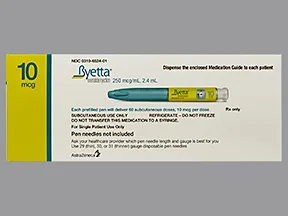
In 2005, exenatide, sold as Bayeta, was the first injectable GLP-1 RA medication worldwide to receive United States Food and Drug Administration, or FDA approval, for the treatment of type 2 diabetes.
Ming-Zhu HiiNARRATOR
Exenatide has a modified amino acid sequence, making it resistant to DPP-4 degradation with a half-life of 2-4 hours, suitable for twice-daily administration under the skin.
Ming-Zhu HiiNARRATOR
In 2009, liraglutide, sold as Victoza from Novo Nordisk, was granted approval by the European Medicines Agency, followed by US FDA approval in January 2010 for managing type 2 diabetes.

Rocio Salas WhalenGUEST
I want you to think about it, the, like the iPhone.
Rocio Salas WhalenGUEST
We have the original iPhone, right, iPhone 1, and that was Byetta.
Rocio Salas WhalenGUEST
Um, it was Exenatide, that's the initial in 2005.
Tara ShirazianHOST
Okay.
Rocio Salas WhalenGUEST
Oh, maybe not in the, in this scenario.
Tara ShirazianHOST
[laughs]
Rocio Salas WhalenGUEST
They'd still be expensive, even the, the, the Byetta, right? Because we don't have any generics yet.
Tara ShirazianHOST
Okay.

Leonard MessnerGUEST
Now, this paper was published in 2023.
Leonard MessnerGUEST
Exenatide has subsequently been discontinued.
Leonard MessnerGUEST
not because of safety factors, but because they're simply better drugs that, you know, from the standpoint of weight management.
Leonard MessnerGUEST
But there are studies, there was a nice paper published in 2025 in JAMA Neurology from the VCU that looked at over a thousand individuals with idiopathic intracranial hypertension.

Clete BarrickHOST
Two exceptions, and they're the older drugs.
Clete BarrickHOST
Exenatide and Elixacinib.
Clete BarrickHOST
This one's a mouthful.
Clete BarrickHOST
Lixasenatide.

Spencer NadolskyHOST
Did you ever hear about these things before that or no?
Summer KesselHOST
Well, I think as a dietician I ha- I had awareness of like Ozempic and Byetta and Victoza from like my patients-
Spencer NadolskyHOST
Mm-hmm
Summer KesselHOST
... with diabetes, right? And I did work a little while in a bariatric center where the surgeon would give some folks Saxenda.

Adam McCallGUEST
Yeah.
Adam McCallGUEST
Byetta came out in 2001, and we've been- Prescribing that and
Jason LoftonGUEST
And it's primarily been used for people with, with-
Adam McCallGUEST
Diabetes

Jonathan LongGUEST
It's just to say that it's not happening right now, okay? It might certainly take much longer to get the level of evidence that you would need.
Jonathan LongGUEST
For example, you know, most people don't realize that the first GLP to actually get approved in a person was Byetta in the early 2000s.
Jonathan LongGUEST
So we've had GLP-based medicines for almost twenty years now.
Jonathan LongGUEST
I think that's sort of the history that people need to understand, is that in the '80s, GLPs were discovered.

Pia WilliamsHOST
Trials, biotech, all the ordinary slog of turning a molecule into an actual medicine.
Pia WilliamsHOST
The Healer Monster's molecule design was directly copied to produce a synthetic drug they branded Byetta.
Pia WilliamsHOST
They read the molecule's sequence and built it from scratch in a lab.
Pia WilliamsHOST
approved in 2005 for type 2 diabetes.