Evidence-based practice
28
MENTIONS
16
EPISODES
14
PODCASTS
Search complete. 28 mentions across 16 episodes found for "Evidence-based practice".
Sep 16, 2026

Eric TrexlerHOST
It shows you how you weigh certain evidence against other things.
Eric TrexlerHOST
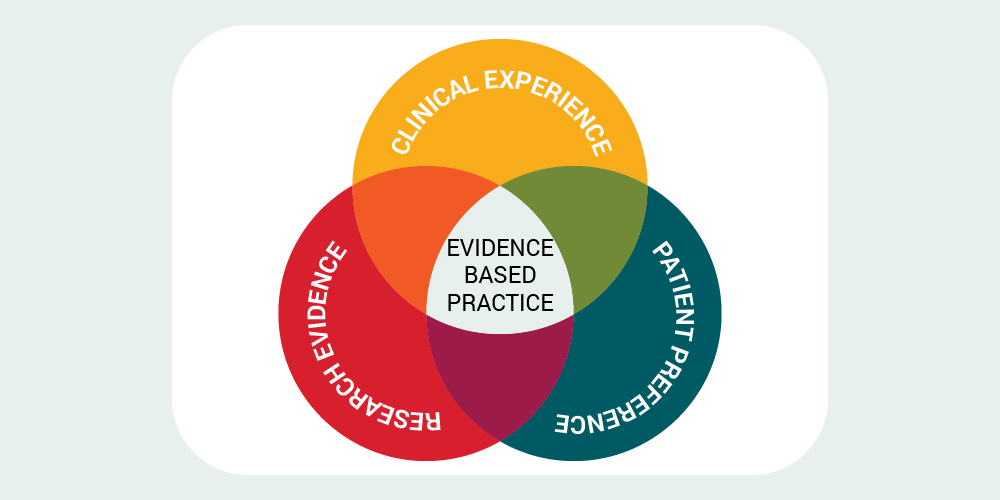
It also shows you, frankly, beyond that, how you actually make that whole three-part Venn diagram of evidence-based practice work, right? Because There may be some scenarios where you say, I actually think, you know, the evidence over here is slightly stronger than over there.
Eric TrexlerHOST
The evidence leads me to A instead of B.
Eric TrexlerHOST
But all the other things in this whole Venn diagram lead me to go with the other one, right? So sometimes what you actually do is very telling.
1 HR 25 MINS LATER
Eric HelmsHOST
And it should.
Eric HelmsHOST
look different for each individual person.
Eric HelmsHOST
I think a lot of people who don't fully understand the meaning of evidence-based practice or the reality of what it looks like kind of think that there's some templates that would look appropriate for the same goal for different people.
Eric HelmsHOST
And the only thing they would adjust is, oh, what's your weekly schedule? And then that template is a three, four, five, six, or seven-day program.

Anne HeinrichsGUEST
And eventually I started to feel more comfortable with what was going to be on the exam.
Anne HeinrichsGUEST
I then supplemented Linda Fetter's evidence-based practice book.
Anne HeinrichsGUEST
I also use a lot of Gemini, which is Google's AI chat.
Anne HeinrichsGUEST
I had Gemini make more practice questions for me.
SheilaHOST
But maybe the language used was just a little bit more harsh than the language that we're really intending with that type of a treatment.
Anne HeinrichsGUEST
Yes, definitely.
Anne HeinrichsGUEST
But yes, for my must-haves for studying, I really feel like the resources that were best for me were Campbell's PCS Advantage, the Linda Fetter's Evidence-Based Practice book, and Pushing
SheilaHOST
Pediatrics, of course.

Vincent FontanierGUEST
So actually, just to go back a little in the history, this is the first study we conducted in here about French physical therapists.
Vincent FontanierGUEST
And in the first one, we used only one of the tools, which is EBP2, EBP profile, which is a self-report that assesses multiple domains of EBP, but it's also a self-reported tool.
Vincent FontanierGUEST
Basically, what it is, it's that the respondent has to rate How he feels about EBP, about relevance of EBP, about his confidence in EBP skills, in the understanding of terminology, in the sympathy of his work environment with EBP, and how he is able to implement EBP in practice.
Vincent FontanierGUEST
So it's all about attitude and barrier, but self-reported attitude and barrier.

Margo HolmGUEST
So if you're writing a research paper, there's a number of different reporting guidelines on how to write a qualitative report, RRCT, a randomized controlled trial or observational study.
Margo HolmGUEST
If you are reporting on EBP or QI, there are the Squire 2.0 guidelines that many nurses are familiar with, and they have a structure for you to describe the problem that you are intending to solve, your methods, your interventions, your outcomes, and your lessons learned.
Margo HolmGUEST
If you're choosing to write one of those case studies that I mentioned, there's also guidelines called CARE that are best practices on how to write up a case study.
Margo HolmGUEST
So those really are prescriptive and really helpful guides.

Joel SturgisGUEST
Right.
Joel SturgisGUEST
But then to say, wow, we can't talk about that because people think we're crazy as you're the ones running around trying to do EBP work.
Joel SturgisGUEST
I mean, you know, what do you what are you worried about? Right.
Joel SturgisGUEST
They already think you're crazy.

Catherine KreevesGUEST
Yes.
Catherine KreevesGUEST
We have to present the EBP project, the big poster and everything.
Catherine KreevesGUEST
And so we present at the end of August.
Richard RidgeHOST
So the EBP project, is that something that you're doing as a group with other people from your unit? Yes.
Catherine KreevesGUEST
I'm part of a group of five new grads who started in September on my unit.
Catherine KreevesGUEST
And then we also included a girl who was the only new grad on her unit.

Christine HakkolaHOST
I'm not, no.
Yael EiserikeGUEST
PCIT is an incredible inter- um, EBP, so it's an evidence-based, uh, model.
Yael EiserikeGUEST
And what it does is...
Yael EiserikeGUEST
And this existed pre-COVID, but really it is meant to be a remote kind of, uh-

Grace CampbellHOST
Don't think that we don't have something for you.
Grace CampbellHOST
We have many grants that you can take advantage of for QI and EBP projects as well.
Grace CampbellHOST
And now, Nicole, I want to pose the same question for ACRM.
Grace CampbellHOST
If a nurse wants to take a step, what can ACRM offer them?

Terry GertonHOST
After identifying one of those gaps, Navy Commander Emily Latimer led a research effort that found a better approach for administering blood to critically injured pediatric patients.
Terry GertonHOST
That innovation earned her the Defense Health Agency Nursing Award for Evidence-Based Practice.
Terry GertonHOST
Commander Latimer joins me now to discuss what her team learned and what it says about readiness across military medicine.
Terry GertonHOST
Commander Latimer, thank you so much for joining me.
Terry GertonHOST
After identifying one of those gaps, Navy Commander Emily Latimer led a research effort that found a better approach for administering blood to critically injured pediatric patients.
Terry GertonHOST
That innovation earned her the Defense Health Agency Nursing Award for Evidence-Based Practice.
Terry GertonHOST
Commander Latimer joins me now to discuss what her team learned and what it says about readiness across military medicine.
Terry GertonHOST
Commander Latimer, thank you so much for joining me.
6 more episodes mention Evidence-based practice.
Create an account to see the whole feed, search across every transcript, and follow the entities you care about.