Evidence-based medicine
46
MENTIONS
9
EPISODES
9
PODCASTS
Search complete. 46 mentions across 9 episodes found for "Evidence-based medicine".
Sep 15, 2026

Adam CifuHOST
I got interested in this after preparing some talks generally making the argument that evidence-based medicine has failed.
Adam CifuHOST
I am a total evidence-based medicine fan.
Adam CifuHOST
My whole career has been about evidence-based medicine, teaching EBM, teaching why it's the way we should practice.
Adam CifuHOST
But I got to say, I think there's a lot which has gone wrong with EBM.
Adam CifuHOST
And so my talks have been about why it's failed, proof that it's failed, and sort of how we can rescue it.
Adam CifuHOST
And so this slide sort of goes over some points that I make and look at a couple of, you know, the great men theory of history.
Adam CifuHOST
Alvin Feinstein, a terrific epidemiologist, biostatician, worked most at Yale after graduating from the University of Chicago.
Adam CifuHOST
Oh, there you go.

Liz FraserGUEST
We assume that the doctor-patient relationship is based on trust, that patients trust their doctors, and that the doctors are knowledgeable and trustworthy, and that the doctor has access to reliable information, which we think of as truth, and that the medical paradigm is superior to those other healing paradigms because medical science is truthful and evidence-based.
Liz FraserGUEST
So [exhala] let's look at evidence-based medicine.
Liz FraserGUEST
The acronym is EBM, and its contemporary manifestations follow, uh, sorry, clinical guidelines.
Liz FraserGUEST
So this talk grew out of my own long-standing interest in epistemology, but also last year, Ron Schweizer and I were the GP advisors to the Defeat Diabetes study, and we ran education sessions, uh, about low carb for the GPs who had patients enrolled in that study, and a lot of those GPs had no familiarity with low carb.
Liz FraserGUEST
And some of those GPs were concerned about going against the guidelines, meaning if a patient had an adverse event, such as a heart attack, while they were enrolled in the Dia-- Defeat Diabetes study, would the GP get the blame because they-
Liz FraserGUEST
So guidelines are now at the center of the modern medical episteme.
Liz FraserGUEST
And this is what I'm questioning.
Liz FraserGUEST
Are modern medical guidelines trustworthy? Are they relevant? Should doctors follow guidelines? What happens if we don't? And how do we know what to do when there are conflicting guidelines? But most of all, how on earth did we get here to the point where GPs are in a panic about whether they'll be targeted if they don't follow the guidelines? So we need to know more about the history of guidelines and the EBM paradigm.

Ryan BaileyGUEST
Uh-oh
Natasha BarthelGUEST
... evidence-based medicine.
Ryan BaileyGUEST
Oh, God.
Ryan BaileyGUEST
[percussion sting]
Natasha BarthelGUEST
[laughs] Oh, God, even Beanie was like...
Natasha BarthelGUEST
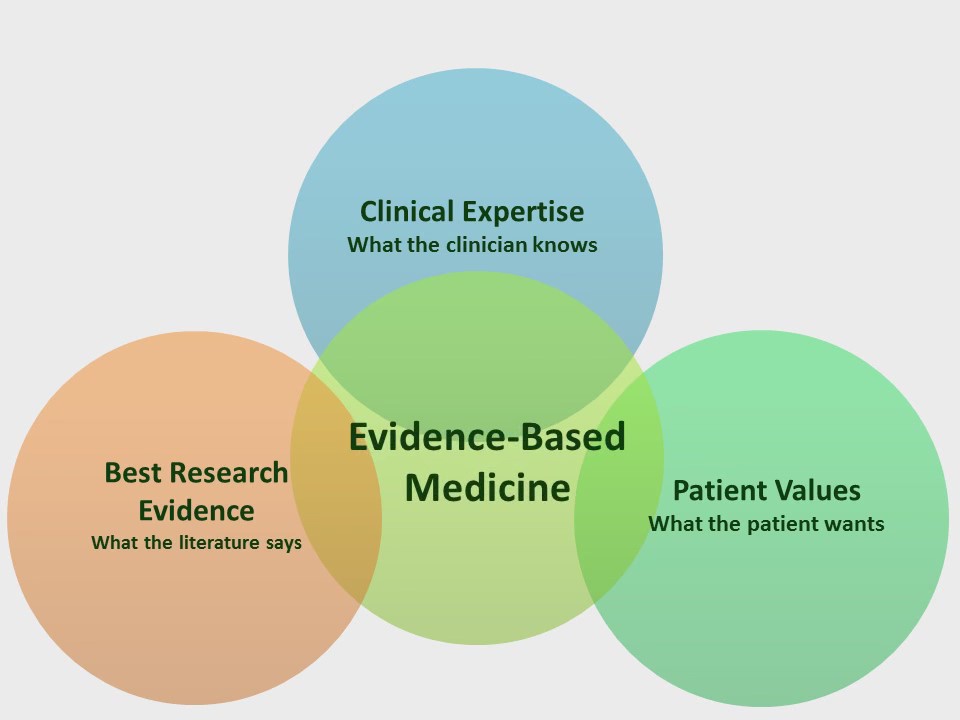
So evidence-based medicine, for the listeners who may not be terribly familiar with this, but it's essentially what you're trying to do is you're trying to get, like, high quality, mostly, like, prospective studies, blinded, randomized, controlled, blah, blah, blah, and they've been peer reviewed by a series of other experts, and they've gone through the rigmarole of publication.
Natasha BarthelGUEST
And you're supposed to use the evidence that we find in that literature to drive clinical decision-making.
Natasha BarthelGUEST
One of the limitations that we frequently encounter in veterinary medicine is that our study populations or our study groups within these papers are insanely low, right? Like, there are more than a handful of papers out there that are published with four to six, uh, you know, cats in a group.

CorneliaHOST
Do I understand that correctly? Yes.
Twila BraseGUEST
Yes, but I think that the difference is sort of like how it started to where it has ended up so far, because there was an entire movement toward evidence-based medicine.
Twila BraseGUEST
And I wrote a paper, I think back in 2005, that really talked about the danger of evidence-based medicine.
Twila BraseGUEST
And even from the researcher's perspective, when you look at the research papers that And you're going to say, we've done this research and we have determined that this is the best way to treat a patient.
Twila BraseGUEST
And you pick these certain research papers.
Twila BraseGUEST
And so you exclude them.
Twila BraseGUEST
There are all these sorts of things.
Twila BraseGUEST
And then what's left is what people would call evidence-based medicine.

Ken MilneHOST
And there's a lot of people to thank.
Ken MilneHOST
And I'm very thankful for my EBM mentor, Dr. Andrew Worcester from McMaster University.
Ken MilneHOST
He started the Best Evidence in Emergency Medicine Project or the BEAM project.
Ken MilneHOST
And we met about 20 years ago.
Ken MilneHOST
He can tell the story about how I attended a BEAM conference and ended up on the BEAM faculty rather than being kicked to the door.
Ken MilneHOST
He's got a great story about that.
Ken MilneHOST
But what he also taught me was that the EBM answer usually is, it all depends.
Ken MilneHOST
And if we go back to, I don't know, about 2011, that's time travel.

Helen CarrHOST
Divashina Gupta is the medical director and a fertility specialist at Repromed Fertility Clinic in Auckland and a private gynecologist at Auckland Gynecology Group.
Helen CarrHOST
She is a RANZCOG subspecialist in reproductive endocrinology and infertility and has been involved in a number of fertility trials and has published in the Cochrane Library of Evidence-Based Medicine.
Helen CarrHOST
Thank you very much for being here today, Divashina.
Devashana GuptaGUEST
Kia ora, Helen.

speaker_0HOST
Welcome back to a Field Guide of Evidence-Based Medicine.
speaker_0HOST
So this is part two of our first episode, and this is pretty exciting.
speaker_0HOST
This is where Jerry and I get into the big, well-done, randomized controlled mega trials of normal saline versus balanced solutions.
18 MINS LATER
Jerry HoffmanGUEST
It's to help you start to think critically." And that's what we're talking about.
Rory SpiegelHOST
Yeah.
Rory SpiegelHOST
I say I teach evidence-based medicine to the med students at Georgetown, and I tell them, "It's a year-long course, but I'm not gonna have time to teach you that much about evidence-based medicine.
Rory SpiegelHOST
My goal is to inspire you and teach you why this is important, why this is why you should focus on this to whatever type of medicine you go into."
Jerry HoffmanGUEST
Right.

Rob LaushesHOST
Last but not least, it took nearly all day Thursday for the Texas House Committee on Public Health to discuss a plethora of interim charges, including social media's impact on youth and infant mortality prevention, while also establishing a new subcommittee on women's health.
Rob LaushesHOST
The committee kicked off with Chairman Gary Van Dever formally establishing the new Subcommittee on Maternal Health, Menopause, and Access to Evidence-Based Medicine, which will focus on issues related to women's hormonal health.
Rob LaushesHOST
As lawmakers discussed one of the interim charges, the impact of social media on youth, individuals on both sides of the aisle expressed similar levels of concern over social media algorithms and minors' access to and heavy consumption of content on such platforms.
Rob LaushesHOST
Several committee members expressed dismay at the various methods by which social media algorithms are believed to be shaped, including, quote, by pupil dilation, how you're engaging with the content and whether it gets your heart rate activated.