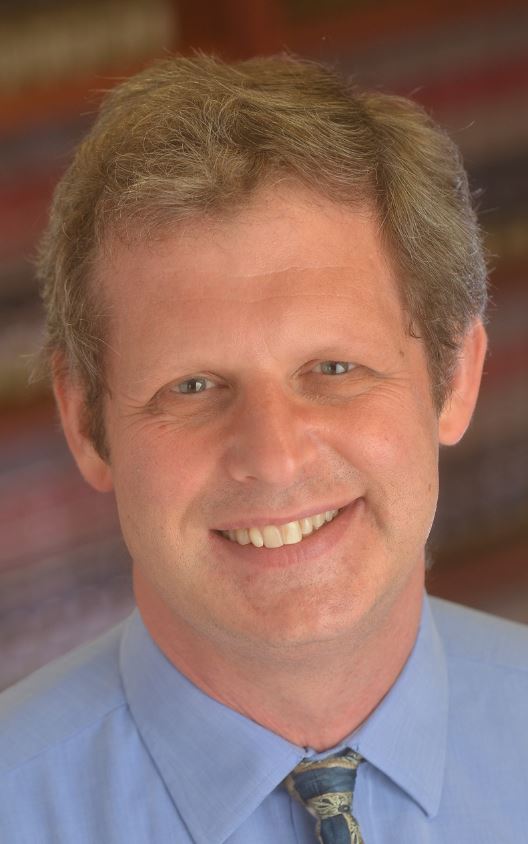
Eugene Volokh
American law professorWikipedia
13
MENTIONS
10
EPISODES
9
PODCASTS
Search complete. 13 mentions across 10 episodes found for "Eugene Volokh".
Oct 14, 2026

Jan JekielekHOST
So there's a provision of the human trafficking statute, um, Alan Dershowitz is talking about it.
Jan JekielekHOST
Most recently, uh, Eugene Volokh has written an amicus brief about it, and of course, you're working on it, which is why we're sitting here together right now.
Jan JekielekHOST
And basically, it, it's targets people who are volunteering in religious communities, but then perhaps, yeah, have regrets sometime down the line.
Jan JekielekHOST
And so what...
10 MINS LATER
John LauroGUEST
I came involved later.
John LauroGUEST
Now Professor, uh, Dershowitz is involved.
John LauroGUEST
Professor, uh, Eugene Volokh is involved.
John LauroGUEST
Um, and what they're saying, and I agree with them, is that that prosecution violates the First Amendment because the government's theory was not physical harm, not any kind of physical abuse, but that this spiritual and central practice was so persuasive that it overcame the will of the individuals who testified at trial.

Rich ZeoliHOST
In 2018, a SUNY Purchase student was charged with aggravated harassment after he put up posters around a campus building featuring Adolf Hitler, a swastika, and a quote from Mel Brooks' movie The Producers.
Rich ZeoliHOST
Hoover Institution fellow Eugene Volokh called the prosecution unconstitutional, noting that the government can't target that for special criminal punishment, and says racist signs can't be criminal.
Rich ZeoliHOST
Under R.A.V. v.
Rich ZeoliHOST
City of St. Paul, 1992, he noted, "A ban on racist fighting words is unconstitutional, even if a ban on fighting words generally is constitutional.

Ilan WurmanHOST
One is, does the institutional press have somehow more right than every man on the street to publish their th- thoughts and sentiments? This is a debate, we've talked about it before.
Ilan WurmanHOST
I think we talked about Citizens United, but it's an important topic, and Eugene Volokh, uh, has, uh, the article about this.
Ilan WurmanHOST
We won't rehash that.
Ilan WurmanHOST
You can visit, uh, you can listen to our old episodes.

Akhil Reed AmarHOST
For example, when issues arose about legal ethics of members of the Supreme Court and various travel invitations they had accepted and other things, we brought in Kathleen Clark to offer the perspective of an expert legal ethicist.
Andy LipkaHOST
Just last week, we had Eugene Volokh on to talk about some First Amendment issues as well.
Andy LipkaHOST
So we certainly have engaged in this practice on multiple occasions.
Akhil Reed AmarHOST
And since you mentioned Eugene Volokh, Eugene, we congratulate you.
Akhil Reed AmarHOST
Since appearing on America's Constitution, you received a huge First Amendment award.
Akhil Reed AmarHOST
I believe it came with $50,000.

Warren SmithHOST
I also hope that this episode might be an introduction to the Compelled podcast.
Christina DarnellHOST
Well, moving on, the Russell Kirk Center announced this week that Eugene Volokh will receive this year's Richard D. McClellan Prize for Advancing Free Speech and Expression.
Warren SmithHOST
Volokh is an influential legal scholar and a fellow at the Hoover Institution at Stanford University.
Warren SmithHOST
By the way, the prize carries with it a cash award of $50,000 for Advancing Free Speech and Expression.

William CooperHOST
It can rest only on the judge's personal policy preferences.
William CooperHOST
Do we trust judges that much?" [laughs] "And finally, do we trust judges to determine when other provisions, the Establishment Clause, the privilege against self-incrimination, the jury trial, the freedom of speech, become obsolete too?" This was, uh, written by Eugene Volokh.
William CooperHOST
It's titled Rule of Law, The Wall Street Journal, Monday, April twelfth, nineteen hundred and, uh, ninety-nine.
speaker_4UNKNOWN
[on-hold music]

speaker_1HOST
Can the president kick reporters out of the White House? When President Trump moved to bar CNN MS Now and Politico from the White House over allegedly biased coverage, it set off a fast-moving legal showdown.
speaker_1HOST
Today, senior fellow Eugene Volokh and Free Speech Unmuted co-host Jane Bambauer break down why the law is surprisingly clear-cut on this issue.
speaker_1HOST
Drawing on a 50-year-old D.C. circuit precedent and a fresh ruling on Oval Office access, the hosts explain the crucial distinction between the press briefing room, a form where reporters can't be excluded based on viewpoint, and the Oval Office, the president's own turf where he can talk to whomever he wants.
speaker_0HOST
Ending the roadless rule can help fight forest fires and improve wildlife access.

Eugene VolokhHOST
That's what we're talking about today.
Eugene VolokhHOST
I'm Eugene Volokh, your co-host.
Eugene VolokhHOST
I'm a senior fellow at the Hoover Institution and a professor emeritus at UCLA Law School.
Eugene VolokhHOST
My co-host is Jane Bambauer, who is a professor at University of Florida Law School.
speaker_0NARRATOR
Featured research initiative, Program on Free Expression.
speaker_0NARRATOR
The Program on Free Expression, led by Senior Fellow Eugene Volokh, advances rigorous nonpartisan research, public education, and practical training on First Amendment issues and free speech policy.
speaker_0NARRATOR
The program examines how law, technology, and institutions shape public discourse and seeks evidence-based solutions that protect speech while addressing modern challenges like social media moderation, doxing, and foreign speech restrictions.
speaker_1NARRATOR
That's your Hoover Daily Report for Friday, September 18th, 2026.

Katie HerzogHOST
It's operated by a private company, but the land and the stadium are public and taxpayers invested a large sum into the stadium, like $30 million.
Katie HerzogHOST
So I asked Eugene Volokh if the fact that the venue is owned by the city makes this a First Amendment issue, and he said, not necessarily.
Katie HerzogHOST
Basically, it comes down to who controls the venue, which in this case is a private company.
Katie HerzogHOST
I asked FIRE as well, same answer.