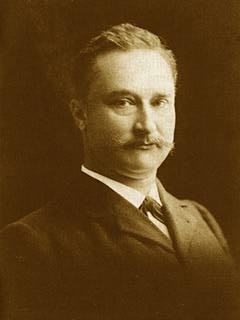
Eugène Dubois
Dutch geologistWikipedia
42
MENTIONS
9
EPISODES
6
PODCASTS
Search complete. 42 mentions across 9 episodes found for "Eugène Dubois".
Oct 13, 2026

Michael CremoGUEST
Then they discovered in Java what they call Java man, Pythocanthopus erectus.
Michael CremoGUEST
A Dutch researcher named Eugene Dubois found a very primitive ape-like skull and next to it a femur or thigh bone that looked a little bit human.
Michael CremoGUEST
He put the two together and said, okay, we've got the Java ape man, finally the missing link.
Michael CremoGUEST
and it was a little bit less than a million years old.

Helen FarrHOST
Join us as we explore the world that existed before us.
Helen FarrHOST
In 1887, the Dutch anatomist Eugene Dubois left his university position to join the Dutch East Indies army as a surgeon.
Helen FarrHOST
The position was merely a matter of convenience to Dubois, a way to get to Southeast Asia, where he believed he would find the fabled missing link between apes and humans.
Helen FarrHOST
At first, he explored caves around Sumatra without much success, and so he shifted his attention to the island of Java in Indonesia.
Helen FarrHOST
His journey took him to the banks of the Solo River, near the village of Trinil.
Helen FarrHOST
The site was unexceptional.
Helen FarrHOST
The Solo River had carved a steep bank about 30 feet high into the landscape, and Dubois, with his team of convict laborers and two army corporals, took advantage of this natural exposure by cutting trenches into the riverbank.
Helen FarrHOST
By 1891, they had found a fossilized human-like molar, and two months later they discovered the now famous skull cap called Trinil 2.

speaker_9NARRATOR
The original bones were passed from researcher to researcher, each one proposing a different interpretation, each one convinced they alone understood the truth.
speaker_9NARRATOR
Then came Java Man, discovered by a Dutch anatomist named Eugene Dubois on the Indonesian island of Java in the 1890s, just a skullcap and a thighbone found yards apart, not even definitely from the same individual.
speaker_9NARRATOR
But Dubois declared it the missing link between apes and humans.
speaker_9NARRATOR
He named it Pythocanthropus erectus, upright ape man.
1 HR 35 MINS LATER
speaker_9NARRATOR
It gives us reference points, markers we can use to reconstruct the branching pattern of the human family tree.
speaker_9NARRATOR
Think of it like trying to understand a massive family reunion when you've only got a handful of old photographs.
speaker_9NARRATOR
each new photo gives you more information you start recognizing facial features that run in certain branches of the family you notice how cousins resemble each other more than they resemble more distant relatives slowly painstakingly you reconstruct who was related to whom that's what paleoanthropologists have been doing for the last century taking fragmentary evidence isolated fossils scattered across continents and millions of years and trying to piece together the story of how we're all related and certain discoveries have been absolutely crucial to that reconstruction in eighteen ninety one eugene dubois found the first homo erectus fossils in java suddenly scientists realized that human ancestors had left africa far earlier than anyone had imagined the human story wasn't confined to one continent it was global in the nineteen twenties and thirties discoveries in south africa revealed even earlier human ancestors species like australopithecus africanus that walked upright but still had relatively small brains these weren't just ancient humans these were the transitional forms between apes and humans evidence of how our lineage had evolved in nineteen seventy four the discovery of lucy a remarkably complete australopithecus afarensis skeleton gave us our first really detailed look at what early human ancestors looked like she walked upright that was clear from her pelvis and leg bones but she still had long arms suited for climbing a perfect example of a species caught between two worlds adapting to life on the ground but not ready to give up the trees entirely Each of these discoveries, along with hundreds of others, helped build the framework for understanding human evolution.
speaker_9NARRATOR
And they all pointed to one inescapable conclusion.

Chris HaslerHOST
Imagine discovering the bones of an ancient creature and becoming convinced that you had found the missing link between ape and human.
Chris HaslerHOST
That was the extraordinary ambition of Eugène Dubois.
Chris HaslerHOST
But the creature at the centre of his obsession would eventually become part of a much bigger story.
Chris HaslerHOST
Because around 2 million years ago, something remarkable was happening to our ancestors.
Chris HaslerHOST
We took a bigger look at the contemporary world of Homo habilis roughly 2 million years ago and recognised that the world was undergoing substantial changes that were pushing Homo habilis to become stronger and more intelligent and also more expertly capable of living life out of trees.
Chris HaslerHOST
As we know, this week we are talking about Homo erectus, the next major human evolutionary milestone.
Chris HaslerHOST
Eugène Dubois To begin the story of Homer Erectus, I would like to introduce you to one of my favourite characters in the story of Paleoanthropology, Mr Eugène Dubois.
Chris HaslerHOST
Eugène Dubois was born in a village called Eysden in the Duchy of Limburg in the Netherlands in the year 1858.
speaker_3NARRATOR
They were just following food, generation after generation, each group pushing a little farther than their parents had gone.
speaker_3NARRATOR
In 1891, a Dutch physician named Eugène Dubois found fossils in Java that he called Pithecanthropus erectus .
speaker_3NARRATOR
Local villagers had been finding bones for years, but Dubois was the first to recognise what they were – an ancient human, nearly a million years old, living on an island thousands of miles from Africa.
speaker_3NARRATOR
In the 1920s and 30s, excavations at Joukoudian Cave near Beijing uncovered fossils of Peking Man.

Justin VarisNARRATOR
A.H. Keene is the anthology, has classified the remains worthy of credence as follows.
Justin VarisNARRATOR
Trinilli Pithecanthropus erectus, found on the left bank of the river Benguin Java, roof of the skull, an upper molar, and a femur found, 1894, by Dr. Eugene Dubois in Pleistocene, bed 12 to 15 meters below the surface, showing characteristics intermediate between gorilla and Neanderthal, but distinctly human, low depressed cranial arc, the lowest human cranium yet described, very nearly as much below the Neanderthal as it is much below the normal European.
Justin VarisNARRATOR
Femur, quite human, tooth very large, but more human than simian Neanderthal, a brain cap, two femora, two humeri, and some other fragments, remarkable for its flat retreating curve, the most ape-like skull next to the Pithecanthropus erectus.
Justin VarisNARRATOR
La Nantes, Belgium, an imperfect lower jaw, simian characteristics very pronounced in the extreme proganthism and alveolar process.
speaker_8NARRATOR
The fossil evidence is staggering.
speaker_8NARRATOR
In 1891, a Dutch physician named Eugène Dubois discovered bones on the island of Java that would change our understanding of human evolution forever.
speaker_8NARRATOR
he called his find java man but it was actually homo erectus living on a tropical island over eight thousand miles from where the species first evolved that's not migration that's conquest that's a species looking at oceans and mountains and saying we can cross that In the 1920s, excavations at Jokudian near Beijing uncovered evidence of Homo erectus living in China over 750,000 years ago.
speaker_8NARRATOR
They called this find Peking Man, and the remains told an incredible story.
S. K. EdisonNARRATOR
The meganthropus finds refer to beds of the beginning of this glaciation.
S. K. EdisonNARRATOR
The first finds of Java man were made in 1891-92 by Dr. Eugene Dubois, a Dutch doctor in the colonial service.
S. K. EdisonNARRATOR
Finds have continued to be made.
S. K. EdisonNARRATOR
There are now bones enough to account for four skulls.