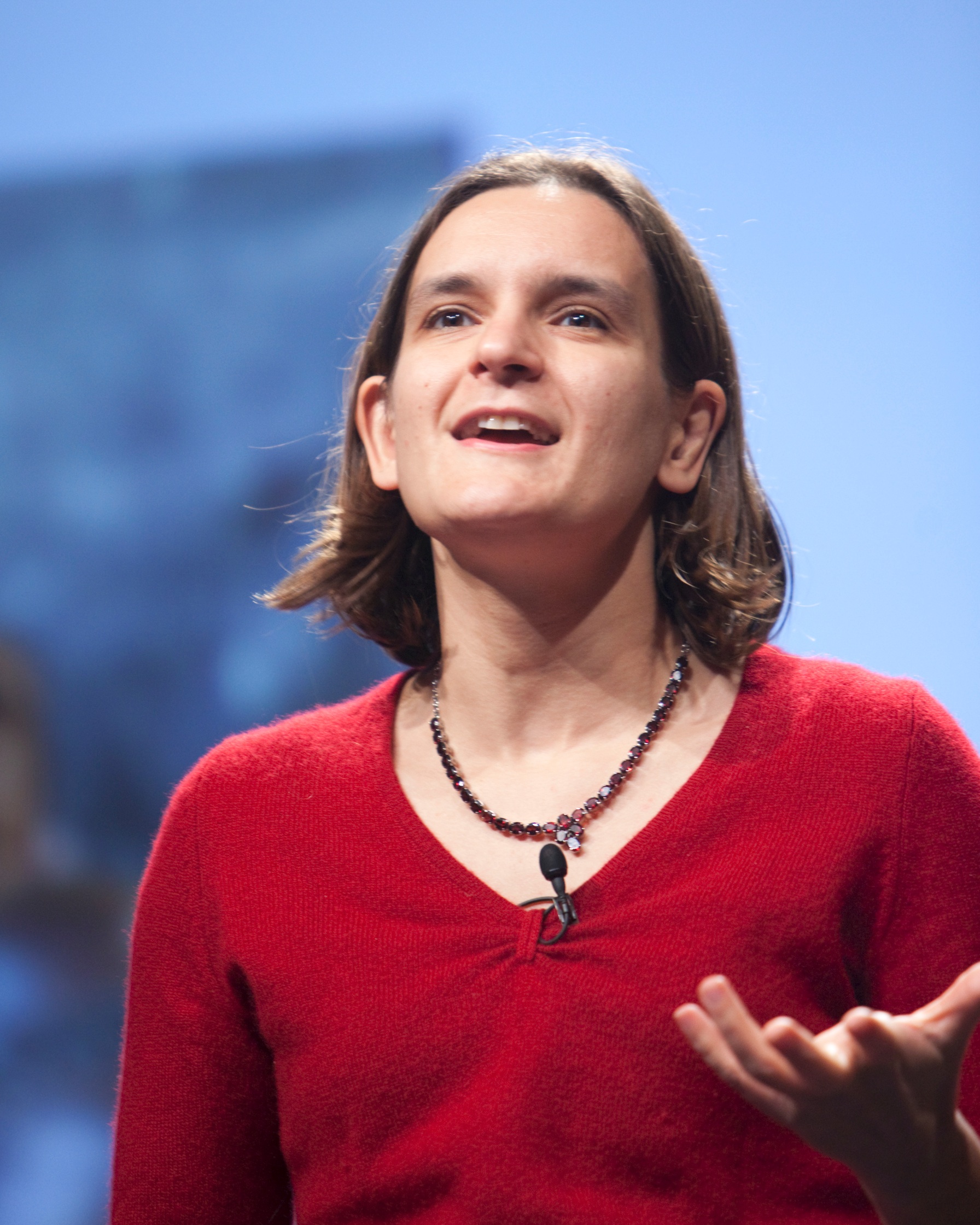
Esther Duflo
French-American economistWikipedia
9
MENTIONS
5
EPISODES
5
PODCASTS
Search complete. 9 mentions across 5 episodes found for "Esther Duflo".
Nov 2, 2026

Melchior LengsfeldGUEST
Also heute wird, äh, wissenschaftlich gemessen, was funktioniert, was funktioniert nicht.
Melchior LengsfeldGUEST
Ähm, es wurde vor einigen Jahren auch oder sogar der Nobelpreis in Wirtschaftswissenschaften vergeben an Esther Duflo, an Abhijit Banerjee.
Melchior LengsfeldGUEST
Genau für diese Art von Wirkungsmessung, äh, wo man sagt, wir können im Kleinen und auch im Größeren nachvollziehen und belegen, was funktioniert und was funktioniert nicht oder was ist nicht wirklich kosteneffizient.
Melchior LengsfeldGUEST
Und diese Einsichten aus der Forschung, aus der Wissenschaft zurückzutragen in unsere Programme, das ist für uns ein ganz wichtiges Anliegen.
Melchior LengsfeldGUEST
Ähm, es ist auch ein Thema, wo wir zum Beispiel mit der Univ-Universität Zürich, äh, arbeiten.
Melchior LengsfeldGUEST
Wir arbeiten aber auch mit dem J-M Poverty Action Lab.
Melchior LengsfeldGUEST
Das ist das Prak, äh, das Praxis Policy Netzwerk, das, äh, Esther Duflo gegründet hat, damit diese Einsichten aus der Forschung auch verfügbar sind in der Praxis.
Melchior LengsfeldGUEST
Ähm, so, das benutzen wir diese Einsichten, um in der Programmgestaltung wirklich auf, ähm, bestätigte Mechanismen zu setzen und man sagt, das funktioniert.

Seth BenzellGUEST
Oh, maybe.
Seth BenzellGUEST
Kevin Bryan, formerly of the amazing micro theory blog, Fine Theorem, writes in the Esther Duflo Banerjee Prize and Kramer.
Seth BenzellGUEST
I think it's Banerjee, Duflo and Kramer.
Ben ZweigHOST
Yeah.
Seth BenzellGUEST
They win a prize for running RCTs in Africa.

Noam AngristGUEST
But as I mentioned, that is changing and various researchers and kind of institutional efforts are placing greater emphasis on the implementation and scaling challenge.
Noam AngristGUEST
Esther Duflo, in her American Economic Association remarks, referred to the economist as plumber, that that was something that we needed to focus more on the plumbing, the implementation questions.
Noam AngristGUEST
John List has popularized this notion of the voltage drop, that a lot of things that worked at small scale no longer work at large scale.
Noam AngristGUEST
And so there's growing interest and momentum in these issues.

MattHOST
... approximately.
JadrianHOST
They're not Esther Duflo.
MattHOST
Plus or minus a year or two.
JadrianHOST
Was Esther Duflo the youngest?
MattHOST
I don't know, actually.
MattHOST
That's a good question.
MattHOST
Yeah.
MattHOST
So, but, um-

speaker_0NARRATOR
Research that has been directly applied in real-world spectrum auctions worth billions of dollars.
speaker_0NARRATOR
In 2019, Abhijit Banerjee, Esther Duflo and Michael Kremer won for their experimental approach to alleviating global poverty, using randomized controlled trials to test what actually works in education and healthcare rather than relying on theory alone.
speaker_0NARRATOR
And Alvin Roth and Lloyd Shapley won the prize for their work on market design and matching theory, which led to practical systems for things like efficiently matching kidney donors with patients who need them.
speaker_0NARRATOR
These are economists designing systems that literally allocate resources to people based on the value those people assign to them, in the most efficient way possible, and the results are measurable and replicable.