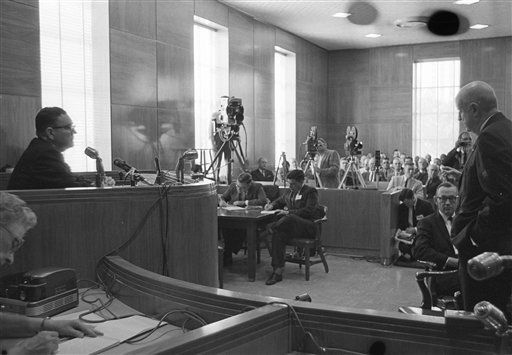
Estes v. Texas
Case in courtWikipedia
6
MENTIONS
4
EPISODES
3
PODCASTS
Search complete. 6 mentions across 4 episodes found for "Estes v. Texas".
Oct 10, 2026

Bobby CapucciHOST
Last night, the defense raised the issue of publishing admissions by the defendant or confessions.
Bobby CapucciHOST
They cited to one sentence from the U.S. Supreme Court opinion in Estes v. Texas that relies on Riddell v. Louisiana case.
Bobby CapucciHOST
And that one sentence in Estes had no precedential value on the issue that's before the court today.
Bobby CapucciHOST
as decided to the dissenting opinion in Riddell, which is very curious because that dissenting opinion, Riddell, was a change of venue case.

Bobby CapucciHOST
Last night, the defense raised the issue of publishing admissions by the defendant or confessions.
Bobby CapucciHOST
They cited to one sentence from the U.S. Supreme Court opinion in Estes v. Texas that relies on Riddell v. Louisiana case, and that one sentence in Estes had no precedential value on the issue that's before the court today.
Bobby CapucciHOST
Estes cited to the dissenting opinion in Riddell, which is very curious because that dissenting opinion, Riddell, was a change of venue case.
Bobby CapucciHOST
And what the dissenting opinion held is that the court properly refused to change venue in that case, even though the defendant's confession had been televised multiple times.

Bobby CapucciHOST
We previously cited, and the reason why I'm saying this again is not to reiterate something, just because if you say it twice, it means something different, but because my colleagues have suggested that maybe my argument earlier was not clear enough, and so I want to make sure it's clear so that the court makes a decision based on the arguments of counsel.
Bobby CapucciHOST
The United States Supreme Court said in Estes v. Texas 381 U.S. 532 the following, In Riddell v. Louisiana, and that's Riddell, R-I-D-E-A-U, this court constructed a rule that the televising of a defendant in the act of confessing to a crime was inherently invalid under the Due Process Clause of the 14th Amendment, even without a showing of prejudice or a demonstration of the nexus between the televised confession and the trial.
Bobby CapucciHOST
I'm not calling the statements of Mr. Robinson confessions.
Bobby CapucciHOST
But that is what the state will call them, and so there are portions of this exhibit and the other exhibits that I've referred to which implicate Mr. Robinson's right not to have what the state calls a confession televised.
Bobby CapucciHOST
That's another piece of the same problem.
Bobby CapucciHOST
So this is all simplified by the court being extra cautious about Mr. Robinson's constitutional rights.
Bobby CapucciHOST
Considering these exhibits to the extent the court deems that they're admissible and portions of them are relevant and not further televising them in this proceeding in a manner which we think is inconsistent with the Supreme Court said in Estes v. Texas.
Bobby CapucciHOST
Judge Graff, alright, I appreciate that, Ms. Novak, Ms.
Bobby CapucciHOST
We previously cited, and the reason why I'm saying this again is not to reiterate something, just because if you say it twice, it means something different, but because my colleagues have suggested that maybe my argument earlier was not clear enough, and so I want to make sure it's clear so that the court makes a decision based on the arguments of counsel.
Bobby CapucciHOST
The United States Supreme Court said in Estes v. Texas 381 U.S. 532 the following.
Bobby CapucciHOST
In Riddell v. Louisiana, and that's Riddell, R-I-D-E-A-U, this court constructed a rule that the televising of a defendant in the act of confessing to a crime was inherently invalid under the Due Process Clause of the 14th Amendment, even without a showing of prejudice or a demonstration of the nexus between the televised confession and the trial.
Bobby CapucciHOST
I'm not calling the statements of Mr. Robinson confessions, but that is what the state will call them.
Bobby CapucciHOST
That's another piece of the same problem.
Bobby CapucciHOST
So this is all simplified by the court being extra cautious about Mr. Robinson's constitutional rights.
Bobby CapucciHOST
Considering these exhibits, to the extent the court deems that they're admissible and portions of them are relevant and not further televising them in this proceeding in a manner which we think is inconsistent with the Supreme Court said in Estes v. Texas.
Bobby CapucciHOST
Judge Graff, all right.