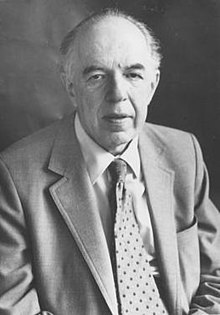
Ernst Gombrich
Austrian art historianWikipedia
6
MENTIONS
6
EPISODES
4
PODCASTS
Search complete. 6 mentions across 6 episodes found for "Ernst Gombrich".
Sep 18, 2026

IreneHOST
Christopher Hitchens, Niall Ferguson, and many others had expatriated and joined America's vast intellectual industrial complex.
IreneHOST
Their verbal facility, forged in private schools and Oxbridge debating societies, frequently invited the suspicion that, as Ernst Gombrich wrote in 2000, of Simon Schama.
IreneHOST
For all his mastery of language, the author distrusts the true function of words, that is, to convey meaning.
IreneHOST
This British patented no bullshit bullshit proved to be a catastrophic American success.

Nicholas HumphreyGUEST
It's been described as a case of always finding, wanting to lo- loving to find closure, finding things which seem to be just right for each other, um, which complete each other.
Nicholas HumphreyGUEST
Um, Ernst, Ernst Gombrich, talking about painting, said, "What an artist is always doing is trying to get it right." Um, people have talked about, uh, uh, significant form is a term used by the art historian theorist Clive Bell, and he puts that down to a sense of rightness of the things, things belonging in a way which please us because we think the world ought to be like that.
Nicholas HumphreyGUEST
And I think we all know that feeling.
Nicholas HumphreyGUEST
We look out at a beautiful landscape, and we think, "That's perfect.
IreneHOST
Christopher Hitchens, Niall Ferguson, and many others had expatriated and joined America's vast intellectual industrial complex.
IreneHOST
Their verbal facility, forged in private schools and Oxbridge debating societies, frequently invited the suspicion that, as Ernst Gombrich wrote in 2000 of Simon Schama, for all his mastery of language, the author distrusts the true function of words, that is, to convey meaning.
IreneHOST
This British patented no bullshit bullshit proved to be a catastrophic American success, manifest in the claim solemnly pronounced in the New Yorker and the New York Times that Tony Blair was arguing for the war on Iraq more persuasively than Bush and Cheney.
IreneHOST
Even then, however, Many in the American ruling class were breaking unpleasantly with Europe.

Fatoş ÜstekGUEST
Yeah.
Fatoş ÜstekGUEST
But also, you know, Victor Stoichita, The History of Shadows, or Gombrich has written books about shadows, so I can continue on that.
Fatoş ÜstekGUEST
But this year's edition is about hybridity because I want to talk about the fact that we are living in this hybrid condition, and that is not a binary of the real versus digital, but it's actually a triangulation of the real, the imaginary, and the digital.
Fatoş ÜstekGUEST
So, um, and, and this hybrid condition that we are living in is also mirrored by various different artists and artistic practices who are juxtaposing materials that are, you know, like, in surface tension with one another or, or bringing mythological frameworks into self-portraiture, exposing scientific facts with, you know, hearsay understandings of the world or, you know, making makeshift materials.
IreneHOST
Christopher Hitchens, Niall Ferguson, and many others had expatriated and joined America's vast intellectual industrial complex.
IreneHOST
Their verbal facility, forged in private schools and Oxbridge debating societies, frequently invited the suspicion that, as Ernst Gombrich wrote in 2000 of Simon Schama, For all his mastery of language, the author distrusts the true function of words, that is, to convey meaning.
IreneHOST
This British-patented no-bullshit bullshit proved to be a catastrophic American success.
IreneHOST
manifest in the claim solemnly pronounced in the New Yorker and the New York Times that Tony Blair was arguing for the war on Iraq more persuasively than Bush and Cheney.

Hans RookmaakerSOUNDBITE_SPEAKER
Very hard to prove.
Hans RookmaakerSOUNDBITE_SPEAKER
So what is the difference between my view and the view of Gombrich, who is a very fine humanist, and his friend Panofsky, and Antal, who is a Marxist, or Baxandl, who is another type of Marxist? What is our difference in our views? Or rather, how can we ever communicate? And I would say it's like this.
Hans RookmaakerSOUNDBITE_SPEAKER
Well, first, the difference.
Hans RookmaakerSOUNDBITE_SPEAKER
The difference is this.