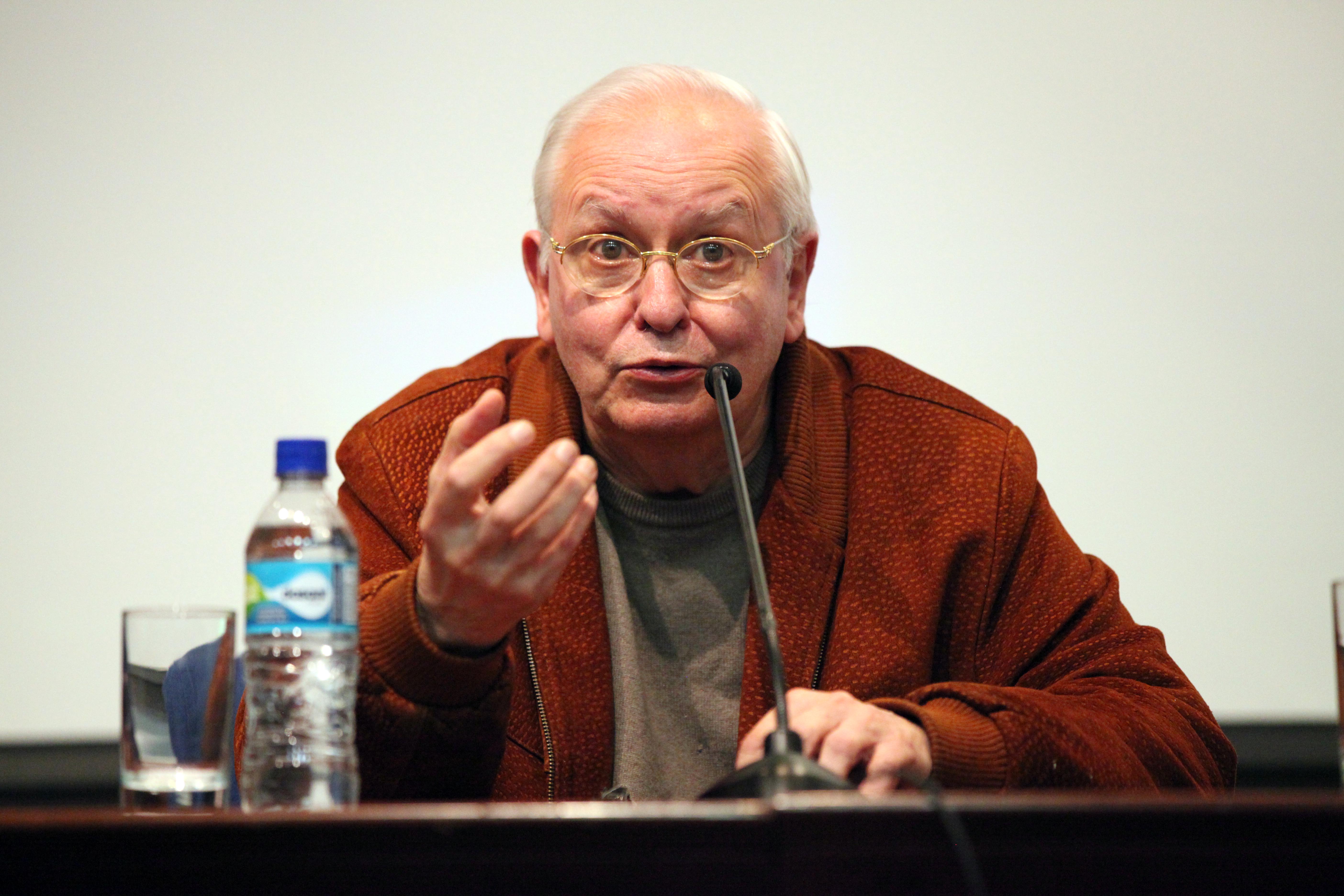
Ernesto Laclau
Argentine philosopherWikipedia
19
MENTIONS
10
EPISODES
8
PODCASTS
Search complete. 19 mentions across 10 episodes found for "Ernesto Laclau".
Oct 3, 2026

Dan OppenheimerHOST
It was, it was, like, Chantal-
Jeffrey LawrenceGUEST
Laclau and Mouffe.
Jeffrey LawrenceGUEST
Yeah.
Dan OppenheimerHOST
And Mouffe.
Dan OppenheimerHOST
What is it? Mouffen...
Dan OppenheimerHOST
What's the other guy's name?
Jeffrey LawrenceGUEST
Mouffe and Laclau.
Jeffrey LawrenceGUEST
Yeah.

Laurie ParsonsGUEST
Essentially, this hegemony per Gramsci's conception is all about this kind of pursuit or non-pursuit of economic interest and tying in tying in these dimensions to the historical material realities of production and industrializing society.
Laurie ParsonsGUEST
Now, about 50 or 60 years later, Ernesto Laclau and Chantal Mouffe essentially attempted to revitalize this idea of hegemony as they saw it by making it more compatible with the kind of post-structural thinking which had become popular at the time.
Laurie ParsonsGUEST
So this is essentially making it more able to link to, for example, Michel Foucault and Lacan.
Laurie ParsonsGUEST
So what they were essentially trying to do is to simplify what was Gramsci's original fairly complex and highly nuanced understanding of hegemony, but also to make it more compatible with the kind of knowledge-based understanding of society which had emerged in the wake of this kind of post-structural thinking.

Laurie ParsonsGUEST
Essentially, this hegemony per Gramsci's conception is all about this kind of pursuit or non-pursuit of economic interest and tying in these dimensions to the historical material realities of production and industrializing society.
Laurie ParsonsGUEST
Now about 50 or 60 years later Ernesto Laclau and Chantal Mouffe essentially attempted to revitalize this idea of hegemony as they saw it by making it more compatible with the kind of post-structural thinking which had become popular at the time.
Laurie ParsonsGUEST
So this is essentially making it more able to link to for example Michel Foucault and Lacan.
Laurie ParsonsGUEST
So what they were essentially trying to do is to simplify what was Gramsci's original fairly complex and highly nuanced understanding of hegemony, but also to make it more compatible with the kind of knowledge-based understanding of society which had emerged in the wake of this kind of post-structural thinking.

Laurie ParsonsGUEST
Essentially, this hegemony per Gramsci's conception is all about this kind of pursuit or non-pursuit of economic interest and tying in these dimensions to the historical material realities of production and industrializing society.
Laurie ParsonsGUEST
Now, about 50 or 60 years later, Ernesto Laclau and Chantal Mouffe essentially attempted to revitalize this idea of hegemony as they saw it by making it more compatible with the kind of post-structural thinking which had become popular at the time.
Laurie ParsonsGUEST
So this is essentially making it more able to link to, for example, Michel Foucault and Lacan.
Laurie ParsonsGUEST
So what they were essentially trying to do is to simplify what was Gramsci's original fairly complex and highly nuanced understanding of hegemony, but also to make it more compatible with the kind of knowledge-based understanding of society which had emerged in the wake of this kind of post-structural thinking.

Laurie ParsonsGUEST
material realities of production and industrializing society.
Laurie ParsonsGUEST
Now, about 50 or 60 years later, Ernesto Laclau and Chantal Mouffe essentially attempted to revitalize this idea of hegemony as they saw it by making it more compatible with the kind of post-structural thinking which had become popular at the time.
Laurie ParsonsGUEST
So this is essentially making it more able to link to, for example, Michel Foucault and Lacan.
Laurie ParsonsGUEST
So what they were essentially trying to do is to simplify what was Gramsci's original fairly complex and highly nuanced understanding of hegemony, but also to make it more compatible with the kind of knowledge-based understanding of society which had emerged in the wake of this kind of post-structural thinking.
Ehsan DehghanGUEST
That's why I'm drawing from already existing theories of democracy and probably expanding them.
Ehsan DehghanGUEST
But probably what differentiates the work from many other works, at least in media and communication, is exactly my distancing from the Habermasian public sphere and positioning myself more in the tradition of discourse theory of Laclau and Wolff.
Pete KunzeHOST
And for those who are not familiar with that kind of tradition, can you can you provide kind of a general introduction for what that turned to provide you that you see missing in Habermas? I mean, you've already gestured towards Habermas's neglect of the digital, the digital media context, but how? how do Laclos and Mouffe, who are also writing before that context, although they write into it, how do they offer maybe solutions or paradigms for thinking through it?
Ehsan DehghanGUEST
I would say paradigm, definitely.
Ehsan DehghanGUEST
That's why I'm drawing from already existing theories of democracy and probably expanding them.
Ehsan DehghanGUEST
But probably what differentiates the work from many other works, at least in media and communication, is exactly my distancing from the Habermasian public sphere and positioning myself more in the tradition of discourse theory of Laclau and Wolff.
Pete KunzeHOST
And for those who are not familiar with that kind of tradition, can you can you provide kind of a general introduction for what that turned to provide you that you see missing in Habermas? I mean, you've already gestured towards Habermas's neglect of the digital, the digital media context, but how? How do Laclos and Mouffe, who are also writing before that context, although they write into it, how do they offer maybe solutions or paradigms for thinking through it?
Ehsan DehghanGUEST
I would say paradigm definitely, solutions probably debated or debatable.

Ehsan DehghanGUEST
That's why I'm drawing from already existing theories of democracy and probably expanding them.
Ehsan DehghanGUEST
But probably what differentiates the work from many other works, at least in media and communication, is exactly my distancing from the Habermasian public sphere and positioning myself more in the tradition of discourse theory of Laclau and Wolff.
Pete KunzeHOST
And for those who are not familiar with that kind of tradition, can you can you provide kind of a general introduction for what that turned to provide you that you see missing in Habermas? I mean, you've already gestured towards Habermas's neglect of the digital, the digital media context, but how? how do Laclos and Mouffe, who are also writing before that context, although they write into it, how do they offer maybe solutions or paradigms for thinking through it?
Ehsan DehghanGUEST
I would say paradigm, definitely.

Ehsan DehghanGUEST
That's why I'm drawing from already existing theories of democracy and probably expanding them.
Ehsan DehghanGUEST
But probably what differentiates the work from many other works, at least in media and communication, is exactly my distancing from the Habermasian public sphere and positioning myself more in the tradition of discourse theory of Laclau and Wolff.
Pete KunzeHOST
And for those who are not familiar with that kind of tradition, can you can you provide kind of a general introduction for what that turned to provide you that you see missing in Habermas? I mean, you've already gestured towards Habermas's neglect of the digital, the digital media context, but how? how do Laclos and Mouffe, who are also writing before that context, although they write into it, how do they offer maybe solutions or paradigms for thinking through it?
Ehsan DehghanGUEST
I would say paradigm, definitely.