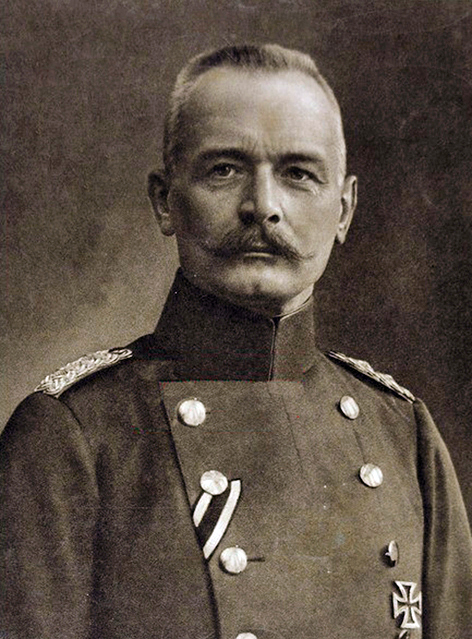
Erich von Falkenhayn
Former Minister of War of PrussiaWikipedia
30
MENTIONS
6
EPISODES
6
PODCASTS
Search complete. 30 mentions across 6 episodes found for "Erich von Falkenhayn".
Sep 14, 2026

Spencer JonesHOST
the evidence on this is pretty conclusive, that as the Somme continues, and this is a crucial point, if the Somme had ended on day one, it would not have relieved the pressure on Verdun.
Spencer JonesHOST
As the Somme continues, Falkenhayn has to shut down offensive operations on Verdun.
Spencer JonesHOST
Now, there is an argument that Verdun, from the German perspective, was reaching that stage anyway.
Spencer JonesHOST
But be that as it may, I think Falkenhayn, given the option, would have preferred to continue the offensive there.
Spencer JonesHOST
And he has to shut it down and shuttle more and more forces up to the Somme front instead, which in turn gives the French opportunity to counterattack at Verdun.
Spencer JonesHOST
And as we've discussed in our Verdun episodes, by the end of the battle, the French will have recovered most of the ground that they've lost.
23 MINS LATER
Spencer JonesHOST
And the Germans, who are not stupid, of course, German high command knows this.
Spencer JonesHOST
German high command has changed at the end of August.

Juan NaulaNARRATOR
In February 1915, Hindenburg surprised the Russians by launching an attack during a snowstorm at the Second Battle of the Masurian Lakes and once again inflicted more than 100,000 casualties on the enemy.
Juan NaulaNARRATOR
While Hindenburg believed that it was possible to win the war by defeating Russia in the east, Falkenhayn continued to insist that the path to victory lay on the western front.
Juan NaulaNARRATOR
The Chief of Staff aimed to maintain his authority over Hindenburg by reassigning Ludendorff to Galizia, but restored the partnership after both men threatened to resign and the Kaiser intervened on their behalf.
Juan NaulaNARRATOR
Falkenhayn was briefly persuaded to move the General Headquarters to the Eastern Front, and ordered a new offensive against the Russians in Galicia.
Juan NaulaNARRATOR
In May, a new army group of German and Austrian troops, commanded by August von Mackensen, launched an offensive that captured the cities of Gorlice and Tarnów in southeastern Poland.
Juan NaulaNARRATOR
Hindenburg's 9th and 10th armies played a supporting role in the north, on the Baltic coast.
Juan NaulaNARRATOR
In the meantime, Hindenburg managed to strengthen his defenses and stood firm against Russian attacks in the Baltic region to the north.
Juan NaulaNARRATOR
On the 27th of July, Hindenburg took command of part of the weakened Austrian army on the Eastern Front, and by the beginning of August, the Brusilov offensive ground to a halt.

Ted LeinhardtNARRATOR
As to the cause for this failure, there were two groups opposed to each other.
Ted LeinhardtNARRATOR
One, the Hindenburg-Ludendorff group, insisted bad German leadership to date, first under von Moltke and then under von Falkenhayn, was responsible.
Ted LeinhardtNARRATOR
The opposing group said not bad leadership but the pre-war plan of General von Schlieffen was responsible, the strategy of which was too complicated and depended upon more time for each step than the Germans had had.
Ted LeinhardtNARRATOR
This group were the backers of General von Falkenhayn and General von Moltke, von Hindenburg's predecessors as chief of staff.
Ted LeinhardtNARRATOR
The Hindenburg-Ludendorff group insisted, first, that had von Schlieffen's plan been carried out, France would have been knocked out in the first round before Russia could have entered the fight.
Ted LeinhardtNARRATOR
Second, that even after the failure to do this, Russia could have been knocked out before Britain produced an army if von Falkenhayn had had the courage to seek a decisive battle instead of trying the usury method of wearing the Russian army down to a point where it would be too weak to fight effectively.
Ted LeinhardtNARRATOR
They insisted that in each case, failure had been due to trying to play safe instead of following the bold policy of seeking great decisive victories, even though doing so meant risking defeat.
Ted LeinhardtNARRATOR
What was von Schlieffen's plan? Why did he make it? Why didn't the Germans follow it when war broke out in August 1914? To find the answer to these questions, it is necessary to go back for a moment to Frederick the Great.

Tom IzzettGUEST
So they appealed to Germany and said, we need a bit of help.
Tom IzzettGUEST
And so Falkenhayn sent a couple of divisions to Italy.
Tom IzzettGUEST
They came up with what they thought was a limited counterattack to push the Italians back a little way.
Tom IzzettGUEST
So they launched that counterattack on October the 25th, 1917, and the Italian Second Army completely collapsed.

Chad HammerHOST
E- and th- this wasn't quite him.
Chad HammerHOST
I would say it was more like a, a, not Fernand Foch, but a, a, a Erich von Falkenhayn.
Kevin DeannaHOST
Mm.
Chad HammerHOST
The German commander.
54 MINS LATER
Chad HammerHOST
Well, the great thing about Ludendorff- Well, I mean, uh, uh, Falkenhayn is clearly Perturabo, so- Oh, yeah ...
Chad HammerHOST
Falkenhayn- Yeah, yeah, yeah ...
Chad HammerHOST
if you wanna look at this comparison here, so you have, you know- Ludendorff, Ludendorff is- You got Erich von Falkenhayn, who at the beginning of the war- Mm-hmm ... was, like, very face forward in this shit.
Chad HammerHOST
Well, as they're going through Belgium and taking these Belgian, uh, town...

Ted LinhartNARRATOR
As to the cause for this failure, there were two groups opposed to each other.
Ted LinhartNARRATOR
One, the Hindenburg-Ludendorff group, insisted bad German leadership to date, first under von Moltke and then under von Falkenhayn, was responsible.
Ted LinhartNARRATOR
The opposing group said not bad leadership but the pre-war plan of General von Schlieffen was responsible, the strategy of which was too complicated and depended upon more time for each step than the Germans had had.
Ted LinhartNARRATOR
This group were the backers of General von Falkenhayn and General von Moltke, von Hindenburg's predecessors as chief of staff.
Ted LinhartNARRATOR
The Hindenburg-Ludendorff group insisted, first, that had von Schlieffen's plan been carried out, France would have been knocked out in the first round before Russia could have entered the fight.
Ted LinhartNARRATOR
Second, that even after the failure to do this, Russia could have been knocked out before Britain produced an army if von Falkenhayn had had the courage to seek a decisive battle instead of trying the usury method of wearing the Russian army down to a point where it would be too weak to fight effectively.
Ted LinhartNARRATOR
They insisted that in each case failure had been due to trying to play safe instead of following the bold policy of seeking great decisive victories even though doing so meant risking defeat.
Ted LinhartNARRATOR
What was von Schlieffen's plan? Why did he make it? Why didn't the Germans follow it when war broke out in August 1914? To find the answer to these questions it is necessary to go back for a moment to Frederick the Great.