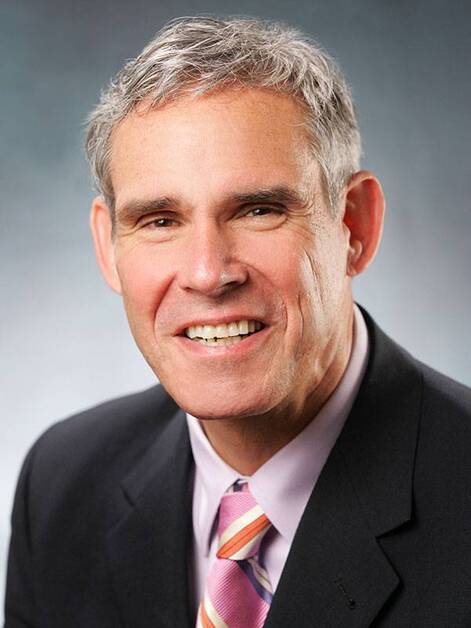
Eric Topol
American cardiologist and scientistWikipedia
26
MENTIONS
18
EPISODES
18
PODCASTS
Search complete. 26 mentions across 18 episodes found for "Eric Topol".
Sep 19, 2026

Roger SeheultHOST
Study identifies mitochondrial dysfunction as the cause of long COVID fatigue.
Roger SeheultHOST
You see here from Eric Topol as well, highlighting a number of studies looking at the microbiota and mitochondrial dysfunction as well.
Roger SeheultHOST
And way back, even as far back as April of 2020, we made the conclusion based on the studies that reactive oxygen species in the mitochondria was the result of ACE2 not being functional because of the virus.
Roger SeheultHOST
And because of that, you had an increase in angiotensin 2 and a decrease in angiotensin 1,7.

Andy MoyeGUEST
But the first self-driving Tesla that runs into a stop sign, you know, people lose their minds, right? Because the very low tolerance for this sort of machine error, even though the rate of error is so much smaller, right? And in fact, it'd be really interesting for your viewers to go look at this.
Andy MoyeGUEST
You know, Eric Topol, who's quite a renowned doctor and scientist here in the U.S., he, along with other physicians, just kind of penned a letter, and I can't remember if it was the New England Journal of Medicine or somewhere else, but had been essentially saying, like, the data around automated cars... is so good that if it was a drug, we would be out of our minds to not prescribe this drug everywhere because we're reducing deaths by 95%.
Andy MoyeGUEST
If we wanted to reduce car deaths by 95%, we essentially, everybody stopped driving, get an automated
speaker_0NARRATOR
car.

Ed CraneHOST
They also found that 25% of people were taking omega-3, the fish oil, or krill oil supplements, and nearly 20% were taking herbal supplements like ginseng.
Ed CraneHOST
Now, Dr. Eric Topol, who's a cardiologist and the founder of the Scripps Research Translational Institute, says there are good reasons to take the supplements, maybe to treat a nutrient deficiency or to prevent birth defects.
Ed CraneHOST
But he says most of these are a waste of money, and it's a lot of money.
Ed CraneHOST
The global supplement industry valued at $228 billion, with a B.

Eric TopolHOST
Okay.
Eric TopolHOST
I'm Eric Topol, and this is Ground Truth.
Eric TopolHOST
Thrilled that you're joining us today.
Eric TopolHOST
I have the real delight to, um, have this discussion with, uh, Marios Georgakis at, uh, the University of Munich, uh, who is a physician scientist, actually a neurologist who studies atherosclerosis, genomics, uh, particularly the cerebrovascular, but he certainly is tuned into the coronary and atherosclerosis anywhere in the body.

Linda BrubakerHOST
JAMA's latest episode of JAMA Plus AI Conversations has a fascinating conversation with Drs.
Linda BrubakerHOST
Roy Perlis and Eric Topol.
Linda BrubakerHOST
They discuss the science of aging, how to think about AI-enabled medicine, including what it will take for AI to move medicine from reactive to predictive.
Linda BrubakerHOST
They also talk about why some well-validated imaging AI remains underused while the large language models have spread rapidly and whether AI is actually giving clinicians more time with patients.

Roy PerlisHOST
[on-hold music] Welcome to JAMA+ AI Conversations.
Roy PerlisHOST
I'm Roy Perlis, editor-in-chief of JAMA+ AI, and I'm pleased to welcome today's guest, Dr. Eric Topol, cardiologist and founder and director of the Scripps Research Translational Institute, and one of those people who consistently ends up on the top 25 list of influential people in medicine.
Roy PerlisHOST
Dr. Topol's spent a couple of decades now writing about where medicine is going in books like "The Creative Destruction of Medicine," "The Patient Will See You Now," "Deep Medicine," and most recently, "SuperAgers: An Evidence-Based Approach to Longevity," which came out last year and has been on bestseller lists pretty much since then.
Roy PerlisHOST
He also writes Ground Truth, a widely read online publication, so he's busy.
22 MINS LATER
Eric TopolGUEST
I don't know that many people are talking about this yet, but I do think over time it will become the main agenda.
Roy PerlisHOST
It's a lot to look forward to.
Roy PerlisHOST
Dr. Eric Topol, thank you for talking with us about aging, about AI, about predicting the future.
Roy PerlisHOST
To our listeners, you can find links to Dr. Topol's recent work in the episode notes.

Andrew HubermanGUEST
... which kind of undercut the story.
Andrew HubermanGUEST
But anyway, I, listen, I think it's great that he's out there, just like I think it's great that, um, Matt Kaeberlein's out there and, um, Eric Topol.
Andrew HubermanGUEST
You need, this is one thing that people really need to understand about health and longevity in the online communities.
Andrew HubermanGUEST
In science, in medicine, and I observed this in the, in the world of skateboarding and, and action sports, you need a community, uh, that represent the sort of different extremes, right? In skateboarding we have our Tony Hawk, we had our, my friend Danny Way, who gr- jumped the Great Wall of China.

OmarGUEST
There's now been thousands of papers over the past few years showing the value of plasma proteomics.
OmarGUEST
There's a paper that came out last week that Eric Topol actually highlighted that gives you your risk of metabolic liver disease, which is basically the hundreds of millions of people end up with liver disease.
OmarGUEST
It's where your liver starts to break down.
OmarGUEST
It starts to become inflamed and fatty and stops to function.

Christina FarrHOST
He's the president of Microsoft.
Christina FarrHOST
And then a very old friend of mine, Chris Longhurst, who has a somewhat new job.
Christina FarrHOST
He's now the CEO of Seattle Children's.
Christina FarrHOST
So these two are like, you know, who I would be texting in an ideal world whenever any big news comes out about healthcare and AI, because they're just so knowledgeable and really always have just candid thoughts on what's going on in the industry.
25 MINS LATER
Peter LeeGUEST
And then the benefit for the organizations is it's again, eliminating coordination friction.
Christina FarrHOST
Yeah, I agree with that.
Christina FarrHOST
I had a great call with a friend yesterday who's at OpenAI and we talked a lot about prompt engineering and just getting into health systems and really doing some of that training.
Christina FarrHOST
Because right now, my physician friends that use the most or clinician friends that use the most AI are also the most technical.

Hatim Abdul-HusseinGUEST
Why don't we call this Building a Digital Ready Workforce Fellowship? Let's call it the Topol Fellowship.
Hatim Abdul-HusseinGUEST
And so we worked to get a sign off from Eric Topol and from Secretary of State at the time.
Hatim Abdul-HusseinGUEST
And the other really good thing was if you get it into policy, it's probably going to happen if there's enough drive around it.
Hatim Abdul-HusseinGUEST
And because it was in policy, it was in Topol review, Secretary of State had said that we were going to do it.
5 MINS LATER
Jing OuyangHOST
Why AI for you? And did you feel like you were quite early?
Hatim Abdul-HusseinGUEST
It at the time felt early because it was a challenge to get people to take you seriously.
Hatim Abdul-HusseinGUEST
And I think what really helped was the vision from the Topol review and Eric Topol himself.
Hatim Abdul-HusseinGUEST
I mean, there was no doubt that a visionary like that saw what was coming.
8 more episodes mention Eric Topol.
Create an account to see the whole feed, search across every transcript, and follow the entities you care about.