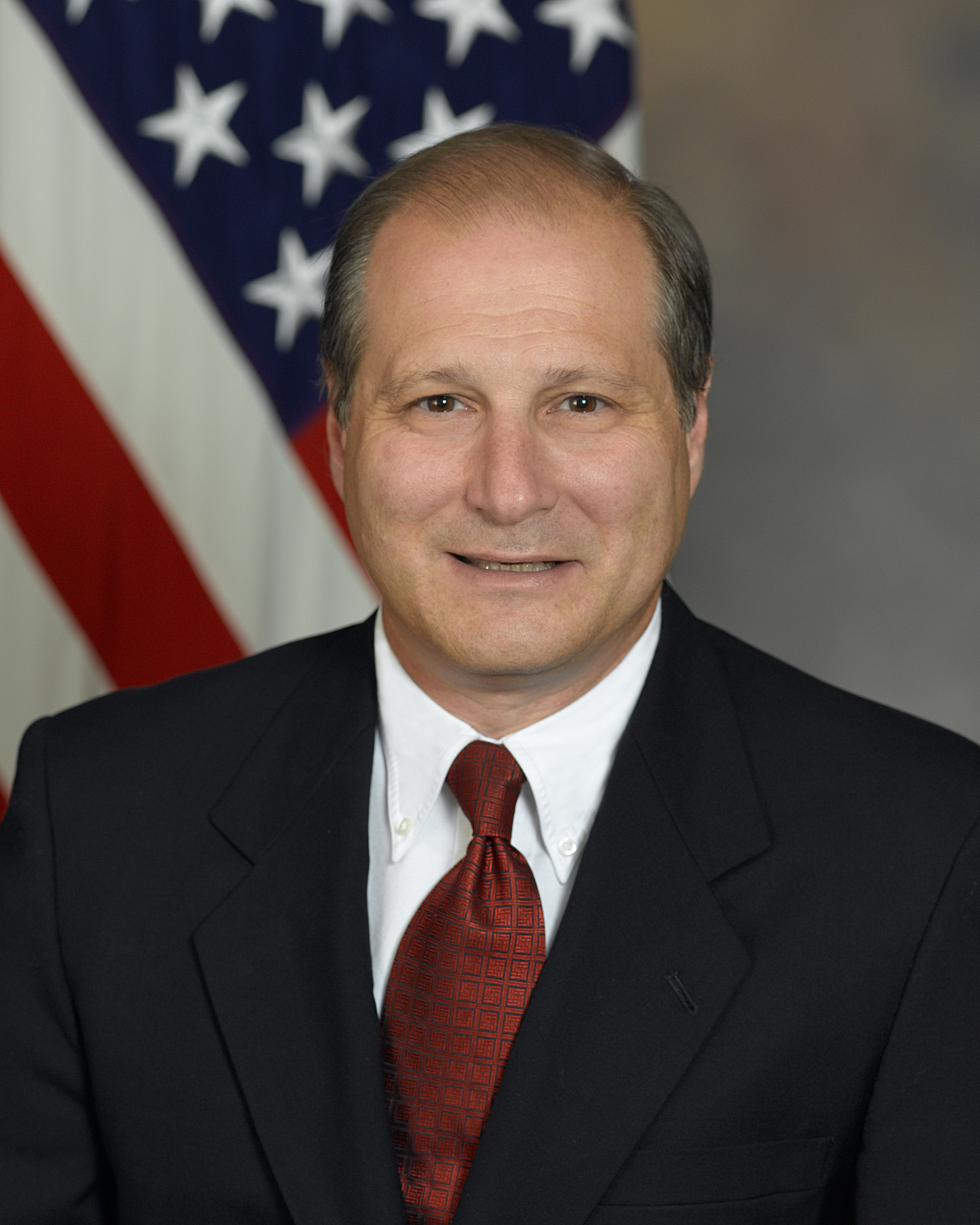
Eric S. Edelman
Former United States Under Secretary of War for Policy
9
APPEARANCES
8
PODCASTS
Sep 9, 2026


Roger ZakheimHOST
Why, why do you think it merits inclusion as something worth, uh, celebrating and recognizing as we look ahead?
Eric EdelmanGUEST
ahead?Uh, well, uh, it's got, um, actually a lot that is very timely for consideration in our own time as people focus, for instance, on the, uh, parlous state of our defense industrial base and how are we gonna replenish the stocks of weapons that have been expended, uh, in, um, both i- in support of Ukraine, but also, uh, as part of, uh, the 12-day war last, uh, spring, a year ago, and, um, and of course, in the, uh, current conflict with Iran, where, where a lot of munitions have been expended.
Eric EdelmanGUEST
Um, so really, I think you have to go back before Reagan becomes president to understand, uh, the buildup.
Eric EdelmanGUEST
I mean, the, the US military was coming out of a particularly difficult time, uh, because it was the post-Vietnam, uh, e- era.
Eric EdelmanGUEST
It, it was an era in which people were talking about a hollow military because we, uh, began cutting defense spending after having spent enormous amount of treasure in, in Vietnam.
Eric EdelmanGUEST
And in a period when the Soviet Union had been building up its, uh, nuclear forces to nuclear parity with the United States, which, uh, r- really affected the freedom of action of, uh, successive US presidential administrations.
Eric EdelmanGUEST
Um, this was, uh, something that, um, was leading a lot of people at the time, uh, towards the mid, uh, late '70s, to believe that the US was in decline.
14 MINS LATER
Roger ZakheimHOST
Um, but talk about, you know, the sort of the we win, they lose and how peace through strength figures into it, because that, that was building for some time.


Vago MuradianHOST
Walk us through this dynamic and what we need to understand about this new nuclear era and what differentiates it from what we saw during the Cold War, which is sort of the mental model that still people carry with them.

Eric EdelmanGUEST
And I think Admiral Richard, who is a terrific STRATCOM commander, was maybe one of the first people to refer to this as the three-body problem, which is that, you know, in physics, in astrophysics, the rotation of one body around another is pretty stable.
Eric EdelmanGUEST
But if you have three celestial bodies all in near proximity trying to rotate around each other, it's a very unstable system.
Eric EdelmanGUEST
And of course, it was also the title of the great Chinese science fiction work by Xi Jinping and a Netflix series.
Eric EdelmanGUEST
So it's become a metaphor for the fact that in the Cold War, after about a decade, we were able to develop a system theory of strategic stability that while sometimes contested has been the dominant theory underpinning nuclear deterrence which is that you need not just the existence of a nuclear deterrent but you need to be able to ride out a first strike by your adversary and have sufficient retaliatory capability that you can impose on acceptable costs on the adversary.
Eric EdelmanGUEST
And that was the so-called balance of terror that was described in the late 1950s, early 1960s by Albert Wohlstetter.
9 MINS LATER


Bill KristolHOST
there's been media reporting on this for the last four or five, six months, right? Yes, of
Eric EdelmanGUEST
And, and the president says those reports are treasonous and we're going to find the leakers who are saying all this as, as if, I mean, this is, I mean, the specific numbers of many of these munitions, particularly the high end specialized munitions like Tomahawk land attack missiles or, or, Patriot and THAAD, that's the Terminal High Altitude Air Defense Missile Interceptors.
Eric EdelmanGUEST
The holdings are specific number classified, but you can discern from open source budget documents, the numbers that have been procured over the number of years we've had, and you can count up the number of strikes we've executed with these munitions and come up with pretty good rough estimate of how many we have left in the tank.
Eric EdelmanGUEST
And this is not something our adversaries don't know, obviously, right? They're doing the same kind of analysis.
Eric EdelmanGUEST
So Secretary Hegseth, interestingly, you know, sort of blamed two people, you know, which was his deputy, Steve Feinberg, which is really ironic because by all accounts, Feinberg is one of the few points of light in the Hegseth Defense Department and has been working very hard on the munitions problem, which is a twofold problem.
29 MINS LATER
Bill KristolHOST
You can make a case that the promotion process is a little ossified and all these things you would, you've dealt with them over the years, but how much of, I don't know, how much effect has it had? What's the upshot of all of that? How much of it is politicization? How much of it is a consolidation of power with the sec, secretary of defense? Um, And how worried are you about what it's left us with and what these, as you say, the second order kind of knock-on effects are down through the military?


Eric EdelmanGUEST
interesting because, you know, Elliot and I were talking about this last week on, on shield of the Republic.
Eric EdelmanGUEST
We were talking about Rahm Emanuel's speech in Israel and the criticism, et cetera.
Eric EdelmanGUEST
You know, one of the things that really struck me is that when you look at what's happening in the democratic party.
Eric EdelmanGUEST
I mean, so we were just talking about Biden having stood by Israel, all the people who are involved in that Jake Sullivan, John Feiner, you know, Anthony Blinken, the secretary of state are now being pilloried by the progressive left inside the democratic party.
8 MINS LATER


Bradley BowmanHOST
Uh, what's your take, uh, on the, uh, the Trump administration's budget request?
Eric EdelmanGUEST
So, um, a- as you said, uh, Brad, I mean, because we're facing such a difficult situation and because, uh, we're sitting at the cusp of a, you know, pretty serious change in the character of warfare, and we've, we've seen that on the battlefield in Ukraine in spades, and we're now been seeing it in the war that's been going on, uh, with Iran, both in the twelve-day war that went on in, um, June of twenty twenty-five and now the, the renewed conflict this spring.
Eric EdelmanGUEST
Um, a- and, and so we need to move away from a lot of the traditional, um, procurement of, you know, um, material in the program of record towards, uh, you know, more emphasis on, um, cheap but tradable, uh, autonomous systems.
Eric EdelmanGUEST
Um, uh, the Department of Defense in, in a very, very slow way started that process actually in the Biden administration.
Eric EdelmanGUEST
Uh, we need to move out, you know, m- more rapidly, um, a- and with a greater sense of urgency on that.
40 MINS LATER


Nick SchifrinHOST
What is the longer term impact? What's the impact on the trust between Europe and the United States?
Eric EdelmanGUEST
Well, all of the things that Ambassador Sands has talked about could have been discussed and, um, negotiated with Denmark and with other NATO allies without recourse to, uh, threats of either military action or tariffs, which seem particularly inappropriate.
Eric EdelmanGUEST
I mean, when Secretary Bessent was asked under what authority these tariffs were gonna be levied, it was under a emergency, the IEEPA emergency tariff, uh, w- which is before the Supreme Court right now.
Eric EdelmanGUEST
But when asked what emergency this was, you know, meant to prevent, he said, "It's an emergency to prevent an emergency," which is doubletalk and nonsense.
Eric EdelmanGUEST
So, um, you know, all of this could have been done i- in a way that didn't arouse all of the concerns that Matthias just, you know, spoke-
9 MINS LATER
Eric EdelmanGUEST
Well, I, I would just say this, which is, you know, after World War II, in 1946, Secretary of State James Byrne sat down with his then Danish counterpart to discuss these very issues.


Dan Kurtz-PhelanHOST
And, and Eric, you as someone who has, um, been a supporter of this kind of military action, though not a supporter of the Trump Administration, I should add, how would you define success? If, you know, a year from now as we're trying to judge whether this was, uh, a good use of American military force and smart US policy or not, what makes this successful and what would make it a failure to your mind?
Eric EdelmanGUEST
Well, so I agree with Suzanne, uh, which is that given what the Israelis had already done in their campaign, I think it would've been irresponsible to allow Fordo to continue to exist and have an angry, pissed-off Iran, uh, with still a lot of enrichment capability and a lot of centrifuges at its disposal.
Eric EdelmanGUEST
So I, I think in some sense, you know, once this Israeli campaign got going, the die was almost, you know, cast.
Eric EdelmanGUEST
You know, what, what will be measured by success? Again, I think we're gonna have to see how a few things play out.
Eric EdelmanGUEST
One, you know, Suzanne made a really powerful point which is, Iran's response options were really all terrible when you, you know, sort of think about them and go through them systematically.
26 MINS LATER
Dan Kurtz-PhelanHOST
Pick up on that, that argument, but also how you see the kind of nuclear dimension of this going forward.

Eric EdelmanGUEST
Um, uh, y- you know, th- this is a demonstration that, um, uh, you know, President Putin i- i- you know, is not all that anxious to, you know, come to the defense of some of his putative allies.
Eric EdelmanGUEST
Th- and when Putin was asked about all this, it was before the US strike of course, but, uh, he, he said, "Well, you know, Israel is, you know, practically a Russian country.
Eric EdelmanGUEST
There are two million, you know, Russian citizens living in Israel, so, I mean, I can't, you know, join in, in a fight against them." So, uh, you know, that's, you know, one, one thing.
Eric EdelmanGUEST
Um, on, on the Pentagon, look, I think all the concerns about Secretary Hegseth remain.
Eric EdelmanGUEST
I mean, I, you know, that nothing changed, nothing that's happened here has changed my view of any of that.
Eric EdelmanGUEST
I would say, however, that, um, you know, this was a demonstration of the professionalism of the US military and their enormous skill, and I would say in the, um, press conference this morning that General Kane, the new Chairman of Joint Chiefs of Staff, acquitted himself extremely well.
23 MINS LATER

Amna NawazHOST
that's pushing for talks or that's preparing for more of a military effort in some way?
Eric EdelmanGUEST
Well, I think the president obviously has expressed in the past that he would prefer a diplomatic solution, uh, but has been frustrated in, in that effort for a variety of reasons.
Eric EdelmanGUEST
I think now the administration, uh, and the president and his colleagues today are facing up to a very difficult reality which is that Israel has done enormous damage, uh, to, uh, Iran's nuclear program, but it is not able to completely eliminate it, uh, because of a lack of certain military capabilities which the U.S. possesses.And so the challenge he now faces is whether the worst outcome would be to leave a- an Iran that has been, uh, damaged, humiliated, but still has the capability of reconstituting its nuclear program.
Eric EdelmanGUEST
I mean, this is a- a country that, um, since the revolution has been founded on the notion of death to America and death to Israel.
Amna NawazHOST
And is that something, is that a step that you believe the US should take in order to fully wipe out the nuclear program? What would you recommend to the President at this point?
Eric EdelmanGUEST
I- I think at this point, uh, the idea of allowing Iran to, um, have a residual capability to reconstitute its nuclear program, given everything that's happened, uh, would be catastrophic for the region, for Israel, and for the United States.