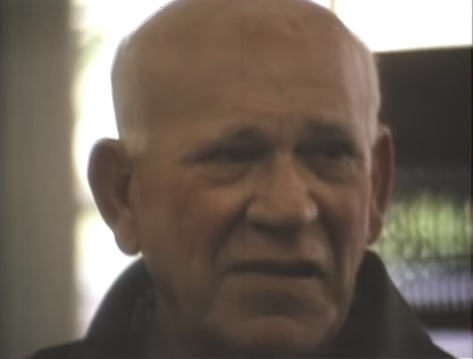
Eric Hoffer
American philosopher and social criticWikipedia
25
MENTIONS
15
EPISODES
14
PODCASTS
Search complete. 25 mentions across 15 episodes found for "Eric Hoffer".
Sep 18, 2026

Robert McTeigueHOST
But I do know that people tend to have a very unhappy relationship with time.
Robert McTeigueHOST
I found a quote recently from an author named Eric Hoffer.
Robert McTeigueHOST
He said this, The feeling of being hurried is not usually the result of living a life and having no time.
Robert McTeigueHOST
It is, on the contrary, born of a vague fear that we are wasting our life.
Robert McTeigueHOST
When we do not do the one thing we ought to do, we have no time for anything else.
Robert McTeigueHOST
So says Eric Hoffer.
Robert McTeigueHOST
People who are happy and have a sense of fulfillment, recognizing that they're living with a sense of purpose, they might be busy, but they don't feel rushed.
Robert McTeigueHOST
So I think what Hoffer is saying is that We feel hurried because we have this anxiety that we're very busy doing something less than, other than what we're supposed to be doing.

Ryan HolidayHOST
Welcome to the Daily Stoic Podcast, designed to help bring those four key stoic virtues, courage, discipline, justice, and wisdom into the real world.
Ryan HolidayHOST
When he was young, the future General James Mattis hitchhiked to San Francisco to meet Eric Hoffer, the philosopher most famous for his book, The True Believer.
Ryan HolidayHOST
And there, talking with Hoffer, James Mattis was told, "Make sure you write down everything interesting that you find." "And I have ever since," he said.
Ryan HolidayHOST
It's wonderful advice.

Josh HowardHOST
Today, Corey, you and I are going to talk about two different works, really one in general.
Josh HowardHOST
um so a mutual of ours was reading through this book uh by eric hoffer and it's an older book it's from 1951 but it's called the true believer thoughts on the nature of mass movements and it's essentially um again hoffer writing from an atheist perspective he's not writing from some sort of christian ideal and yet he's trying to answer why do ordinary people become fanatical participants in these revolutionary political nationalistic or religious movements This is essentially the question that he's asking, and I thought it was stirring for a couple of reasons.
Josh HowardHOST
Number one, I think that we can sort of plunder the Egyptians when we come to these sort of things.
Josh HowardHOST
I think there's some nuggets of wisdom in the in the work.
Corey WingHOST
hour and a half for better, about a number of different things, a lot of them theological.
Corey WingHOST
And he sees the world that's happening around him because how could you not? You know, Lindsay Clancy got brought up more than once and, you know, what's happened there and how one man was able to kind of stand against insanity uh so so to your point i think this effect it's probably a better word that you know it's not bad to notice things but we are living in a day and an age and i want to be fair here we are living in a day and an age where a lot of the aforementioned angry young men say that they are vilified for just quote noticing things you know well i just noticed you know xyz but but again that's one of the things you hear from these angry young men were to be afraid of is i've just noticed xyz whatever they've noticed um a lot of conspiratorial stuff typically So to say that they're disaffected and that they've noticed certain patterns or certain things, well, I mean, that doesn't make them untrue.
Corey WingHOST
And I think that's a perfect lead in for this book that we're talking about, because I think that's what this, you know, Eric Hoffer has tried to do is he's trying to say there are patterns.
Corey WingHOST
I've noticed some things.

Mia HughesGUEST
They lay all the groundwork.
Mia HughesGUEST
And so from there I just re-read the book True Believer by Eric Hoffer.
Peter BoghossianHOST
Oh, the 1951 book.
Mia HughesGUEST
That's right, that's right.
Mia HughesGUEST
And when you read it, I've read it before, but when I read it this time, it was perfectly describing what we are still currently in the midst of, how these individuals, trans-identified individuals in the grips of this overvalued belief, unleashed a mass movement.
Mia HughesGUEST
And mass movements, like Eric Hoffer's book, is about the true believer, which is...
Peter BoghossianHOST
Give me the stages.
Peter BoghossianHOST
Talk to me about the stages.

speaker_1NARRATOR
Para ser grosero no se necesita nada de inteligencia.
speaker_1NARRATOR
Eric Hoffer dijo: "La rudeza es la imitación de fortaleza de un hombre débil".
speaker_1NARRATOR
Escuchemos al pastor Rick en la segunda parte de la enseñanza titulada Mostrando respeto.
Rick WarrenHOST
Eric Hoffer dijo: "La rudeza es la débil imitación de fortaleza de un hombre débil".
Rick WarrenHOST
Para ser grosero no se necesita nada de inteligencia.
Rick WarrenHOST
Es como la profanidad.
Rick WarrenHOST
Lucas seis treinta y uno nos dice esto: traten a los demás tal y como quieren que ellos los traten a ustedes.
Rick WarrenHOST
Eric Hoffer dijo: la rudeza es la débil imitación de fortaleza de un hombre débil.
Rick WarrenHOST
Para ser grosero no se necesita nada de inteligencia.
Rick WarrenHOST
Es como la profanidad, no se necesita inteligencia para decir malas palabras.

Brian O'SheaHOST
I recommend everyone get a copy of this.
Brian O'SheaHOST
It was written in 1951 by Eric Hoffer.
Brian O'SheaHOST
Eric Hoffer is not an academic.
Brian O'SheaHOST
He was like a longshoreman who just watched people, apparently.
Brian O'SheaHOST
But it's all about, and just so you know, it's about he's the guilt-ridden hitchhiker who thumbs a ride on any cause from ultra-conservatism to communism.

Jack ArmstrongHOST
Yeah.
Jack ArmstrongHOST
Oh, there it is, my favorite Eric Hoffer quote, "For many people an excuse is better than an achievement because an achievement, no matter how great, leaves you having to prove yourself again in the future.
Jack ArmstrongHOST
But an excuse can last for life."
Joe GettyHOST
Yeah, I, I watch out for that in my kids all the time.

Pete QuiñonesHOST
I want to welcome everyone to my next reading.
Pete QuiñonesHOST
I just finished reading, well, I didn't finish True Believer by Eric Hoffer.
Pete QuiñonesHOST
I just became, I mean, I did what a lot of us do.
Pete QuiñonesHOST
You read a book, and I told you I was reading it with you.

Pete QuiñonesHOST
I just finished reading...
Pete QuiñonesHOST
Well, I didn't finish True Believer by Eric Hoffer.
Pete QuiñonesHOST
I just became...
Pete QuiñonesHOST
Oh, I mean, I did what a lot of us do.
5 more episodes mention Eric Hoffer.
Create an account to see the whole feed, search across every transcript, and follow the entities you care about.