Epithelial–mesenchymal transition
9
MENTIONS
3
EPISODES
2
PODCASTS
Search complete. 9 mentions across 3 episodes found for "Epithelial–mesenchymal transition".
Oct 2, 2026

Dave KrullHOST
Remodeling the tumor microenvironment.
Dave KrullHOST
The study’s pathway analyses showed enrichment in biological processes related to extracellular matrix organization, collagen metabolism, integrin signaling, epithelial-mesenchymal transition, EMT-associated pathways.
Dave KrullHOST
These pathways are commonly associated with tissue remodeling, cell migration, and tumor invasion.
Dave KrullHOST
The authors propose that MECs may help create a microenvironment that facilitates cancer cell movement and metastatic spread.

Daniel J. GuerraHOST
And I was thinking about it when I was given the last lecture.
Daniel J. GuerraHOST
And so this is what I collected from that and now transforming it into kind of like an EMT, right? Into just like one clear statement.
Daniel J. GuerraHOST
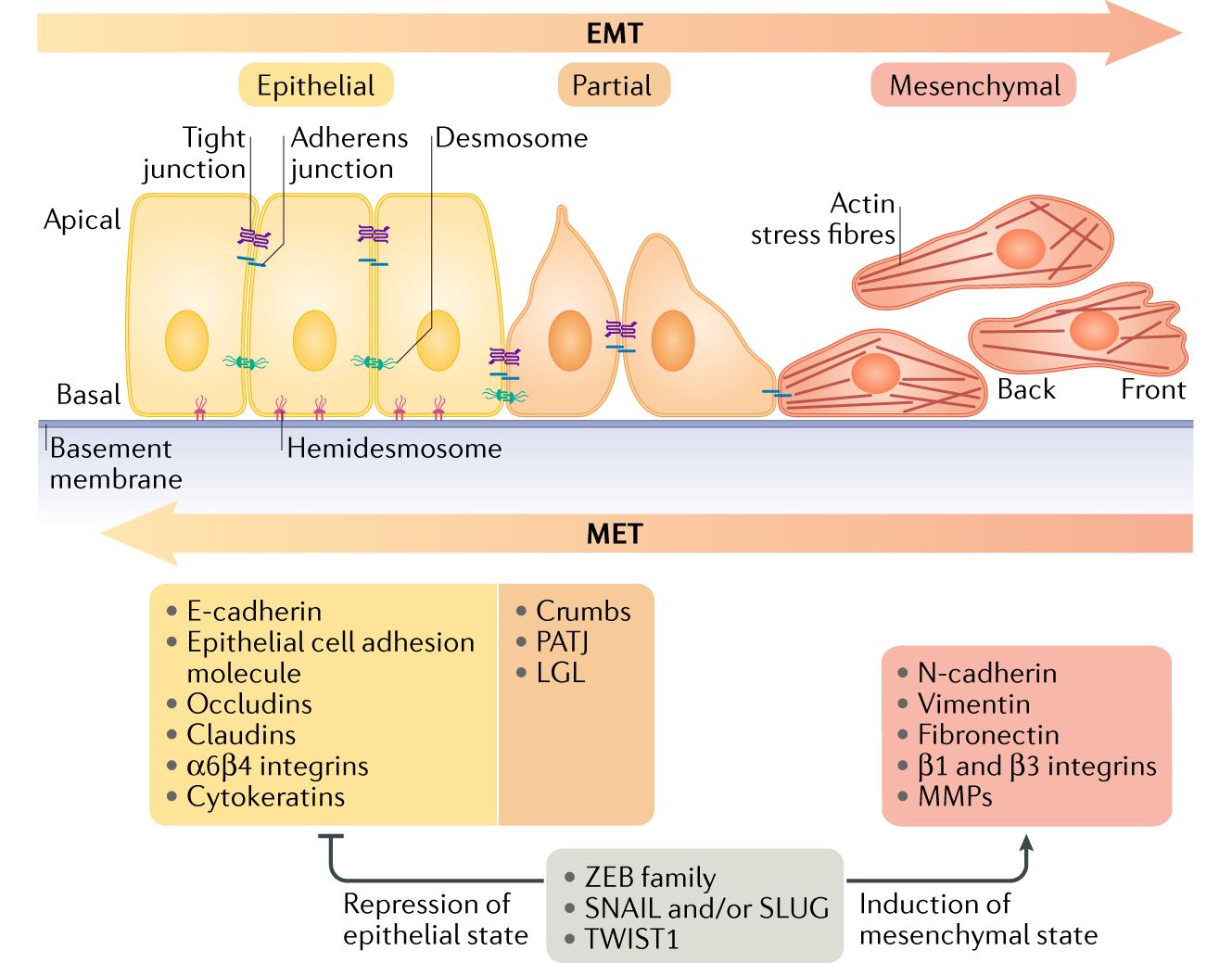
Now think about what I'm going to say relative to the regulation of cells moving from being epithelial to being mesenchymal, which then means they're moving through essentially a de-differentiation.
Daniel J. GuerraHOST
They're no longer really epithelial cells.
Daniel J. GuerraHOST
You may be able to measure the marker's quantity.
Daniel J. GuerraHOST
That may go up and down.
Daniel J. GuerraHOST
And you might say, oh, when it increases, we see, for example, an EMT event.
Daniel J. GuerraHOST
But that doesn't mean that was necessarily associated with that quantitative change.
Daniel J. GuerraHOST
So what we discuss is the endothelial mesenchymal transition.
Daniel J. GuerraHOST
The EMT.
Daniel J. GuerraHOST
Okay? That's how we start looking at transformed cells that become cancer cells.
Daniel J. GuerraHOST
So let's get into this discussion.
Daniel J. GuerraHOST
Remember, succinate dehydrogenous, and on and on and on, which is actually complex to an electron transport channel.
Daniel J. GuerraHOST
Stuff you should have in your mind.
Daniel J. GuerraHOST
So remember, when you start with acetyl-CoA, you're synthesizing all these other carboxylic acids, right? So all of them are used as acylation tools to control gene expression, which is involved in morphological and such things as EMT transitions.
Daniel J. GuerraHOST
Cancer cells.