Eocene
Geologic periodWikipedia
130
MENTIONS
43
EPISODES
37
PODCASTS
Search complete. 130 mentions across 43 episodes found for "Eocene".
Oct 1, 2026

Neil HerbertHOST
Now, parts of the surrounding area have genuine geological and botanical significance.
Neil HerbertHOST
The nearby Baciu Gorge, for example, is a protected natural area formed in Eocene limestone.
Chris FlynnHOST
Oh.
Neil HerbertHOST
Yet only for the second half of the 20th century-

speaker_2NARRATOR
By the time Berruornis was alive, the basic owl body plan was already taking shape.
speaker_2NARRATOR
By the Eocene epoch, around 50 million years ago, owl diversity had increased, and several distinct lineages were already present.
speaker_2NARRATOR
The Eocene was a time of warm climates and dense forests across much of the world, and it appears to have been a productive period for early owl evolution.
speaker_2NARRATOR
Fossils from the Eocene include Protostrix, found in Wyoming, which had large eye sockets suggesting it was already adapted for nocturnal or low-light hunting.
speaker_2NARRATOR
The oversized orbits of Protostrix tell us that the move toward nocturnal life, one of the defining features of modern owls, was already well underway fifty million years ago.
speaker_2NARRATOR
The split between the two modern owl families, Tytonidae and Strigidae, is thought to have occurred sometime during the Eocene or early Oligocene.
speaker_2NARRATOR
By that point, the two lineages were already diverging, developing the slightly different body plans and facial structures that distinguish barn owls from true owls today.
speaker_2NARRATOR
Ancient barn owl relatives have been found in fossil deposits across Europe, and they were once more diverse than they are today.

David StrassmanHOST
There we go.
David StrassmanHOST
The Eocene-Miocene
Melanie DuringGUEST
thermal maximum as well.
Melanie DuringGUEST
It was a very tropical lagoon, especially Europe.
Melanie DuringGUEST
As soon as Europe floods- Wait a minute, there was the thermal
David StrassmanHOST
maximum in the Miocene as well as the- That's the
Melanie DuringGUEST
Eocene.
Melanie DuringGUEST
Eocene-Miocene.

Elliot NewtonHOST
and it's all about the evolution of horses more generally.
Elliot NewtonHOST
So horses, obviously we all know what horses are, but horses evolved about 55 million years ago in the Eocene.
Elliot NewtonHOST
When they started, they were these tiny little dog things with very short legs, and they started to evolve longer legs, then grasslands started to evolve, and they started to become these grassland species.
Elliot NewtonHOST
And then about five million years ago, that's when the horses that we read, the equus genus that we recognise today, started to come about.

Ben TuckerNARRATOR
Students have always thought conception formed from morbid imaginative treatment of very ancient tropical radiata, also like prehistoric folklore things Wilmarth has spoken of, Cthulhu cult appendages, etc.
Ben TuckerNARRATOR
Vast field of study opened, deposits probably of late Cretaceous or early Eocene period, judging from associated specimens, massive stalagmites deposited above them.
Ben TuckerNARRATOR
hard work hewing out but toughness prevented damage state of preservation miraculous evidently owing to limestone action no more found so far but will resume search later job now to get fourteen huge specimens to camp without dogs which bark furiously and can't be trusted near them with nine men three left to guard the dogs we ought to manage the three sledges fairly well though wind is bad must establish plain communication with mcmurdo's sound and begin shipping material but i've got to dissect one of these things before we take any rest wish i had a real laboratory here dyer better kick himself for having tried to stop my westward trip first the world's greatest mountains and then this if this last isn't the high spot of the expedition i don't know what is we're made scientifically congrats peabody on the drill that opened up the cave now will arkham please repeat description the sensations of peabody and myself at receipt of this report were almost beyond description nor were our companions much behind us in enthusiasm mcteague who had hastily translated a few high spots as they came from the droning receiving set wrote out the entire message from his shorthand version as soon as lake's operator signed off all appreciated the epoch-making significance of the discovery and i sent lake congratulations as soon as the arkham's operator had repeated back the descriptive parts as requested and my example was followed by sherman from his station at the mcmurdo sound supply cache as well as by captain douglas of the arkham later as head of the expedition I added some remarks to be relayed through the Arkham to the outside world.
Ben TuckerNARRATOR
Of course, rest was an absurd thought amidst this excitement, and my only wish was to get to Lake's camp as quickly as I could.

Kaylee JohnsonHOST
yeah well it there's different ways to slice the cake on this one and i think i'm used to using the the epics for the paleogene and the neogene which is why it's it's throwing me off because i worked in the eosine to the myosine and pliocene i just
Kelsey MillsHOST
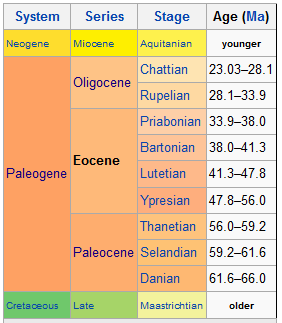
worked in all of it i guess so So for the Cenozoic epics, we've got, you know, like our Paleocene, Eocene, Oligocene, Miocene, Pliocene, Pleistocene, Holocene.
Kelsey MillsHOST
And I'm going to throw this one in here just because I think it's become more relevant and I've seen it mentioned in a few more papers now than I did like 10 years ago.
Kelsey MillsHOST
One known as the Anthropocene, which is essentially... an epic for where we really start seeing

Carlos GiménezGUEST
So we're destroying the planet with ten percent of point zero four percent.
Carlos GiménezGUEST
That's why it's insane, okay? And so, um, and so, you know, I also talk about the Eocene epoch, uh, twenty, thirty million years ago.
Carlos GiménezGUEST
What was the carbon dioxide percentage? What were the temperatures back then? Which were, by the way, fourteen to twenty-seven degrees warmer than they are today, okay? And you know who did really well during the Eocene epoch? What, what kind of animal did really well? Primates.
Carlos GiménezGUEST
We're primates.
Dave RubinHOST
Yeah.
speaker_1HOST
The bear family has been present on Earth for a long time.
speaker_1HOST
The earliest known ancestors of modern bears appeared roughly thirty-eight million years ago during the late Eocene epoch.
speaker_1HOST
These early bear relatives were small, dog-sized animals that looked quite different from the bears we recognize today.
speaker_1HOST
The oldest known member of the family Ursidae proper is Ursavus, a small bear-like animal that lived in Europe and Asia around twenty million years ago.
speaker_1HOST
Over millions of years, the descendants of these early bears gradually increased in size, developed broader skulls, and shifted toward the more omnivorous diets that characterize most modern species.
speaker_1HOST
The story of bear evolution is, in some respects, a story about how one basic body plan, large, omnivorous, adaptable, was refined and redirected over tens of millions of years to fit an extraordinary range of environments.
speaker_1HOST
The early bear ancestors that appeared in the Eocene were generalized forest-dwelling animals, not particularly distinguished from the other small carnivores of their time.
speaker_1HOST
What set them apart in retrospect was a tendency toward dietary flexibility and a body plan that could scale up without losing its fundamental functionality.

65TucksNARRATOR
Next comes the period known as the Cambrian, and to it we may similarly assign about two and a half aeons on like grounds.
65TucksNARRATOR
the cambrian epoch begins with a fair sprinkling of the lower animals and plants presumably developed during the preceding age but it shows no remains of fish or any other vertebrates to the silurian devonian and carboniferous periods we may roughly allow an eon and a fraction each while to the whole group of secondary and tertiary strata comprising almost all the best-known English formations, red marl, lias, oolite, greensand, chalk, eocene, miocene, pleocene, and drift, we can only give a single eon to be divided between them.
65TucksNARRATOR
Such facts will sufficiently suggest how comparatively modern are all these rocks when viewed by the light of an absolute chronology.
65TucksNARRATOR
now the first fishes do not occur until the silurian that is to say in or about the seventh eon after the beginning of geological time the first mammals are found in the trias at the beginning of the tenth eon and the first known bird only makes its appearance in the oolite about half-way through that latest period this will show that there was plenty of time for their development in the earlier ages true we must reckon the interval between ourselves and the date of this blue mud at many millions of years but then we must reckon the interval between the lias and the earliest Cambrian strata at some six times as much, and between the lias and the lowest Laurentian beds at nearly ten times as much.
65TucksNARRATOR
For example, the earliest ancestral horse is partly a horse and partly a tapir.
65TucksNARRATOR
We may regard him as a tertium quid, a middle term, from which the horse has varied in one direction and the tapir in another, each of them exaggerating certain special peculiarities of the common ancestor and losing others in accordance with the circumstances in which they have been placed.
65TucksNARRATOR
Science is now perpetually discovering intermediate forms, many of which compose an unbroken series between the unspecialized ancestral type and the familiar modern creatures thus in this very case of the horse professor marsh has unearthed a long line of fossil animals which lead in direct descent from the extremely unhorselike eocene type to the developed arab of our own times similarly with birds professor huxley has shown that there is hardly any gap between the very bird-like lizards of the lias and the very lizard-like birds of the Oolite.
65TucksNARRATOR
Such links, discovered afresh every day, are perpetual denials to the old parrot-like cry of no geological evidence for evolution.
33 more episodes mention Eocene.
Create an account to see the whole feed, search across every transcript, and follow the entities you care about.