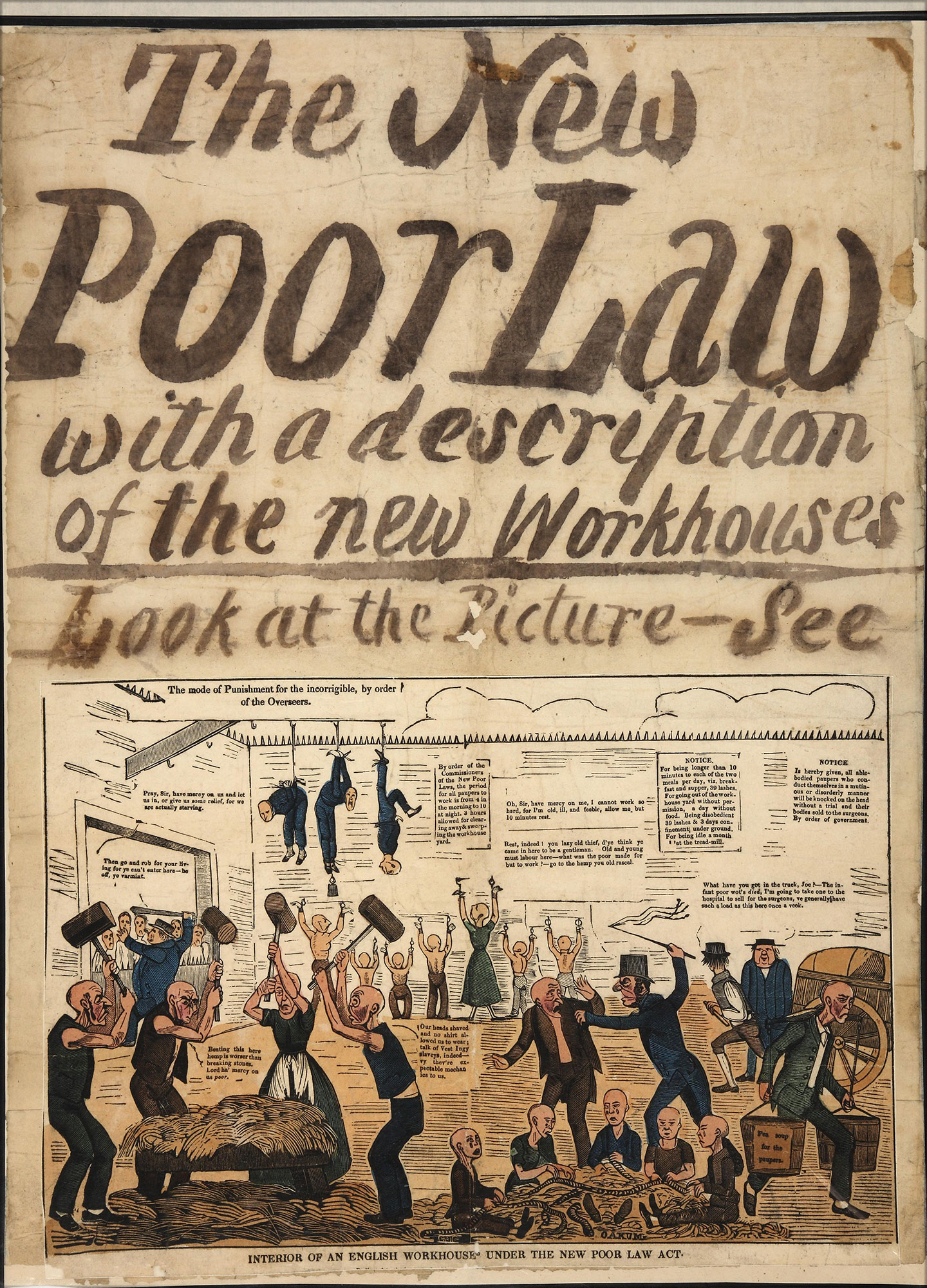
English Poor Laws
5
MENTIONS
4
EPISODES
4
PODCASTS
Search complete. 5 mentions across 4 episodes found for "English Poor Laws".
Sep 17, 2026

Jacqueline RidingGUEST
There's no welfare state at all until after the Second World War.
Jacqueline RidingGUEST
The Poor Law only got got rid of completely after the Second World War, when the welfare state comes in.
Jacqueline RidingGUEST
It finally gets, um, officially, um, removed.
Jacqueline RidingGUEST
But that's what everyone was relying on, if you really fell on hard times before the Second World War-
Maddy PellingHOST
Mm
Jacqueline RidingGUEST
... was the Poor Law, which was first-
Maddy PellingHOST
It's quite shocking to think that reaches so far
Jacqueline RidingGUEST
... established in the Elizabeth I, or was it, uh, James the, I think it's the final year of Elizabeth I's reign.

Kyle MunleyNARRATOR
"Are they still in operation?" "They are.
Kyle MunleyNARRATOR
Still," returned the gentleman, "I wish I could say they were not." "The Treadmill and the Poor Law are in full vigour, then?" said Scrooge.
Kyle MunleyNARRATOR
"Both very, sir." "Oh! I was afraid, from what you said at first, that something had occurred to stop them in their useful course," said Scrooge.
Kyle MunleyNARRATOR
"I'm very glad to hear it." Under the impression that they scarcely furnish Christian cheer of mind or body to the multitude, returned the gentlemen.

Christopher ReynoldsGUEST
1595, not 16, but 1595.
Christopher ReynoldsGUEST
And it was the Poor Laws, the Elizabethan Act, And it was to do to help people who'd come into the cities, were in poverty and couldn't find work and had resorted to crime.
Christopher ReynoldsGUEST
You know, you may know that the Oliver Twist story, you know, the boy ends up in an orphanage and, you know, and here's this gang running around and stealing things.
Christopher ReynoldsGUEST
And he has the work for the gang and he ends up in the orphanage.