Emotional contagion
62
MENTIONS
13
EPISODES
13
PODCASTS
Search complete. 62 mentions across 13 episodes found for "Emotional contagion".
Nov 4, 2026

Diane DucarmeHOST
Can we experience stress that doesn't originate with us? And could that stress matter for migraine? So the emotion we're going to focus on is stress, but it does apply to many other emotions such as anger, grief, etc.
Diane DucarmeHOST
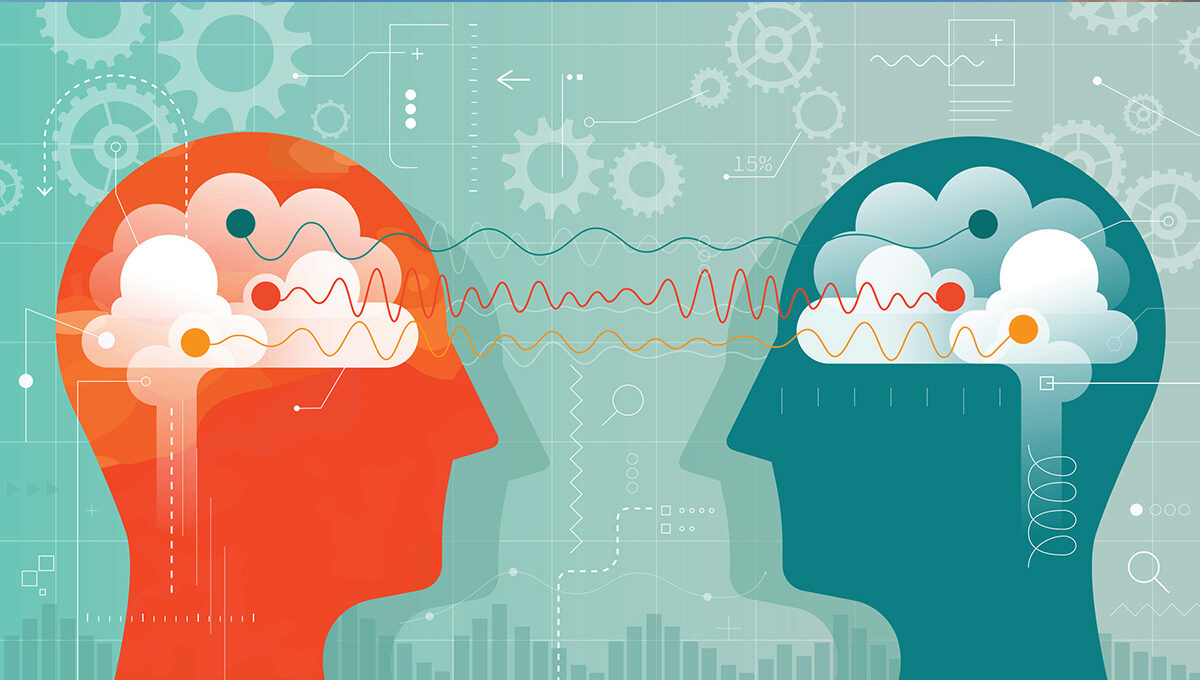
So in psychology, there's a concept called emotional contagion, and it's going to describe how emotions can spread between people through facial expressions, tone of voice, body language, and social interaction.
Diane DucarmeHOST
So if you think about it, when someone smiles warmly at you, you often smile back without thinking.
Diane DucarmeHOST
And so when someone whispers nervously, you might become more alert.
Diane DucarmeHOST
And I find that one interesting, right? You might spend an entire day supporting a distressed friend, you hold yourself together, you listen, you help, you reassure them, and then you finally get home and everything becomes quiet.
Diane DucarmeHOST
And that's when the migraine begins.
Diane DucarmeHOST
Now this really research does not prove that absorbing another person's emotion causes migraine it involved a relatively small number of participants and the study examines changes in stress not emotional contagion specifically but it gives us an important clue your migraine may respond not only to the stressful experiences but also to the way your stress levels change over time and there's another important piece of the puzzle and that's the hidden cost of always being emotionally available there was a study published in headache the journal of head and face pain in 2023 And it examines the relationship between emotional processing, psychological adversity, and migraine.
Diane DucarmeHOST
And the researchers discussed how difficulties with emotional processing, particularly in people who have experienced adversity or trauma, may contribute to migraine burden.

Jerry CunninghamHOST
And for you people on either one of them, you can find the other podcast just by searching for it.
Jerry CunninghamHOST
But today we're going to talk about emotional contagion, how emotions spread between people, why your brain participates in it, and how you can influence the emotional atmosphere around you without allowing everybody else's mood to control your day and your mood.
Jerry CunninghamHOST
Picture yourself walking into a restaurant on a Friday evening.
Jerry CunninghamHOST
You've had a pretty good week, and you're hungry, and you're looking forward to this nice meal at whatever restaurant.
Jerry CunninghamHOST
And you haven't changed.
Jerry CunninghamHOST
But the emotional atmosphere has changed your experiences of that going out to dinner on a Friday evening.
Jerry CunninghamHOST
We psychologists have a name for what you're experiencing, and it's called emotional contagion.
Jerry CunninghamHOST
That just refers to the process that we go through when one person's emotions can influence the emotions of another person.

Jerry CunninghamHOST
And for you people on either one of them, you can find the other podcast just by searching for it.
Jerry CunninghamHOST
But today we're going to talk about emotional contagion, how emotions spread between people, why your brain participates in it, and how you can influence the emotional atmosphere around you without allowing everybody else's mood to control your day and your mood.
Jerry CunninghamHOST
Picture yourself walking into a restaurant on a Friday evening.
Jerry CunninghamHOST
You've had a pretty good week, and you're hungry, and you're looking forward to this nice meal at whatever restaurant.
Jerry CunninghamHOST
And you haven't changed.
Jerry CunninghamHOST
But the emotional atmosphere has changed your experiences of that going out to dinner on a Friday evening.
Jerry CunninghamHOST
We psychologists have a name for what you're experiencing, and it's called emotional contagion.
Jerry CunninghamHOST
That just refers to the process that we go through when one person's emotions can influence the emotions of another person.

Emily McDonaldHOST
Of course, I have to bring neuroscience into this.
Emily McDonaldHOST
And it is emotional contagion and nervous system co-regulation.
Emily McDonaldHOST
People do not just respond to your appearance.
Emily McDonaldHOST
They respond to how they feel in your presence.
Emily McDonaldHOST
And how you make other people feel isn't just about what you say.
Emily McDonaldHOST
It's about the state of your own nervous system and your own emotional state.
Emily McDonaldHOST
Because the other part of this mechanism that I mentioned is emotional contagion.
Emily McDonaldHOST
Now, we have chemical signals that we leak out into the air.

Dave MorrisHOST
Okay.
Dave MorrisHOST
So let's talk about, and I think, again, you've talked about this on the podcast before, this thing called emotional contagion.
Rich HortonHOST
Okay.
Dave MorrisHOST
So what impact does leadership behavior have in these situations? And can you sort of unpack that from an emotional perspective, Rich?
Rich HortonHOST
Yes.
Rich HortonHOST
So notice what happened in that situation there.
Rich HortonHOST
One of the chickens started to panic and then very quickly this emotional contagion happened and they all started to panic.
Rich HortonHOST
Now, as a leader, because of your role and position, we've talked in the past about the office and the role that you bring in to a situation.

Passion GrahamGUEST
Me versus me, baby.
Lindsay ZubekHOST
Another one of your many gifts, Passion, which I'm not sure if you're aware of, but there's this thing called emotional contagion.
Lindsay ZubekHOST
And it is when you walk into a room, when Passion walks into a room, you light up a room.
Lindsay ZubekHOST
The people around you, their body language changes.
Passion GrahamGUEST
Because we have a team that's depending on you.
Passion GrahamGUEST
Right.
Passion GrahamGUEST
And while I didn't know the term emotional contagion, I do know that emotions are contagious.
Passion GrahamGUEST
Right.

Kate NicholroyHOST
Obviously, I think that was still on a scale where I was mostly delightful, surely.
Kate NicholroyHOST
But I think there's research around this sort of emotional contagion.
Kate NicholroyHOST
I think it was Bersard at Wharton that did a paper all about the ripple effect.
Kate NicholroyHOST
And she put business students into groups.

Gabby CaviedesHOST
Today, the podcast will be delivered by myself, Dr. Gabby Caviedes and Anthony Alibro.
Gabby CaviedesHOST
We will be talking about something called emotional contagion.
Gabby CaviedesHOST
And I want to open the scene with a scenario where you walk in to your Monday morning meeting and you sit down in the room and you can immediately feel the tension.
Gabby CaviedesHOST
You've got maybe your boss in there, maybe you've got the CFO sitting in there, some people who just have some really serious looks on their faces and the room just becomes quieter.
Gabby CaviedesHOST
You kind of close off a little bit too.
Gabby CaviedesHOST
And so what's happening here, this is really going to be the topic of our conversation today is When you walk into any room, when you interact in any situation, there's something occurring called emotional contagion.
Gabby CaviedesHOST
And it's how the emotional experience of one person carries over to another.
Gabby CaviedesHOST
So, Anthony, tee us up here for what we're really going to be talking about in relation to this.

Amanda WaterstoneHOST
And there's a name for how that energy affects other people in psychology.
Amanda WaterstoneHOST
It's called emotional contagion theory.
Amanda WaterstoneHOST
When we're bringing that positive energy to the day by wearing something uplifting, people unconsciously mimic that energy.
Amanda WaterstoneHOST
They mimic the expressions, the posture of others and the energy of those around them, which pulls their own mood in a certain direction, in that positive direction.

Isaac AlkaideHOST
Perhaps a quiet engineer in a meeting disagrees strongly with the proposed solution but doesn't feel safe enough to challenge the program director.
Isaac AlkaideHOST
Perhaps a team member whose performance has suddenly deteriorated deteriorated is dealing with the circumstances you know nothing about the emotionally intelligent leader becomes curious before becoming just mental and that matters because leadership depends heavily on information if people trust that they can tell you the truth particularly uncomfortable truth you have a much better chance of identifying problems early recent research has also connected leaders emotional behavior with psychological safety and team functioning even in virtual teams a 2026 study found that leaders emotional expressivity was associated with emotional contagion psychological safety and team output what about relationship management This brings us to the fourth capability.
Isaac AlkaideHOST
Using all of this information to manage relationships effectively.
Isaac AlkaideHOST
Leadership rarely happens in isolation.
3 more episodes mention Emotional contagion.
Create an account to see the whole feed, search across every transcript, and follow the entities you care about.