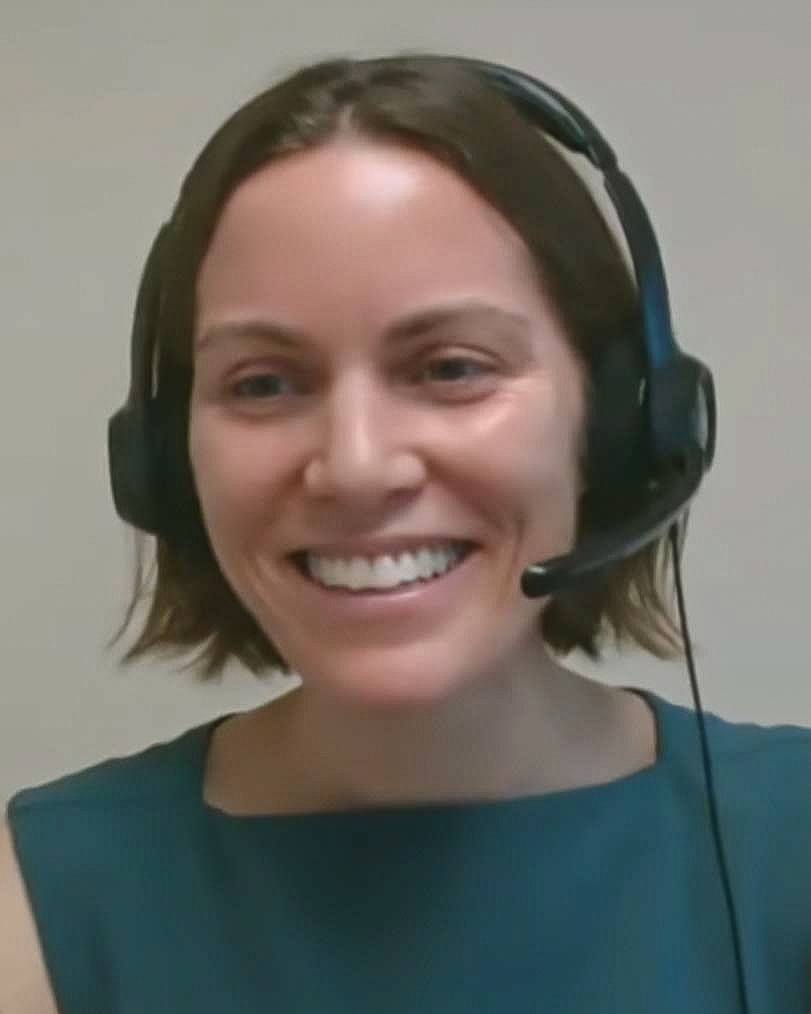
Emily Oster
American economist
28
APPEARANCES
26
PODCASTS
Sep 3, 2026

Emily OsterGUEST
that's a complicated question, and there are some dimensions it's true on and some that it's not, which is, of course, how academics start every answer.
Emily OsterGUEST
If you look at metabolic disease, type 2 diabetes, that was virtually unheard of in kids, you know, 50 years ago, and it is now fairly common.
Emily OsterGUEST
So there are some of these kind of chronic disease conditions which certainly have gone up.
Emily OsterGUEST
There are other places where I think the data is a bit more nuanced, so something like autism.
5 MINS LATER

Abby McCloskeyHOST
Like, is the attention on this from Maha, we can talk more about what Maha is specifically doing, a net benefit?

Aimee EyvazzadehHOST
So my question is, how long should someone try before seeking help? What's the data-backed guidance for when to see a fertility doctor?
Emily OsterGUEST
There are some standard recommendations, uh, which people are given about waiting a year if you're under a certain age, waiting six months if you're over a certain age, pretty much seeing somebody immediately when you're over 40.
Emily OsterGUEST
You know, the idea of waiting a shorter time as you're older has some logic because you, you have fewer months of your potential fertility to, to continue.
Emily OsterGUEST
But I, I think there isn't an answer to this question where you could say it's two months for this age, it's three months for this age.
Emily OsterGUEST
You know, there is a difference between for the last year I haven't been on birth control and we sort of just been having sex whenever, versus for the last year I've been tracking my ovulation every month and we've had sex on one of the two, you know, maximal ovulation days and we've done all these other things.
Aimee EyvazzadehHOST
How can fertility patients arm themselves with data that helps them on their journey?

Heather HirschHOST
What happens during the postpartum crash? And is it more severe if you are in your late 30s, early 40s? Or is it no different from when you were having a baby if you were in your 20s?

Emily OsterGUEST
So in general, we see after you have a baby, your hormones tank, other hormones go up, estrogen goes down.
Emily OsterGUEST
We see actually many of the kinds of symptoms that you would have later in perimenopause or menopause, things like hot flashes, this sort of like waking up in the middle of the night soaked in sweat is actually a very common postpartum symptom.
Emily OsterGUEST
And so those hormonal crashes happen post-pregnancy, no matter what age you are, that's a feature of pregnancy.
Emily OsterGUEST
I think what's different if you're doing You know, look, in the time period in which people are having babies in their early 20s, you have your babies, you know, then you're like in your late 20s and 30s, you kind of like run through your late 20s and 30s in this sort of like nice neutral space, no pregnancy, no perimenopause, and then those symptoms would come back.
9 MINS LATER
Heather HirschHOST
In what way can women ask for support when they're going through mood changes?


Emily OsterGUEST
Uh, and by works, we mean does it improve infant sleep, does it improve parent sleep? And the answer to those things is, is yes.
Emily OsterGUEST
You know, babies don't wake up any less." That's, it's a little bit of an odd way to explain it.
Emily OsterGUEST
Like, everyone wakes up all the time in the night, so you're, you sleep in cycles and you wake between the cycles.
Emily OsterGUEST
And one of the things that sleep training does effectively is let babies connect these cycles better for themselves, and so they sort of are able to fall back asleep on their own.
Emily OsterGUEST
So in a sense, they still have these, like, wake patterns, as you will have as an adult-
7 MINS LATER


Emily OsterGUEST
[laughs] I think it offers the potential for a little bit less regret, I think in kind of two ways.
Emily OsterGUEST
So one is the ability to say, "Look, I made the best choice with the information I had at the time.
Emily OsterGUEST
And, you know, that maybe that wasn't the right choice in the end, but there was nothing I could have done differently before this," which doesn't save you from feeling bad if it wasn't the right choice, but it does sort of save you from saying, "I made a mistake," which is a different thing from saying, "I wish that things had turned out differently." Um, and those are subtly different, but I think can be quite different in your, in your brain.
Emily OsterGUEST
The other thing that I, I sort of try to offer to people in the book is a combination of sort of pushing to make a decision and to not sit on our decisions forever and structured opportunities to rethink them.
Emily OsterGUEST
I really try to be explicit with people that, like, when you make a decision to do something or not do something, you should plan a time that you can, like, follow up on that decision and that there should be an opportunity to say, "Hey, like, we made this decision the best way we could with the information we had at the time.
11 MINS LATER


Chelsea ClintonHOST
What actual information do you have for working parents about how to navigate summer with our kids and the fact that we still have work to do?
Emily OsterGUEST
And one of the things I think is probably worth saying as a kind of level setting is, like, people now are spending, like, twice as many hours a week with their kids as our parents spent before.
Emily OsterGUEST
No, it's like people think like, oh, in the 1970s, 1980s, like people said, no, actually, like the average amount of time for both women and men has about doubled over this period in terms of how much time people are spending with their children.
Emily OsterGUEST
And so that translates in like sort of into this summer, like we're somehow expecting ourselves to be spending all of these hours with our kids and also all of these hours at our job.
6 MINS LATER

Emily OsterGUEST
I f- feel very strongly that we wanna think about risks and benefits, and that we wanna weigh them by sort of thinking broadly about that whole, like all of the risks and benefits.
Emily OsterGUEST
If you think about something like breastfeeding, like we wanna weigh, like what are the benefits of, of breastfeeding, which there are some, although not as many as people say, against, you know, what are the, what are the, uh, what are the costs on the other side.
Emily OsterGUEST
You know, is this, um, are there mental health issues for Mom? Are there, you know, m- does sh- does she not want to do this? Are, is it hard in some...
Emily OsterGUEST
There's many costs on the other side that people experience, and that we really wanna, wanna kind of weigh those things.
7 MINS LATER

Rachel JaffeHOST
So it makes sense to think about the things that there's something that you can do about it.
Emily OsterGUEST
Hepatitis B is actually most dangerous if it is contracted early in life, and it can be contracted from mom or from other household members.
Emily OsterGUEST
And if you contract hepatitis B early in life, it's very, very likely to lead to being a carrier, which then raises the risk of liver cancer quite a lot.
Emily OsterGUEST
And the universal vaccination at birth comes about so we make sure that we vaccinate anybody whose mom might be a hepatitis B carrier.
Emily OsterGUEST
For some people, if they know that mom is not a hepatitis B carrier, they'll sometimes wait until eight weeks to do the first vaccine, which can work in that setting also.

Emily OsterGUEST
So one is that I think when we are parenting, we really want to make the right choices, which is a good instinct.
Emily OsterGUEST
And it's very hard to absorb the idea that like this could be a good choice for me, but not for someone else.
Emily OsterGUEST
And some of this push, particularly like it with our friends, is a feeling of, you know, this worked for me.
Emily OsterGUEST
And so I'm going to tell you like what I think you should do because I know it worked for me.
26 MINS LATER

Simona DejtaHOST
And so I ask all women, what do you think ambition could look like or should look like or is for women after motherhood?


Emily OsterGUEST
I want to set the stage a little bit and tell you kind of what was the genesis of this project and what do I think we are kind of learning from it and what do I think we know before and what do I think we know now.
23 MINS LATER

Emily OsterGUEST
... gives us the answers to our questions, um, you know, particularly around spaces that we care a lot about.
Emily OsterGUEST
I want people to know what the best evidence says about breastfeeding and what the benefits are and what are the things that are overstated, but the decision to breastfeed is actually not only about what the data says.
Emily OsterGUEST
It is also about constraints that you face, things that are complicated, whether you can do this, and also about how you feel about it, right? So when I had my first kid, I knew all of the data on breastfeeding.
Emily OsterGUEST
I knew that a lot of the benefits were overstated, but it was really important to me.

Renee ReinaHOST
What inspired you to write this book, and also what is it about, for people listening?
Emily OsterGUEST
So it really is about the things that happen in high-risk pregnancies and how likely they are to happen again, and what you can do to make them less likely to happen.
Emily OsterGUEST
About 50% of pregnancies either involve or end in one of the complications we talk about.
Emily OsterGUEST
But I also hope nobody reads it, because I would prefer nobody to have these complications.
Emily OsterGUEST
So it's a, it's a little bit of a, of a balance, and it is actually unlike my other books.

Yasmin BasugianADVERTISER
God
Emily OsterGUEST
And people were like the sort of moment that I realized how much feedback people get about their parenting is somebody wrote a newspaper column about how like this was like a terrible thing.
Emily OsterGUEST
And it ends with this like amazing set of quotes that's like, there is a loneliness epidemic.
Emily OsterGUEST
And it's like now preserving the two and a half hours on Sunday mornings is the cause of the loneliness epidemic and everyone's going to die.
9 MINS LATER


Emily OsterGUEST
Uh, screen time is perhaps the best example of correlation is not causation in parenting.
Emily OsterGUEST
And so people, you know, send me these studies that say, you know, screen time before the age of one is linked with, you know, all of these terrible outcomes.
Emily OsterGUEST
You look at the study, and you'll have one group of kids that are watching more than four hours of screens a day before the age of one, and then another group that never watches screens before the age of one, and then they, they compare them later.
Emily OsterGUEST
Do you think there's anything else different other than the screen exposure? Like, of course, those are really different households.
18 MINS LATER
Unknown podcast
Parenting Expert Emily Oster: The #1 Parenting Mistake That Causes Unnecessary Stress (Use THIS Data-Backed Framework to Debunk the Biggest Parenting Myths!)
Apr 13 · 1h 29m
Emily OsterGUEST
Uh, screen time is perhaps the best example of correlation is not causation in parenting.
Emily OsterGUEST
And so people, you know, send me these studies that say, you know, screen time before the age of one is linked with, you know, all of these terrible outcomes.
Emily OsterGUEST
You look at the study, and you'll have one group of kids that are watching more than four hours of screens a day before the age of one, and then another group that never watches screens before the age of one, and then they, they compare them later.
Emily OsterGUEST
Do you think there's anything else different other than the screen exposure? Like, of course, those are really different households.
15 MINS LATER


Emily OsterGUEST
Economists talk a lot about trading off risks and benefits, which is a big piece of decision-making, but when I outline this for people, I made the point you need to start by framing the question you are asking.
Emily OsterGUEST
And so particularly when there's so much uncertainty and the decision is so new, I think that people very frequently, they know what the first option is, and then they frame the second option as or not.
Emily OsterGUEST
Should I send my kid to daycare or not? But or not is actually not an option, or not is some other thing.
Emily OsterGUEST
And this choice is gonna be really different if it's should I send my kid to daycare or hire a full-time nanny? Should I send my kid to daycare or have my elderly parents take care of them? Should I send my kid to daycare or quit my job? And then I tell people, "Look, you need to end your decision by making a, a final decision," rather than what I think a lot of people do, which is just keep thinking about it over and over again and allowing it to take over every time they're in the shower, every five-minute conversation with their spouse, every little moment.
Emily OsterGUEST
You really wanna say, "Okay, we're gonna make the decision, and then we're gonna try to move on."
20 MINS LATER
Emily OsterGUEST
When we started working on this question, what I wanted to understand was how can we understand this behavior? Is it that people don't know about the test? The test is expensive, something about insurance, and none of those things were consistent with the data.


Emily OsterGUEST
So the third question is: Is this gonna happen again? And in the pregnancy case, that's the hardest question to answer, but it's also the one I think is most helpful for moving forward.
Emily OsterGUEST
And there are a lot of different things that are gonna go into, is something likely to happen again? And some complications are gonna be more likely to happen again and are almost certain, and some are gonna be very unlikely.
Emily OsterGUEST
And when Nate and I talk about this in the book, and when you think about it, I think it can be very helpful for people to sort of understand the risks in kind of three buckets.
Emily OsterGUEST
So thinking about one possibility is it's very likely this will happen again, say, you know, more than fifty%.

Emily OsterGUEST
So the HHS trimmed the list of recommended childhood vaccinations from, like, seventeen to about eleven.
Emily OsterGUEST
This was totally, as we're saying, like, totally outside of a normal process for this.
Emily OsterGUEST
This was outside of that process, like, unilateral decision from the health secretary.
9 MINS LATER

Steve HayesHOST
And maybe if you could explain to us why you got the grief you got, and how you thought about, um, giving, you know, offering some praise to the administration and to somebody like RFK Jr., who has this reputation of being a conspiracy theorist and amplifying bad information.


Emily OsterGUEST
I talk to a lot of new par- you know, parents who are thinking about preschools.
Emily OsterGUEST
People will be like, "What's the right preschool?" It's like, "Well, I, I don't know." You know? Or, "Should I send my kid to daycare or not?" Well, that's a v- very poor question because or not is not a childcare solution.
Emily OsterGUEST
Here's the three things we could do." And then we get some information about them and then we make a decision.
Emily OsterGUEST
But that first step of actually saying, like, "What are the things we could realistically do?" Often we miss that and then we're in a morass of kind of discussing all the possible eventualities, all the possible-
35 MINS LATER
Emily OsterGUEST
It's called Expecting Better, and I wrote it when I was pregnant the first time.
Emily OsterGUEST
And I then spent a decade talking about that book with people, and many of them would come and say, "Your book was so great.
Emily OsterGUEST
I read it, but then this happened," or, "Then I had a miscarriage." "Then I had hyperemesis." "Then I had postpartum depression, and I need more answers.
Emily OsterGUEST
I want to know." And the first question everyone always is just, "Is it gonna happen again?"
36 MINS LATER


Emily OsterGUEST
I mean, not like, not like an unreasonable, abusive amount, but there were people taking Tylenol more than 28 days during the pregnancy.
Emily OsterGUEST
So, these are people who are treating some kind of, you know, is it chronic pain? Is it chronic headaches? Is it, you know, a g- set of long-term illnesses? Whatever it is.
Emily OsterGUEST
That is a group that's quite different than people who are not taking Tylenol, not taking these medications at all.
Emily OsterGUEST
They're just different, and you could imagine some of those differences involve, you know, neurodivergence of mom, for example, which of course would, you know, potentially drive autism, a disease which we know has an enormous genetic component.
Emily OsterGUEST
Uh, th- so that's, like, one issue, and then the other issue is we actually have reasonably good evidence that compares, you know, within sibling groups where one sibling was exposed to more au- more, uh, acetaminophen prenatally than the other, and you don't see the associations there.
Emily OsterGUEST
Like, if you look at those data sets, if you don't adjust, if you don't compare within siblings, you do see the effect, but then when you adjust to compare the siblings, you don't see the effect.
6 MINS LATER


PJ VogtHOST
Do we believe that human beings are being exposed to microplastics at doses that would actually affect our health?
Emily OsterGUEST
That is the question, and that is where the evidence, I think, is not especially compelling.
Emily OsterGUEST
So the doses that humans are exposed to, even though there's a bunch of it in your brain, they are way, way lower than the doses that we're exposing animals to in these studies, and there is a fair amount of disagreement about whether those doses are in fact bad enough to have any, you know, measurable negative impacts on people.
Emily OsterGUEST
We don't have a lot of direct evidence or really any direct evidence that would say having a lot of microplastics makes you less healthy.
Emily OsterGUEST
So I think there's actually a legitimate disagreement about, you know, whether at the levels people are exposed to, this is actually a health problem that would be kind of important, like you would want to be concerned about it for yourself.
14 MINS LATER
PJ VogtHOST
And with your kids, do you think about their plastic consumption? Like, do you make the small, marginal edge case, uh, modifications, or no?
Emily OsterGUEST
Um, and I think that's actually a good point, which is that I think there is a question of, like, could we limit the amount of plastic we are introducing into the environment, having nothing to do with microplastics? You know, plastic is not good for the environment, it's not good for animals in the environment, it's not good for the ocean.

10:02

Like (laughs) what is, what is the story that takes us from 2021 to 2025? And why is it that so many people who were s- had so much faith in those shots are now part of a program to walk back from that technology generally?
Emily OsterGUEST
So on the first question of vaccine hesitancy, I think the end case scenario that I am most concerned about is one in which, in some way, this administration manages to make it quite difficult to get your kid vaccinated, and so sort of changing some aspect of, you know, what's approved or what's covered by Medicaid.
Emily OsterGUEST
On the COVID vaccine, I think you and I probably have a different position on this, but I do lay some blame at the feet of some of the public health advice that post-dated the early 2021 COVID vaccines.
Emily OsterGUEST
And to sort of play devil's advocate or try to express what somebody like Jay Bhattacharya, the director of the NIH, would say here is that these vaccines were an incredible breakthrough, they saved millions of lives, but when we started telling people, "Your seven-year-old needs a third booster in 2023," you lost a lot of people.
13:55
How do you think about what he's doing there and how it compares to the sort of war on vaccines, on the sort of, um, public health and medicine side?

Emily OsterGUEST
So, to sort of think about a general approach where I'm, people are gonna do things, and I wanna know if it leads to some outcome.
Emily OsterGUEST
So, one way to do that, the, like, gold standard approach to that, is to randomize, to take a bunch of people, you know, randomly allocate them into a group that does one thing and a group that does other, something else, follow them over time, and see if the outcomes differ.
Emily OsterGUEST
And the reason that's so valuable is that you are manipulating this one factor, and the people are otherwise similar because you've chosen them randomly, and so then if you saw differences at the end, you would be like very confident that the differences were due to this thing you manipulated.
Emily OsterGUEST
It's not generally the kind of data that we bring to bear on these sort of more lifestyle questions, and I think there's a couple of reasons for that, you know, one is that it's, it's actually quite hard to run a study of that nature; you need a lot of data, it's expensive, um, and it's hard to get people to change their behavior.
19 MINS LATER


Isaac SaulHOST
If that's true or that's just my impression, what the data says, and kinda what you're hearing from people.
Emily OsterGUEST
Uh, but let's start with the, the biggest global take and then we can dial down a little bit into what we know and what we don't know.
Emily OsterGUEST
So the, if we think globally, fertility rates are on the decline in, uh, everywhere, so in every, at this point, like, every kind of rich country has a fertility rate below replacement, so that's below about 2.1.
Emily OsterGUEST
There are a number of places in Asia that have fertility rates below 1.0, uh, which means their populations are cratering very quickly.
Emily OsterGUEST
Uh, and then even if we look at less developed countries where the fertility rates tend to be higher, we have still seen very, very large declines.
Emily OsterGUEST
You know, 25 years ago, 30 years ago, there were places that had a fertility rate of 8.0. No place has a fertility rate of 8.0 anymore.
18 MINS LATER
Isaac SaulHOST
I think I understand from your writing that you do view dropping fertility rates is an issue and how you kind of make that argument.
Scroll for more appearances