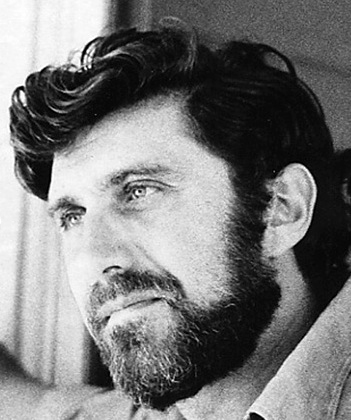
Elliot Aronson
American psychologistWikipedia
7
MENTIONS
6
EPISODES
6
PODCASTS
Search complete. 7 mentions across 6 episodes found for "Elliot Aronson".
Sep 7, 2026

James PollardHOST
And this one feels backwards, which is exactly why it works and why most financial advisors will never do it.
James PollardHOST
There is a classic study from 1966, Elliot Aronson and his colleagues, where people listened to recordings of a supposedly brilliant quiz contestant.
James PollardHOST
And I talked about this in one of the most recent episodes, actually.
James PollardHOST
In one version, at the end, the contestant clumsily spilled coffee all over himself.

Suresh GopalakrishnanHOST
If your ego allows you to suspect this trap, convince someone to be radically candid with you.
Suresh GopalakrishnanHOST
Carol Tavris and Elliot Aronson's Mistakes Were Made, But Not By Me offers a funny take on this.
Suresh GopalakrishnanHOST
You should check it out.
Suresh GopalakrishnanHOST
Thanks for listening.

Grace BeverleyHOST
I think it turns out that a lot of those hard parts that have recently been removed were actually doing something for us, and the science on why is something I am very interested in.
Grace BeverleyHOST
I had a look into what's actually happening in our brains when we remove a lot of the difficulty from our lives, and the first thing I came across is a theory called effort justification, and this is based on research that goes back to a psychologist called Elliot Aronson in the '50s.
Grace BeverleyHOST
The basic finding, which wasn't a surprise to me, is that we value things more when we've had to work for them.
Grace BeverleyHOST
There's a famous later study called the IKEA Effect by Michael Norton at Harvard Business School, which found that people place significantly higher value on flat-pack furniture they'd built themselves, even when it was objectively worse than the preassembled version, just because they'd put the effort in.

DaveHOST
There's also something called the jigsaw or teaching technique.
DaveHOST
So Elliot Aronson came up with this and he said there's six conditions that must be met to reduce prejudice.
DaveHOST
First, in and out groups have to have interdependence.
DaveHOST
We talked about that with the Robert's Cave.

John Robert TartaglioneGUEST
So, um, I make jokes about philosophy being kind of, uh, the, the, the job market being anemic for philosophy majors, which is true, but philosophy is actually was a great starting point for me because philosophy was all about, like, musings on human nature, right? These th- theories about, like, what makes humans tick, and so that kind of s- kickstarted my interest in, in psychology in a, in a little less of a formal way.
John Robert TartaglioneGUEST
And when I graduated and I was kinda trying to figure out what I want to do, I started reading about psychology, right? And the first book I picked up was The Social Animal by Elliot Aronson.
John Robert TartaglioneGUEST
Um, and to this day, it remains my favorite book of all time.
Emily SanderHOST
Mm.