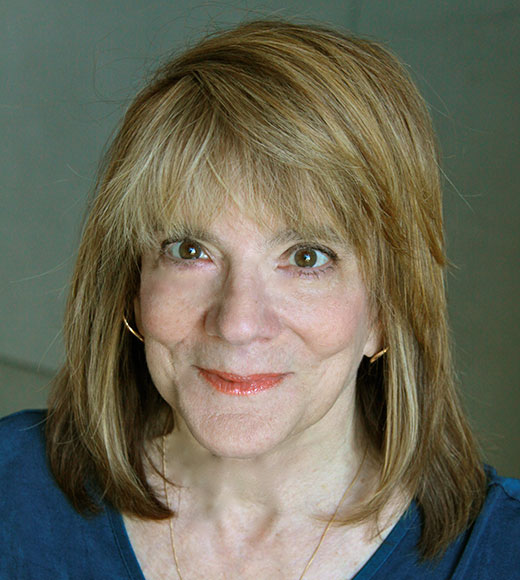
Elizabeth Loftus
American psychologistWikipedia
51
MENTIONS
27
EPISODES
26
PODCASTS
Search complete. 51 mentions across 27 episodes found for "Elizabeth Loftus".
Nov 1, 2026

Bobby CapucciHOST
The juror said that, ultimately, the jury found that all of the victims were credible.
Bobby CapucciHOST
The defense team focused strongly on its memory expert, Professor Elizabeth Loftus.
Bobby CapucciHOST
Loftus testified about experiments that had been conducted in which researchers had successfully implanted a false memory into the mind of research subjects.
Bobby CapucciHOST
I mean, talk about Yahoo quackery.

Sam VakninHOST
And the problem is that he said, she said, is not a reliable standard for conviction.
Sam VakninHOST
memory even even when the other party means well even when the accusing party is innocent and honest memory is highly unreliable it degrades with time it is refrained with time see the studies by elizabeth loftus sexual offenses the reporting of sexual offenses should be time debarred.
Sam VakninHOST
There should be a statute of limitation on how long after the event you can report it.
Sam VakninHOST
You can complain to the police.

Jacob MookHOST
The Frades recruited a highly credentialed advisory board.
Jacob MookHOST
Among the members were Paul McHugh... known in recent years for insisting that transgender people suffer from a psychological disorder, and Elizabeth Loftus, a psychology professor who testified on behalf of Ted Bundy in his 1976 Utah trial before he escaped and went on another killing spree.
Jacob MookHOST
Yeah, that's, that's another thing.
Jacob MookHOST
I don't know if he went on that killing spree.
Jacob MookHOST
Um, Perhaps no one alive has been harder on memory's reputation than Loftus.
Jacob MookHOST
Absolutely.
Jacob MookHOST
Elizabeth Loftus would have us believe that memory basically doesn't fucking exist, according to her.
Jacob MookHOST
In 1974, the Department of Transportation... awarded Loftus, then a newly minted Ph.D. in psychology, a grant to study memory distortion among eyewitnesses of car accidents.

JacobHOST
The Frades recruited a highly credentialed advisory board.
JacobHOST
Among the members were Paul McHugh, known in recent years for insisting that transgender people suffer from a psychological disorder, and Elizabeth Loftus, a psychology professor who testified on behalf of Ted Bundy in his 1976 Utah trial before he escaped and went on another killing spree.
JacobHOST
Yeah, that's, that's another thing.
JacobHOST
I don't know if he went on that killing spree.
JacobHOST
Um, Perhaps no one alive has been harder on memory's reputation than Loftus.
JacobHOST
Absolutely.
JacobHOST
Elizabeth Loftus would have us believe that memory basically doesn't fucking exist, according to her.
JacobHOST
In 1974, the Department of Transportation... awarded Loftus, then a newly minted Ph.D. in psychology, a grant to study memory distortion among eyewitnesses of car accidents.

Nicholas RhodesHOST
All right, next.
Nicholas RhodesHOST
An essay in Scroll argues AI is changing how we remember, citing MIT research with memory scientist Elizabeth Loftus.
Nicholas RhodesHOST
In a 2024 study, 200 people watched a crime video, then answered questions from an AI interviewer.
Nicholas RhodesHOST
The chatbot version produced over three times as many false memories as the control group.

Tim MendhamPANELIST
So it was really controversial.
Tim MendhamPANELIST
There was a U.S. psychologist named Elizabeth Loftus, She was one of the key people in criticizing repressed memory as a non-existent condition that's only being assisted by therapists of perhaps good intent, who knows, but it was a false memory.
Tim MendhamPANELIST
She got death threats and all sorts of things for that.
Tim MendhamPANELIST
Since then, it's probably still being used.

Tim MendhamGUEST
So it was really controversial.
Tim MendhamGUEST
There was a U.S. psychologist named Elizabeth Loftus, She was one of the key people in criticizing repressed memory as a non-existent condition that's only being assisted by therapists of perhaps good intent, who knows, but it was a false memory.
Tim MendhamGUEST
She got death threats and all sorts of things for that.
Tim MendhamGUEST
Since then, it's probably still being used.

Karla LassondeHOST
Okay.
Karla LassondeHOST
Well, one of the queens of what we call eyewitness memory, Elizabeth Loftus, usually recounted as one of the top 10 psychologists of our time.
Karla LassondeHOST
Wow.
Karla LassondeHOST
Yeah, pretty cool.

MarcusHOST
Jennifer Freight is actually is someone we mentioned before on the show, specifically episode 138, which was part two of two of our series on false memories, abuse and power.
MarcusHOST
where we kind of got into the life work of Elizabeth Loftus, a psychologist who was very influential in reshaping how the mental health community thought about the concept of repressed memories and how the justice system thought about eyewitness testimony.
MarcusHOST
So we talked about her work in that regard, and we also talked about her late career money-grubbing ways So Freyd, as it turns out, is kind of a critic of Loftus and Loftus of Freyd.
MarcusHOST
But Freyd had come up with the theory of betrayal trauma partially in response to Loftus' work dismissing the concept of repressed memories.

Bradley BuschHOST
Yeah,
Paul ClineGUEST
just to pick up on the negatives, because they also talk about Elizabeth Loftus' famous work on sort of false memories, which is fantastic.
Paul ClineGUEST
And Loftus' earlier work on eyewitness testimony is really critical here as well, where... you can change people's memories of the events with really subtle things.
Paul ClineGUEST
Like she, in the very famous 1974 study, changed the verb used in a question about the speed of some cars.
17 more episodes mention Elizabeth Loftus.
Create an account to see the whole feed, search across every transcript, and follow the entities you care about.