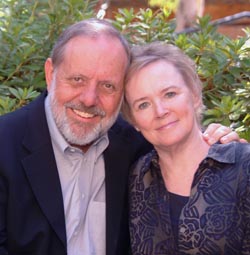
Elizabeth L. Bjork
American psychologistWikipedia
5
MENTIONS
3
EPISODES
3
PODCASTS
Search complete. 5 mentions across 3 episodes found for "Elizabeth L. Bjork".
Sep 29, 2026

Mark GuadagnoliHOST
I'll tell you something that you just mentioned about, you know, you were originally a computer science major, right? And then you got into cognitive science.
Mark GuadagnoliHOST
So several of the people that we've had on this podcast, Bob and Elizabeth Bjork, they were mathematicians, and then they turned into psychologists.
Mark GuadagnoliHOST
And Thad Polk was also computer science.
Mark GuadagnoliHOST
He turned into neuroscience.
1 HR 5 MINS LATER
Chad LaneGUEST
And this is exactly that in action.
Chad LaneGUEST
In fact, Roddy also are the advisors.
Chad LaneGUEST
Elizabeth Bjork and Dan Schachter, you know, it's a rich mayor.
Chad LaneGUEST
It's a great group of people.

Barbara TverskyGUEST
It was Howie Egas and Ed Smith especially and Irv Biederman and Amos and Jerry Riker was then there.
Barbara TverskyGUEST
Elizabeth Ligon came.
Barbara TverskyGUEST
Elizabeth Ligon Bjork was a classmate.
Barbara TverskyGUEST
Jerry Riker was a classmate.
Barbara TverskyGUEST
We had...

SteveHOST
And all of these tasks require physical movement and the use of motor skills and a certain amount of patience that we just don't need when we're consuming digital media.
SteveHOST
And that reminds me of what the psychologists Robert and Elizabeth Bjork called desirable difficulties, which is the counterintuitive idea that making something easier isn't always better.
SteveHOST
And sometimes the difficulty itself is doing useful cognitive work, particularly when it comes to learning or understanding.
SteveHOST
In his book, The World Beyond Your Head, the author Matthew Crawford explores human attention and he suggests that it isn't simply a thing that we possess, but something that's organised by our environment and the objects within it.