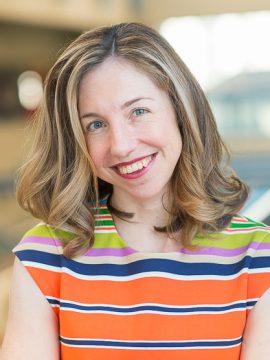
Elizabeth Dunn
Canadian social psychologist and professorWikipedia
15
MENTIONS
9
EPISODES
6
PODCASTS
Search complete. 15 mentions across 9 episodes found for "Elizabeth Dunn".
Sep 13, 2026

ClintHOST
God is our provider.
ClintHOST
Hey, there's two psychologists, Elizabeth Dunn and Michael Norton.
ClintHOST
They spent years studying where happiness from money actually comes from.
ClintHOST
In one of their most cited studies, they gave people a small amount of money, five bucks, 10 bucks, 20 bucks, like small amounts of money.
Elise HuHOST
I can't wait for our next trip where we can spend the day practicing yoga, enjoying a spa treatment, exploring the area, and then head back to our own place to unwind and enjoy some quality time together.
speaker_2UNKNOWN
[gentle music] On the TED Radio Hour, the climate movement is missing a trick according to happiness researcher Elizabeth Dunn.
Xochitl GonzalezSOUNDBITE_SPEAKER
So I don't think that promoting self-denial is a winning strategy.
speaker_2UNKNOWN
Habits that will make you happier and help the environment too.

Elise HuHOST
[instrumental music plays]
speaker_3NARRATOR
On the TED Radio Hour, the climate movement is missing a trick according to happiness researcher Elizabeth Dunn.
Meghan SullivanGUEST
So I don't think that promoting self-denial is a winning strategy.
speaker_3NARRATOR
Habits that will make you happier and help the environment too.

Elizabeth DunnGUEST
[laughs]
Manoush ZomorodiHOST
This is social psychologist Elizabeth Dunn.
Elizabeth DunnGUEST
For one thing, when I left a room, if I, if I didn't turn off all the lights, he would shoot me this withering look, like, "Why do you hate the Earth?" You know?
Manoush ZomorodiHOST
[laughs]
11 MINS LATER
Elizabeth DunnGUEST
So it's really a yes and kind of situation where we need governments to take action, but then we need individuals to respond and, and it's really a kind of reinforcing cycle.
Elizabeth DunnGUEST
And so the notion that we can take individuals out of the equation just makes no sense to me because our choices go beyond our own individual action and can influence others.
Manoush ZomorodiHOST
When we come back, more with author and social psychologist Elizabeth Dunn.
Manoush ZomorodiHOST
We'll get into the nitty-gritty, why eating more maple syrup is good for the planet, and why you should go ahead and treat yourself to that nonstop flight.

Michael NortonGUEST
So I was... doing research on things like income and wealth inequality, which I still do research on and I think is a very important topic.
Michael NortonGUEST
But my friend and eventual collaborator, Liz Dunn, said, you're a bummer.
Michael NortonGUEST
You're studying these things that are really sad and they're making you sad.
Michael NortonGUEST
And she said, we're going to study happiness together.
Jennifer BorgetHOST
We have like a chart showing how my trajectory has gone.
Jennifer BorgetHOST
When you first started studying the relationship between how we spend money and our own happiness, what were you expecting to find? And then what actually happened?
Michael NortonGUEST
So with my collaborator, Liz Dunn, there was like a lot of research on the relationship between money and happiness.
Michael NortonGUEST
You know, you ask people, how much do you make this year? And then how happy are you? And you look at the correlation.

Eric ZimmerHOST
And when I find something that can do both at the same time, I'm always interested.
Eric ZimmerHOST
Elizabeth Dunn and Jiaying Zhao call it the sweet spot, choices that cut your carbon emissions and make you happier at the same time.
Eric ZimmerHOST
Liz studies happiness.
Eric ZimmerHOST
Jiaying is a climate expert, the one colleagues call the human carbon calculator.
Leslie JohnGUEST
What is her name?
Eric ZimmerHOST
Elizabeth Dunn.
Leslie JohnGUEST
I love Liz Dunn.
Leslie JohnGUEST
Oh, she's amazing.

Laura VanderkamHOST
Today's tip was partly inspired by this week's interview with the authors of Leave The Lights On.
Laura VanderkamHOST
Elizabeth Dunn and Jiaying Zhao argue that there are lots of things people can do to help the environment that are actually enjoyable.
Laura VanderkamHOST
There is no reason to try to shame people into doing things that they don't enjoy.
Laura VanderkamHOST
When people don't enjoy something, they won't keep doing it, and so then it won't happen.
Laura VanderkamHOST
Today's episode is going to be a slightly longer one, part of the series where I interview fascinating people about how they take their days from great to awesome, and any advice they have for the rest of us.
Laura VanderkamHOST
So today, I am delighted to welcome Elizabeth Dunn and Jiaying Zhao to Before Breakfast.
Laura VanderkamHOST
Liz and JZ, as they go by, are the co-authors of the brand-new book Leave the Lights On: How Joyful Decisions Can Save Our Species.
Laura VanderkamHOST
So Liz and JZ, welcome to the show.
21 MINS LATER
Eli RalloHOST
[upbeat music]
Laura VanderkamHOST
Well, I am back.
Laura VanderkamHOST
I am talking with Elizabeth Dunn and Jiaying Zhao, um, otherwise known as J.Z., two researchers, academics at the University of British Columbia, Liz studying happiness, J.Z. studying climate.
Laura VanderkamHOST
Um, so maybe you guys can pivot a little bit to talk about your own schedules.