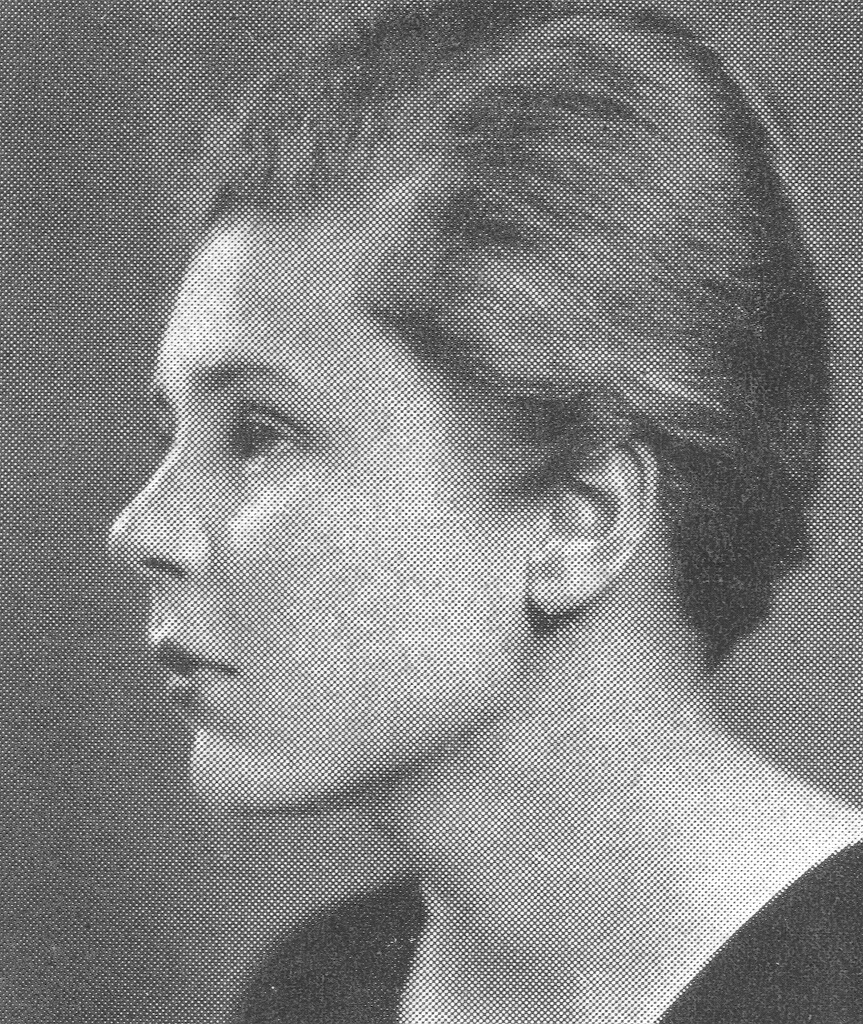
Elizabeth Bishop
American poetWikipedia
23
MENTIONS
16
EPISODES
14
PODCASTS
Search complete. 23 mentions across 16 episodes found for "Elizabeth Bishop".
Nov 4, 2026

Patricia LockwoodGUEST
So in an early meeting, we got one book that was sort of told through the life of a writer.
Patricia LockwoodGUEST
And Raymond's like, it's always, you know, Elizabeth Bishop or Sylvia Plath or someone like that.
Patricia LockwoodGUEST
I think he just said, he was like, just stop it.
Patricia LockwoodGUEST
And I was like, I was dying inside because I was like, I had just done this very uncharacteristic thing, which was to be kind of like shot into the universe after writing an LRB essay about Sylvia Plath, where I read all of her work, all of her letters, all of her stories, all of her fiction.

Meghan O'RourkeGUEST
I think each line of the couplet, it's almost like the two legs and sarcoma, I think, often starts in the leg.
Meghan O'RourkeGUEST
And that in part that you pointed out makes me think of a poet like Elizabeth Bishop who would say things and qualify them.
Meghan O'RourkeGUEST
And it was kind of through the qualification, actually, that they would become more impactful, more intense.
Meghan O'RourkeGUEST
We, I think, hear the ways in which there's an impulse in our culture to want to see suffering as something that leads us to a kind of, you know, better self, right? We love to, whatever doesn't kill you makes you stronger.

Sabaa TahirGUEST
Like I need something to kind of weave through it.
Sabaa TahirGUEST
And that's when I came to the poem, one art by, um, Elizabeth Bishop, which is, um, you know, uh, uh, a Villanelle has six stanzas and the book is divided into six parts and each stanza sort of opens one part of the book.
Sabaa TahirGUEST
And, um, I mean, it took me like 10 years to figure that out.
Sabaa TahirGUEST
You know what I mean? It seems simple.

Zach StaffordHOST
That's amazing.
Saeed JonesHOST
And so I'm going to read One Art by Elizabeth Bishop.
Saeed JonesHOST
It's a Villanelle, which is a very technical form of poem that basically is like a mathematical equation turned into a poem.
Saeed JonesHOST
One Art by Elizabeth Bishop.
Saeed JonesHOST
The art of losing isn't hard to master.
Saeed JonesHOST
So many things seem filled with the intent to be lost that their loss is no disaster.
Saeed JonesHOST
Though it may look like, write it.
Saeed JonesHOST
Like disaster.

Sandy YannoneGUEST
And We gave a deadline, and when the poems started coming in, poem after poem after poem, there was, we knew, we had some that we knew existed.
Sandy YannoneGUEST
We had some what we called legacy poems, like Elizabeth Bishop, William Dickey.
Sandy YannoneGUEST
And others, we didn't know if we'd be able to get the rights to them, but we were hopeful.
Sandy YannoneGUEST
And we had some living poets that we knew had written about the Titanic.

Tim Winton SelectualsHOST
That ultimately gives you populism.
Tim Winton SelectualsHOST
It doesn't give you radicalism, right? And, you know, there's a way of looking at the revolution in art from 1850 to 1950 alongside the revolution in politics and seeing them as parallel but not identical processes, right? And it's like, yeah, like I think that what Mallarmé did with language and what Elizabeth Bishop did with old sonnet forms is important as fucking storming the Winter Palace.
Tim Winton SelectualsHOST
But, you know.
Patrick MarlboroughHOST
No, I mean, look, I'm on the same page, obviously.

MaitreyabandhuGUEST
I mean a speech which is particularly suggestive and particularly sort of weighty and sticky and has got something in it.
MaitreyabandhuGUEST
You know, if you hear Elizabeth Bishop read her poems or if you read her letters, her letters are very, very close to her poems.
MaitreyabandhuGUEST
You could break them up and turn them into poems.
MaitreyabandhuGUEST
The poet, the poem becomes like the ideal voice of the poet.

Norman RosenthalGUEST
And he picked up the book while we were talking on the phone and started reading to me a very famous villanelle, which is a structure of poetry, called One Art.
Norman RosenthalGUEST
by Elizabeth Bishop.
Norman RosenthalGUEST
It's a very famous poem and writing about the art of losing.
Norman RosenthalGUEST
The art of losing isn't hard to master.
Lavinia GreenlawGUEST
You need to be able to see and articulate what you're looking at and take it apart, put it back together.
Lavinia GreenlawGUEST
But that, as Elizabeth Bishop said, only comes after And it's that what I found with my students was that I was much more often encouraging them to go back to the back of their head and reconnect with the imperative that drove the poem in the first place.
Lavinia GreenlawGUEST
I do believe like Coleridge that we're moving between more than usual emotion, more than usual discipline.
Lavinia GreenlawGUEST
And it's easier and safer to stay on the discipline end of the dial, perhaps, than it is to return to and learn how to hold the poem and clarify the poem while keeping that live sense of where it first came from.
28 MINS LATER
speaker_5AUDIENCE
This is probably a very silly question, but there seems to me such a paradox about difficulty.
speaker_5AUDIENCE
I'm a painter, and often the paintings that look simplest are the most difficult.
speaker_5AUDIENCE
And the poems that I love most often appear simple, but I know are incredibly often fiendishly difficult, like Elizabeth Bishop writing The Moose, and it takes her 17 years and she has it on the wall and she changes one word here and there and it's then on the fridge and then it's in Brazil and then it's somewhere else.
Lavinia GreenlawGUEST
I'm still thinking about The Moose.

speaker_3NARRATOR
You're listening to an Airwave Media Podcast.
Erin O'LuanaighHOST
Okay, welcome to part four of our discussion of the poems of Elizabeth Bishop.
Erin O'LuanaighHOST
We are partway through First Death in Nova Scotia.
Erin O'LuanaighHOST
We just finished the second stanza.
6 more episodes mention Elizabeth Bishop.
Create an account to see the whole feed, search across every transcript, and follow the entities you care about.