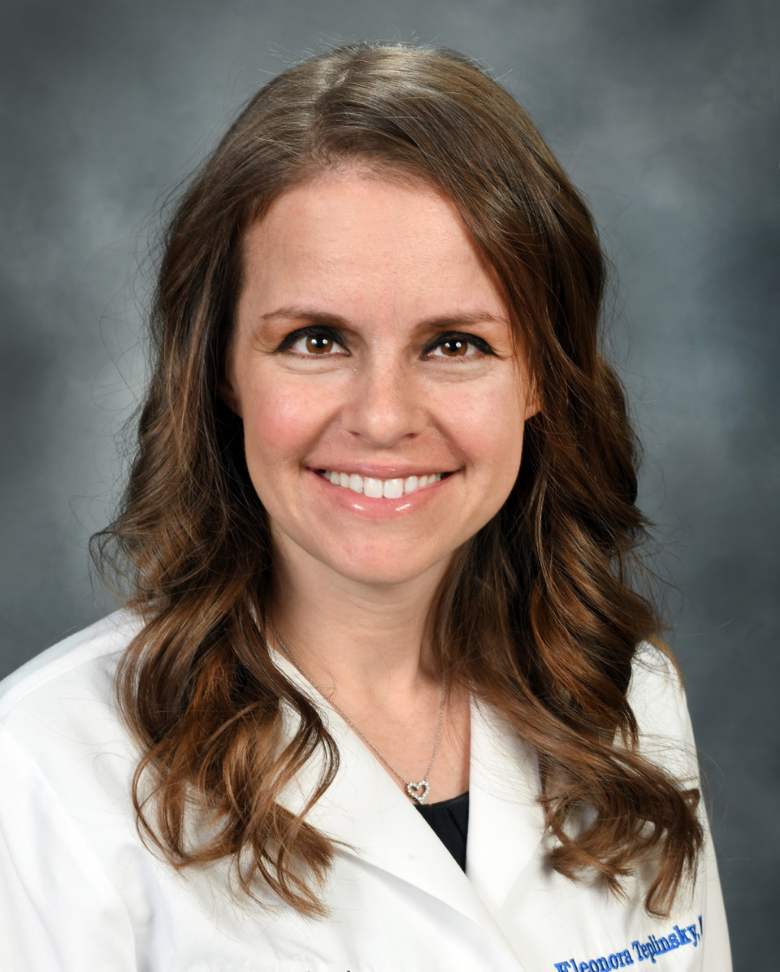
Eleonora Teplinsky
10
APPEARANCES
9
PODCASTS
Sep 23, 2026


Eleonora TeplinskyGUEST
what about starting before 40? So this depends on your family history, depending on when someone in your family was diagnosed, if you have a first degree relative, let's say who was diagnosed at 45, we say start 10 years younger.
Eleonora TeplinskyGUEST
Some people had childhood cancers like lymphoma where they received radiation to the chest.
26 MINS LATER
39:08
Tell us what some of the misunderstanding or misinformation is around mammogram because people do have fear.

Jamie DePoloHOST
So following up on that, when early menopause is caused by breast cancer treatment, what are the most common issues you see in your clinic and how do you treat them? Just so if anybody is watching this and they say, oh, hey, that happened to me and I had no idea that it was part of my treatment.

Eleonora TeplinskyGUEST
And so we talk a lot about, you know, it's when to start in chemotherapy, there's a whole counseling and education session.
Eleonora TeplinskyGUEST
And I think we continue to do that for our patients who are going into early or premature menopause, really having a conversation about what are the potential side effects that you can expect and how are we going to treat them? Whether that be medication for hot flashes, whether that be seeing a cardiologist to do cardiac prevention, whether that be making sure we're doing a bone density and bone health, right? You know, in the book, that's what I try to do.
Eleonora TeplinskyGUEST
is give people action steps for some of these most common things that can happen.
Eleonora TeplinskyGUEST
And then also having conversations about hormones, because they are going to be right for some people, they're not going to be right for other people.
Eleonora TeplinskyGUEST
But really that preventive counseling about what to expect and not saying, I will see how it goes.
10 MINS LATER
Jamie DePoloHOST
So do you have some tips for how people can evaluate the accuracy and the trustworthiness of what they're seeing and hearing?


Eleonora TeplinskyGUEST
patient navigate that? I really believe firmly that we have to change the narrative that someone is too young for cancer.
Eleonora TeplinskyGUEST
And I see patients all the time that were kind of bounced around the system or dismissed for a long time before they were diagnosed.
Eleonora TeplinskyGUEST
In breast cancer specifically, the incident rates are rising in women younger than 50.
Eleonora TeplinskyGUEST
And so we're in this early onset cancer epidemic, if you will, where we're seeing more and more cancer.

Eleonora TeplinskyGUEST
And why did you write this book? I've always, always been interested in medicine.
15 MINS LATER
Samina RahmanHOST
First of all, who do you think menopausal, when you talk about menopausal, you know, I've had so many conversations on this podcast about menopausal hormonal therapy and debunking sort of, you know, the risks associated with breast cancer that we've always thought How do you look at menopausal hormonal therapy in post-cancer patients?

11:39

Can you kind of walk us through what those environmental factors are to be mindful of and maybe what are some things that we're doing in our daily lives that we should be avoiding to keep our hormones at bay and also be mindful of breast cancer?
Eleonora TeplinskyGUEST
And really in terms of what to avoid, right? And there's a lot of things that you can get into like parabens and endocrine disrupting chemicals.
Eleonora TeplinskyGUEST
So should you completely throw out all your makeup and use clean products only? No, because we don't know yet that that's going to make a big difference.
Eleonora TeplinskyGUEST
I like to think about what are things that we can control, right? What are things that we can take action on? And I have two young girls as well.
Eleonora TeplinskyGUEST
And my big thing is movement, right? How how are we moving our bodies every single day? We know exercise is one of those things that is so beneficial, not just for reducing cancer risk, but helping us be as healthy as possible throughout our lives.
15:26
Is there anything that when you talk to patients or when you do seminars that people find to be really surprising that they're doing or they're using in their daily lives that is not helping reduce their cancer risk? alcohol.

Eleonora TeplinskyGUEST
health, but also muscle health and how the two, you know, really interact with each other.
Eleonora TeplinskyGUEST
So I think it really starts by, of course, we want to assess bone health.
Eleonora TeplinskyGUEST
We want to start with getting that bone density scan, but that's only one part of it.
Eleonora TeplinskyGUEST
Because if you have osteopenia or osteoporosis, you know, there are things that we can do.
Eleonora TeplinskyGUEST
We start, you know, thinking about bone calcium and vitamin D and bone medications for some people and movement, which we'll get into.
Eleonora TeplinskyGUEST
But a normal bone density, while it's great, we want to keep it that way, right? We want to make sure that we are being proactive instead of reactive.
5 MINS LATER

ShiraHOST
What are some of the most common lingering side effects you see in breast cancer survivors, especially the ones... that may not realize are treatable or worth bringing up.
Eleonora TeplinskyGUEST
So I think we talked about some of them, but I think it looks different for each person.
Eleonora TeplinskyGUEST
And a lot of it depends on what treatments you've received or will continue to receive.
14 MINS LATER
ShiraHOST
How can patients tell the difference between evidence-based therapies and misinformation?

Eleonora TeplinskyGUEST
There's a lot of misinformation about mammograms, but bottom line is mammograms save lives.
Eleonora TeplinskyGUEST
So sometimes people will say, "How did I get diagnosed with breast cancer? I just had a normal mammogram two years ago." And so mammograms allow us ...
Eleonora TeplinskyGUEST
By having a mammogram, we don't prevent anything, it just allows us to pick up something very early.
12 MINS LATER

Ellen AncuiHOST
And you mentioned vaginal dryness is not something we necessarily wanna live with, so how do you discuss HRTs with your breast cancer patients? What is your take on all of it?

speaker_0HOST
To begin with, Eleonora Topinski from Valley Health System in Paramus, New Jersey, who discusses a study examining the online information patients receive when inquiring about AI in cancer care, which revealed a scarcity of reliable resources on the internet.
Eleonora TeplinskyGUEST
This was a study by Dr. Pearl Subramanian and colleagues, which really asked the question of what information are patients getting online when they ask about AI and cancer care? So not about using AI to give them information about how to treat their cancer, but if they want to know what can AI do in cancer care, what information are they getting? And they looked at both Google and YouTube, so Google web pages, YouTube videos.
Eleonora TeplinskyGUEST
And they found a really small number of resources, both on Google and YouTube, that addressed this.
Eleonora TeplinskyGUEST
And most of the resources were at about a 12th grade reading level, which is higher than the average reading level in America.
speaker_0HOST
She also comments on the importance of educating patients about the potential risks of using AI for health information, including the possibility of loose information and hallucination by AI systems.
Eleonora TeplinskyGUEST
You know, there's been a lot of discussion here at ASCO this year about kind of updating on studies that have been published, so sometimes we see brand-new studies and lots of groundbreaking things, and sometimes in a year like this one, we are building on all the studies that have been presented to really understand longer-term follow-up, nuances in the population and outcomes.
Eleonora TeplinskyGUEST
So I wanna put that out there that not every year is gonna be the year in breast cancer.
Eleonora TeplinskyGUEST
But one of the big studies that is new that did catch my attention is the OPTIMA trial, and what that really looks to see is can we broaden the group of patients where we can omit chemotherapy in hormone receptor-positive, HER2-negative breast cancer.
Eleonora TeplinskyGUEST
So currently, if someone has more than three lymph nodes, we recommend chemotherapy generally, and for premenopausal women who have lymph node-positive disease, the current data has shown a benefit to chemotherapy, and there are studies kind of looking into that more.
Eleonora TeplinskyGUEST
And the question really has been in the premenopausal space is the, is it the benefit of chemo, or is it the chemo makes someone menopausal, you know, uh, induces ovarian suppression? So which one really is it, right? 'Cause these are very hormonally-driven cancers.
8 MINS LATER
Jamie DePoloHOST
It seems very complicated to understand, and I'm wondering if you could explain that and then talk a little bit about the one study, the Ascent 4 trial, that made kind of a big splash.