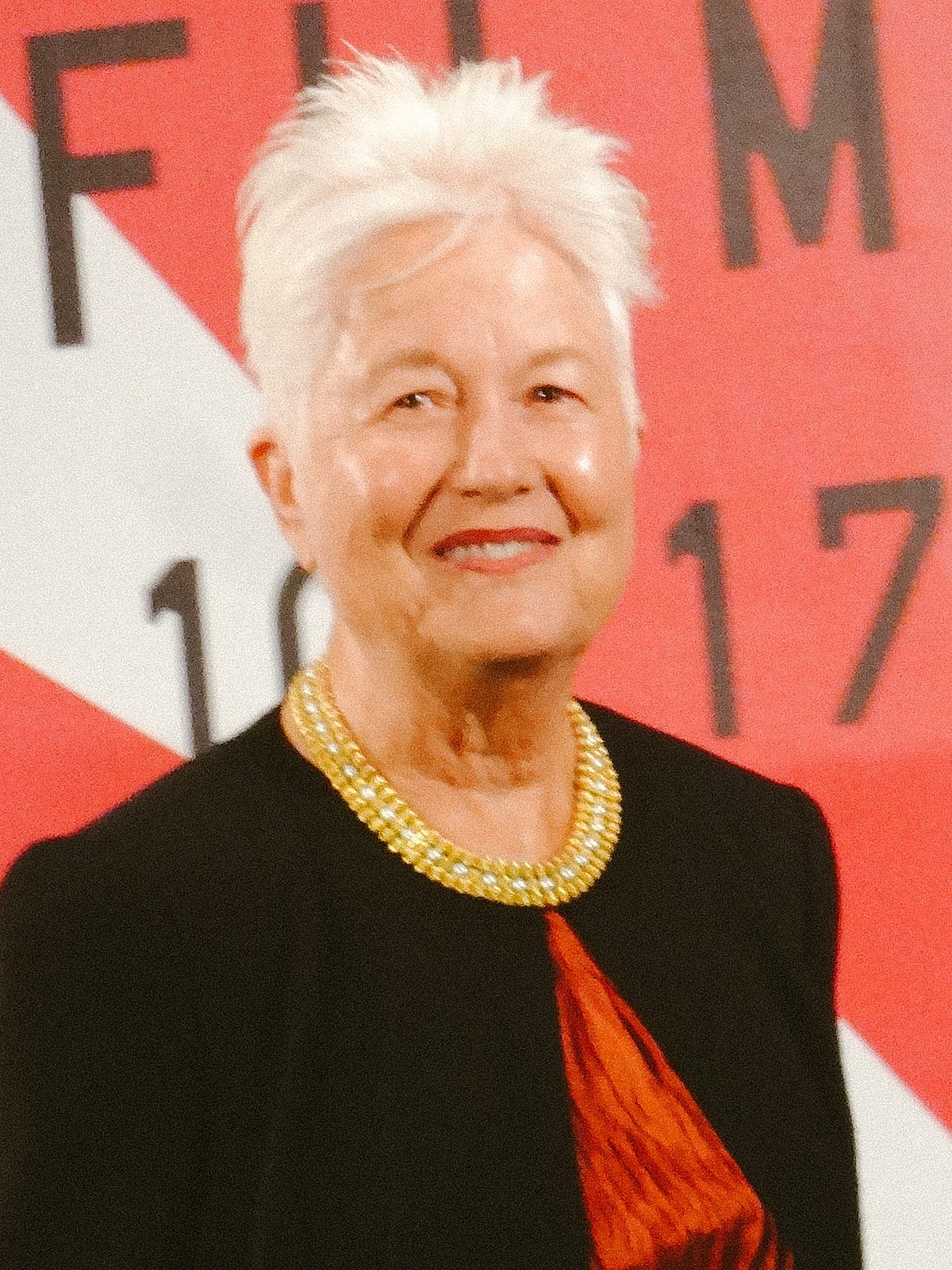
Eleanor Coppola
American film director and screenwriterWikipedia
22
MENTIONS
12
EPISODES
11
PODCASTS
Search complete. 22 mentions across 12 episodes found for "Eleanor Coppola".
Sep 10, 2026

Andrew FordHOST
That is...
Andrew FordHOST
Eleanor Coppola.
Cory SchneiderHOST
Yeah.
Cory SchneiderHOST
What year did this come out? It didn't come out until like 92, right?
Andrew FordHOST
So probably 92, depending on.
Andrew FordHOST
But yeah.
Andrew FordHOST
No, it's Eleanor Coppola with Faye Barr and George Hickenlooper.
Andrew FordHOST
So it's technically the late George Hickenlooper and the late Eleanor Coppola, I believe, as well.

Michael H. WeberGUEST
I could do a Lobot episode any day of the week with you guys.
Michael H. WeberGUEST
So one other thing I want to ask you guys is how familiar you are with Hearts of Darkness, the documentary Eleanor Coppola made about the making of Apocalypse Now.
Michael H. WeberGUEST
I've seen it a long
Keith PhippsHOST
time ago, but I remember thinking it was really good.

speaker_0HOST
Right.
speaker_0HOST
And there's a posthumous documentary by Eleanor Coppola about Sofia Coppola's 2006 Marie Antoinette.
speaker_0HOST
Oh, and Lily Wachowski announced she is, quote, kind of done with the Matrix franchise, handing the reins over to Drew Goddard.
speaker_1HOST
So if we synthesize everything we just discussed, the entire picture of the 2026 entertainment landscape becomes really clear.

Paul RuggGUEST
I had seen with my wife when I was – I had been there a year and a half or something.
Paul RuggGUEST
I saw – What's it called? It was the documentary that Eleanor Coppola made about Francis Coppola making Apocalypse Now.
speaker_5UNKNOWN
Yeah.
Paul RuggGUEST
And it was this sort of like documentary from her point of view of how he lost his mind making it.

Stephen VlahosGUEST
for anybody that's going to get into start something is the heart of darkness.
Stephen VlahosGUEST
It's a. Eleanor Coppola filmed Francis making apocalypse now.
Stephen VlahosGUEST
And it's the best, best thing I've ever watched.
Stephen VlahosGUEST
I mean, the amount of stuff that he went through to make that movie, it was like seven years over budget.

speaker_0HOST
You can find it.
speaker_0HOST
and what's striking when you watch it isn't that it's different from what's in the film it's that it's more honest what they released ends on willard's boat moving into darkness the radio call unanswered or at least unresolved kurtz's voice still on the soundtrack the moral question hanging which is also a legitimate ending which also works but the explicit destruction of the compound the clear indication that willard is participating in exactly what he was sent to stop that's not ambiguity that's a statement the reason it got pulled is actually somewhat documented in hearts of darkness the documentary that eleanor coppola made about the production and in subsequent interviews by the time they got to post-production the film had already become a legend for its catastrophic on-set disasters the typhoon marlon brando arriving vastly overweight having read nothing martin sheen's heart attack and cupola was in a fragile state united artists wanted something that could win cannes which it eventually did and there was a sense that the more devastating explicit ending was two on the nose two on the nose that phrase has killed more great cinema than any budget crisis the thing is sometimes art should be on the nose sometimes the nose is exactly where you should be the argument that explicitness is somehow less sophisticated than ambiguity is a bias that critics have not necessarily one that serves every film equally apocalypse now is a film about the explicit horror of american foreign policy dressed up as individual moral collapse making the ending more comfortable and ambiguous is a choice that reflects the same cultural embarrassment the film is supposedly critiquing walter murch who cut the film has spoken about this in interviews with the diplomat's precision he clearly has complex feelings about those choices he won the academy award for his work on it and also released an extended cut decades later that restored material and reframed some sequences but the compound destruction never made it back in sometimes it's not a whole sequence sometimes it's a single scene three minutes maybe four and the absence of those three minutes turns what should have been a tragedy into something that reads as a thriller scene nineteen ninety five david fincher there is a scene that was written and in some versions of the production history partially shot in which john doe kevin spacey's character visits a library early in the film the scene establishes quietly and without exposition that doe has been planning these murders for years not months years there are books he's annotated going back nearly a decade handwriting changes he was different once and became this what the finished film gives you instead is a villain who appears to have arrived fully formed the kind of evil that has no origin no evolution just pure theological malevolence which is effective brad pitt's reaction to that head in the box at the end is one of the great performances of shock and grief in ninety cinema but here's the argument for the library scene if doe has been doing this for years quietly invisibly then the horror isn't just what he did the horror is the city the horror is that a man catalogued these murders and nobody noticed not because he was particularly brilliant but because modern urban life is so atomized that extreme deliberate evil can grow in plain sight that changes what the film is about without the library scene science is a procedural about catching a monster with it it becomes something closer to what finch's later work zodiac especially would make explicit a film about the failure of institutions to see what's right in front of them about how systems that should detect and prevent violence instead create the conditions for it fincher has talked in various commentaries about restraint in that film about how much he deliberately withheld and some of that restraint is clearly intentional and correct but the library scene sits in a different category it's not withholding for mystery It's withholding background that would have elevated a very good genre film into something genuinely disturbing in a systemic way.
speaker_0HOST
I want to spend some real time on Brazil.
speaker_0HOST
Terry Gilliam, 1985.

Amanda DobbinsHOST
There are a lot of events.
Amanda DobbinsHOST
Most of this film was, um, directed and, and filmed by Sofia's late mother, Eleanor Coppola, who also of course directed Hearts of Darkness, the making of documentary about Apocalypse Now.
Amanda DobbinsHOST
That is one of the greats.
Amanda DobbinsHOST
Um, Sofia Coppola finished the film after her mother's passing.
Sean FennesseyHOST
Mm-hmm.
Amanda DobbinsHOST
Um, so I, you know, Eleanor Coppola is a great, was a great filmmaker and also a great writer and a great chronicler of what it means to make films and also to, um, be a woman in the orbit of making films.
Sean FennesseyHOST
Mm.
Sean FennesseyHOST
Mm.

ChaseHOST
of this? Right.
ChaseHOST
And Eleanor Coppola, Francis Ford Coppola's wife, she was documenting all of this and basically collecting all the footage to make this making of documentary.
ChaseHOST
And she even said it seemed like... uh brando was taking a very long time to work through the character with coppola because like he knew he was getting paid like by the week yeah he was like milking it yeah
DrewHOST
and they're just showing scenes of like how do we mix this character in like i remember them talking about how coppola was scared to have dennis hopper and brando in the same room because he was like hopper's character just like Super eccentric.

Amanda DobbinsGUEST
...
Amanda DobbinsGUEST
I'm supposed to do as a mother and a woman over 40, uh-
Sam FragosoHOST
Mm-hmm
Amanda DobbinsGUEST
... with, you know, fearing sun damage.
35 MINS LATER
Sean FennesseyGUEST
Which is unsurprising if you look at the people behind the film.
Sam FragosoHOST
Maybe I should add some context.
Sam FragosoHOST
In my family, my mother showed me Boogie Nights, and my father showed me Goodfellas, and I think that's really all, at a young age, like maybe 10 or 11.
Sean FennesseyGUEST
Okay.
speaker_0NARRATOR
Something about the character not quite working, the approach being wrong.
speaker_0NARRATOR
Eleanor Coppola's diary from the production, published as notes, gives you a more textured version.
speaker_0NARRATOR
Keitel's Willard was too active, too much of a protagonist in the conventional sense, someone who pursues the mission, who has drive and forward energy.
speaker_0NARRATOR
Coppola needed someone who could be passive, who could be carried by the river.
15 MINS LATER
speaker_0NARRATOR
Pickens meant it.
speaker_0NARRATOR
When you know these stories, and you can go find them, they're documented, they're in the memoirs and the interviews and the making of accounts.
speaker_0NARRATOR
They're in Eleanor Coppola's diary and in what Hoffman has said about the mirror.
speaker_0NARRATOR
When you know them, you watch these films differently.
2 more episodes mention Eleanor Coppola.
Create an account to see the whole feed, search across every transcript, and follow the entities you care about.