Ejection fraction
127
MENTIONS
25
EPISODES
20
PODCASTS
Search complete. 127 mentions across 25 episodes found for "Ejection fraction".
Oct 28, 2026

Joshua KhorsandiGUEST
ECG shows normal sinus rhythm with anterior Q waves, a narrow QRS, and no acute ST segment or T wave changes.
Joshua KhorsandiGUEST
Repeat transthoracic echocardiogram shows an LVEF of 30%.
Joshua KhorsandiGUEST
What is the most appropriate next step? The answer choices are as follows.
Joshua KhorsandiGUEST
A, switch Valsardin to Sacubrital Valsardin.
Shikha JhaGUEST
So the correct answer is B, consider implantable cardioverter defibrillator ICD placement.
Shikha JhaGUEST
Generally, arrhythmic complications increase both morbidity and mortality rates in patients after ACS.
Shikha JhaGUEST
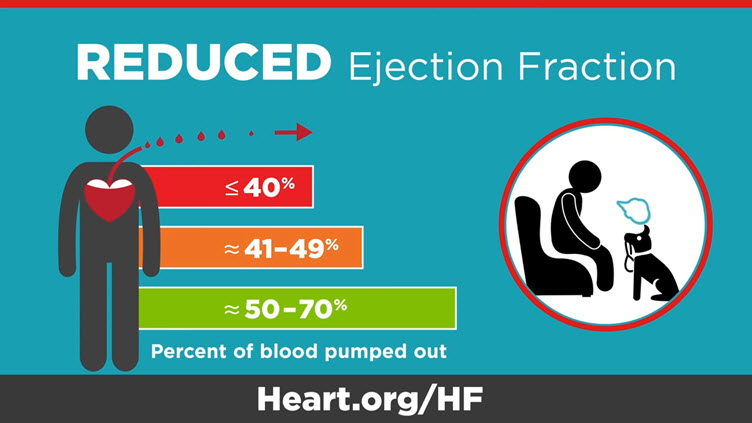
Patients who present with EMI with reduced LVEF as in less than or equal to 40% have increased risk of new onset atrial fibrillation, radiarrhythmias, and ventricular arrhythmias.
Shikha JhaGUEST
Ventricular arrhythmias are common after ACS and more common in patients with reduced LVES.

Niraj SharmaHOST
It was a non-inferiority margin, and the margin they chose was minus 10% points, and it was an intention to treat primary analysis.
Niraj SharmaHOST
Secondary endpoints were left ventricular ejection fraction, QRS duration, NT-proBNP symptoms, six minute walk, capture thresholds, and device implant measures.
Niraj SharmaHOST
Crossover was permitted.
Niraj SharmaHOST
So let's talk about the crossover part.
Niraj SharmaHOST
CSP turned out to be worse than Byvi.
Niraj SharmaHOST
All the other trials point towards the direction that that this is non-inferior.
Niraj SharmaHOST
The way I look at it until we have a much larger randomized trial is try by V in this classic situation, left bundle reduced ejection fraction.
Niraj SharmaHOST
And if the anatomy, the CS anatomy is poor, then just jump straight, not even try putting a CS lead in because the anatomy is so bad.

MarkHOST
She has atrial fibrillation, and she's actually on a Pixaban and amiodarone for that.
MarkHOST
She has hypertension, hyperlipidemia, not obstructive coronary artery disease, chronic kidney disease with a baseline creatinine around 1.2, Heart failure with improved EF, and now the most recent EF, was 60 to 65, and a remote history of breast cancer, and she got a mastectomy and lumpectomy many years ago.
MarkHOST
And for her meds, like I mentioned, she's on anticoagulation with apixaban, amiodarone, amlodipine, atorvacetin, and dipagliflozin, and she said she took all of her medications in the morning prior to admission.
MarkHOST
Her family history is non-contributory.
22 MINS LATER
MarkHOST
So we got an echocardiogram.
MarkHOST
It showed that her TAVR was well-seated, very minimal regurgitation, no issues with the TAVR.
MarkHOST
Her EF was 60 to 65%, same as previous, and there was no vegetations noted.
MarkHOST
Otherwise, her echo essentially looked completely normal with a well-seated TAVR.

Robert PassHOST
What about the echocardiograms of these patients? Turns out that there was right atrial and right ventricular dilation in 23% and 45% respectively, and qualitatively there was at least mild RV dysfunction in 56% of patients.
Robert PassHOST
The LVEF was abnormal in 11%.
Robert PassHOST
And what about the CMRs that were performed? Well, not unlike the echoes, 15% had an RV end-diastolic dilation and 23% end-systolic dilation.
Robert PassHOST
The mean RVEF was 52%, and only 6% had depressed RVEF on CMR.
Robert PassHOST
Interestingly, there was left ventricular end-diastolic and systolic dilation in 21-25%, and the mean LV ejection fraction was normal at 58%, with 10% having a depressed LVEF.
Robert PassHOST
A residual ASD was seen in 2%, and all of the volume and functional measurements were similar between sinus venosus ASDs and secundum patients.
Robert PassHOST
Finally, in regards to the survey, it seems that those with sinus venosus ASDs had significantly higher scores on the physical functioning domain compared to those who had a secundum ASD.

Joshua KhorsandiGUEST
Emergent coronary angiography demonstrates ninety percent stenosis of proximal to mid LAD, and he's treated with two drug-eluting stents.
Joshua KhorsandiGUEST
Transthoracic echocardiograms during hospitalization showed an LVEF of twenty-five percent with anterior and apical wall motion abnormalities.
Joshua KhorsandiGUEST
He is discharged on dual antiplatelet therapy, along with metoprolol, valsartan, spironolactone, SGLT2 inhibitor, and rosuvastatin.
Joshua KhorsandiGUEST
At follow-up three months later, he reports home blood pressure readings in the nineties over fifties millimeters of mercury with intermittent shortness of breath and lightheadedness.
Joshua KhorsandiGUEST
Blood pressure in the office is ninety-two over fifty-four millimeters of mercury.
Joshua KhorsandiGUEST
ECG shows normal sinus rhythm with anterior Q waves, a narrow QRS, and no acute ST segment or T wave changes.
Joshua KhorsandiGUEST
Repeat transthoracic echocardiogram shows an LVEF of thirty percent.
Joshua KhorsandiGUEST
What is the most appropriate next step? The answer choices are as follows.

EddieHOST
Because there's only 4,400 patients in this cohort who had a GLP-1 exposure compared to 470,000 patients who didn't.
EddieHOST
And so they just took everybody who had the exposure and which of the 470,000 was the closest based off of, um, the history of diabetes, obesity, their age, their sex, their LVEF, their blood pressure, lactate, creatinine, bilirubin, bicarb, those were their propensity scores, and said, "Okay, who's the closest in this group to my, to my person?"
ToddHOST
Yeah.
EddieHOST
"That's the person I'm gonna use to match" And they did it for all, for all 4,400 patients there.
Mina FaresGUEST
And it's important to emphasize that at this point, the patient had already established on good medical therapy and he was clinically stable and no chest pain and his ECG was stable at this point.
Nazli OkumuşHOST
So to summarize, this is an 88-year-old with NSTEMI, preserved EF, and complex coronary anatomy, including distal left main disease and CTO of RCA.
Nazli OkumuşHOST
So, Mina, Faryal, can you please take us through your thinking process in terms of the medical therapy and the next steps of the management?
Fariyal CheemaGUEST
Yeah, so at that point, he was pain-free and we can see that he has complex coronary anatomy.
5 MINS LATER
Nazli OkumuşHOST
But whenever I use support, honestly, I haven't regretted it.
Nazli OkumuşHOST
One thing I would do for this case is since patient is stable and we have time, I would assess the access sites to make sure we have appropriate access and it's not going to add additional complications to the case.
Nazli OkumuşHOST
But otherwise, I think I would also go for support given multivascular disease, frailty, even though EF is normal.
Nazli OkumuşHOST
I would also get an LVDP to see what the left-sided filling pressures are.

John MandrolaHOST
So it could be that both drugs were effective and fell on either side of that significance level.
John MandrolaHOST
Or aficamten could be a slightly better drug based on its shorter half-life, uh, that allows, you know, a better ability to uptitrate and may be able to stop the drug sooner if the LVEF drops.
John MandrolaHOST
And there are also fewer drug-drug interactions with aficamten.
John MandrolaHOST
The thing that seems reasonable to conclude is that both drugs affect the biology of HCM as echo and biomarkers do go in the right direction.
John MandrolaHOST
I'm just a neutral Martian looking in at this interesting data, but I'm struck by the short-term nature of these trials.
John MandrolaHOST
I mean, both drugs work by creating negative inotropy.
John MandrolaHOST
That's a little worrisome, isn't it? I mean, LVEF fell below fifty percent in ten point five percent of aficamten patients versus zero point eight on placebo, and serious heart failure events occurred in four point three versus zero point four.
John MandrolaHOST
So that's a lot higher.

Karen LarmerHOST
Cardiac structural abnormalities can also qualify.
Karen LarmerHOST
Cardiac structural abnormalities can include increased left ventricular mass, increased chamber sizes, such as increased left atrial volume, increased wall thickness, reduced LVEF, wall motion abnormalities, or abnormal global longitudinal strain.
Karen LarmerHOST
Evidence suggesting elevated filling pressures, such as an average E over E prime of at least fifteen, can also be relevant.
Karen LarmerHOST
Let's make this practical.
15 more episodes mention Ejection fraction.
Create an account to see the whole feed, search across every transcript, and follow the entities you care about.