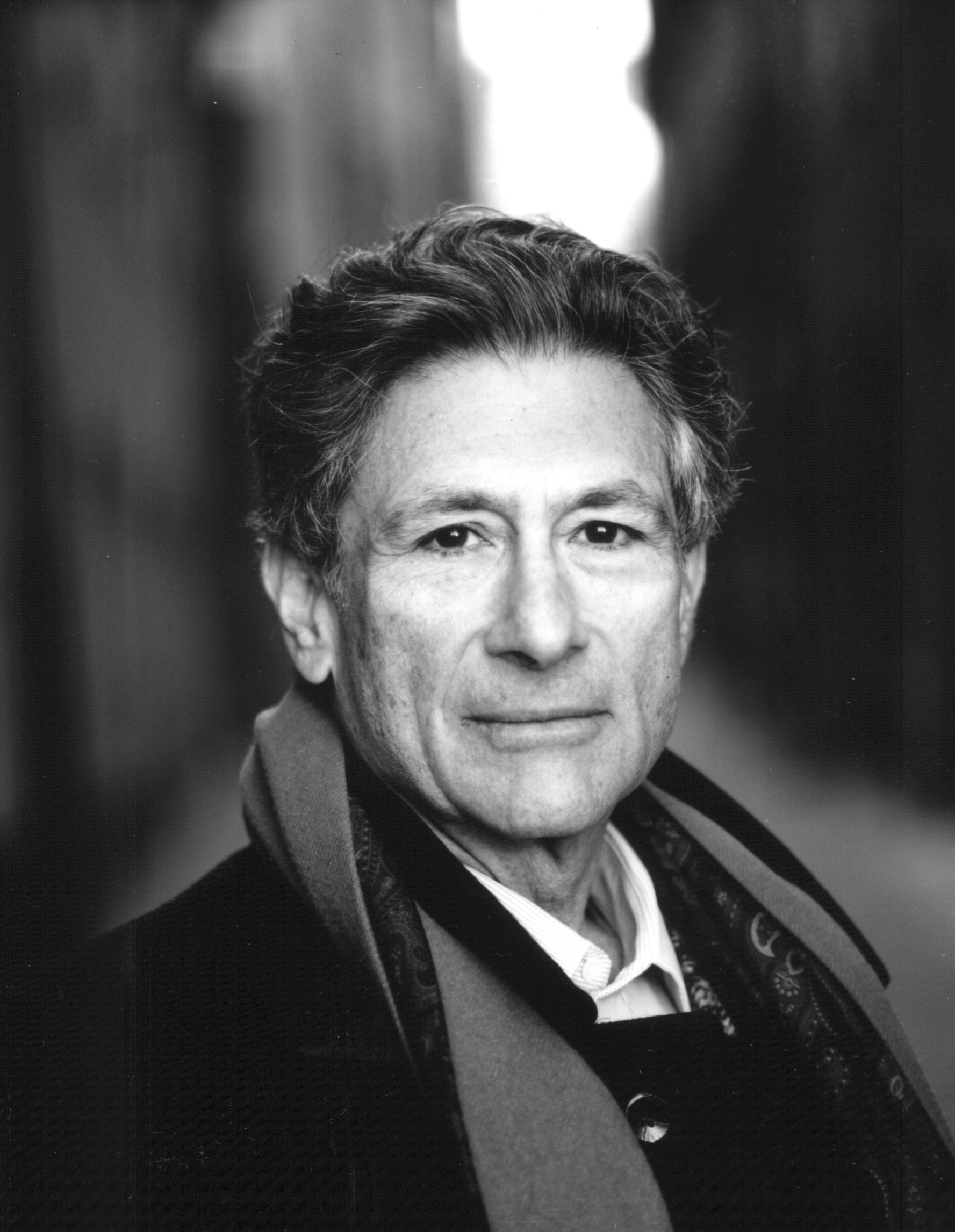
Edward Said
Palestinian-American academic and literary criticWikipedia
125
MENTIONS
76
EPISODES
68
PODCASTS
Search complete. 125 mentions across 76 episodes found for "Edward Said".
Sep 12, 2026

Irfan AhmadGUEST
And that book put at the center that, look, terrorism is the enemy of the West, and therefore the subtitle is How to Win.
Irfan AhmadGUEST
Now, it has 40 contributions, and Edward Said actually wrote a critique of that book.
Irfan AhmadGUEST
And in his reading, the message that that book wanted to say is that the Arabs are the terrorists, and Arabs alone are the terrorists.
Irfan AhmadGUEST
So you already see the idea being floated in 1986.

Chris GratienHOST
But what are we adding with this term Hebrew Orientalism? How is it distinct from Orientalism and how is it related to what our audience knows as Orientalism?
Mostafa HusseinGUEST
When we talk about Orientalism, the shadow of Edward Said usually looms very, very large.
Mostafa HusseinGUEST
Rather than opening up and objectively explaining the Orient for European audience, Edward Said teaches us that Orientalism is a projection and a reflection of the West itself.
Mostafa HusseinGUEST
And therefore, during the colonial era, Orientalism reflects the history of colonialism and imperialism rather than representing or talking about the East itself.
Mostafa HusseinGUEST
As the object of Western imagination, the East is seen as the uncivilized, the savage, the underdeveloped, the weak, the feminized, while the West emerges as the superior, the powerful, the civilized.

Chris GratienHOST
But what are we adding with this term Hebrew Orientalism? How is it distinct from Orientalism and how is it related to what our audience knows as Orientalism?
Mostafa HusseinGUEST
When we talk about Orientalism, the shadow of Edward Said usually looms very, very large.
Mostafa HusseinGUEST
Rather than opening up and objectively explaining the Orient for European audience, Edward Said teaches us that Orientalism is a projection and a reflection of the West itself.
Mostafa HusseinGUEST
And therefore, during the colonial era, Orientalism reflects the history of colonialism and imperialism rather than representing or talking about the East itself.
Mostafa HusseinGUEST
As the object of Western imagination, the East is seen as the uncivilized, the savage, the underdeveloped, the weak, the feminized, while the West emerges as the superior, the powerful, the civilized.

Janet ParshallHOST
So if you start looking at some of the problems out there, you see, for example, that September 11th has been hijacked in other ways.
Janet ParshallHOST
The NEA, that teachers union, the National Teachers Labor Union, provides resources for teaching 9-11 that quotes radical anti-Israeli professor Edward Said, calling the U.S., quote, cruel and inhumane.
Janet ParshallHOST
and blaming the 9-11 attacks on America's support for the Jewish state.
Janet ParshallHOST
Another curriculum, it's called the Voices Ethnic Studies Curriculum, used in Pittsburgh public schools, teaches that the attacks led to, and I quote, "...increased experiences with racism and Islamophobia, with no mention of how many people were killed or by whom." A California ethnic studies curriculum reportedly stated that, quote, 9-11 served as a catalyst to bring about more blatant discrimination and referred to America as a, quote, colonizer.

Louise AdlerGUEST
It was just very depressing.
Richard FidlerHOST
[laughs] So then you go to the United States to New York to study at Columbia University, and that's where you met and studied under the Palestinian intellectual Edward Said.
Richard FidlerHOST
How, how well did you get on with Edward Said?
Louise AdlerGUEST
Extremely well.
Louise AdlerGUEST
I wanted to write my thesis on Marxist aesthetics.
Louise AdlerGUEST
Popular? [laughs] Charisma, charisma on steroids.
Louise AdlerGUEST
Extremely handsome character.
Louise AdlerGUEST
But l- all, all I can remember is the women's toilets were full of graffiti about Edward Said.

Ayman MakaremGUEST
And I find that Sartre story kind of interesting that way.
Ayman MakaremGUEST
The other one is Edward Said.
Ayman MakaremGUEST
Because Edward Said not only sits in the pulpit of Columbia and writes his big books and his very intellectual post-colonial, post-structuralist things.
Ayman MakaremGUEST
He also got directly involved in Palestinian politics and the Palestinian National Committee.
Ayman MakaremGUEST
He met with Yasser Arafat.
Ayman MakaremGUEST
Meaningless, right.
Ayman MakaremGUEST
He had to start basically from the beginning with these people and, like, earn their trust and respect and admiration or whatever.
Ayman MakaremGUEST
And there's this beautiful scene, one of my favorite scenes of cinema, with Edward Said sitting with a group of, like, five Palestinian women, refugees in the south of Lebanon.

Liz SchmermundGUEST
Yeah
Angela WeislGUEST
... and I've read everything, and I've never heard of Edward Said and then they made me read him in college.
Angela WeislGUEST
I was like-
Andrew RimbyHOST
Yes, yes.
Angela WeislGUEST
Sor- sorry, I'm ranting.
Andrew RimbyHOST
No. Yeah.
speaker_12SOUNDBITE_SPEAKER
This guy named Edward Said, who I had never heard of before.
speaker_12SOUNDBITE_SPEAKER
This is very strange because in high school I had read basically every single great writer that you could possibly think of, or at least I'd heard of every single great writer that you could possibly think of, and I didn't know who Edward Said was and I didn't know, you know, what poem or what novel we were reading of his.

Dexter Van ZileGUEST
Okay, I think the issue with this point is this that young people have basically been indoctrinated with the idea that western civilization is evil okay and they have been indoctrinated with the idea that israel was evil and that it was essentially a singularly evil country and then the same methods used to demonize israel as it turned out had actually been applied against the western democracies as well And, you know, you've got people like Foucault, Marcuse, and a whole bunch of other people that have been dominating the intellectual environment on college campuses for a long time.
Dexter Van ZileGUEST
And Edward Said, people basically embrace the idea that Western civilization was evil.
Dexter Van ZileGUEST
And as a white guy, I'm going to, and white guys were the worst.
Dexter Van ZileGUEST
Okay.

Nura HossainzadehGUEST
Yeah, I think it's an interesting question, a complex question.
Nura HossainzadehGUEST
I think that you're going to have to go back all the way to Edward Said and his idea of Orientalism and how that infuses even Western academia.
Nura HossainzadehGUEST
That was one of his central points.
Nura HossainzadehGUEST
And that...

Asal RadGUEST
And, you know, that's what made me want to study the region further, eventually getting a PhD in history in the modern Middle East.
Asal RadGUEST
And the part where media plays into it is when you study the Middle East, I mean, one of the most important texts that all of us will read is Edward Said's Orientalism.
Asal RadGUEST
and this idea of the entire way that the region has been depicted through the academy, through popular culture, through art.
Asal RadGUEST
And that made me very interested in understanding narratives, how stories are told, in our modern society the to my mind at least the most important storyteller is the news media because most people you know that if you're looking at mass consumption of the public most people are not going to be reading a lot of books on these topics they're not you know everybody has their own jobs and specialties and things that they're working on and so everyone's not going to become a historian of the middle east that's not the extent that their education is going to go on this particular topic.
66 more episodes mention Edward Said.
Create an account to see the whole feed, search across every transcript, and follow the entities you care about.