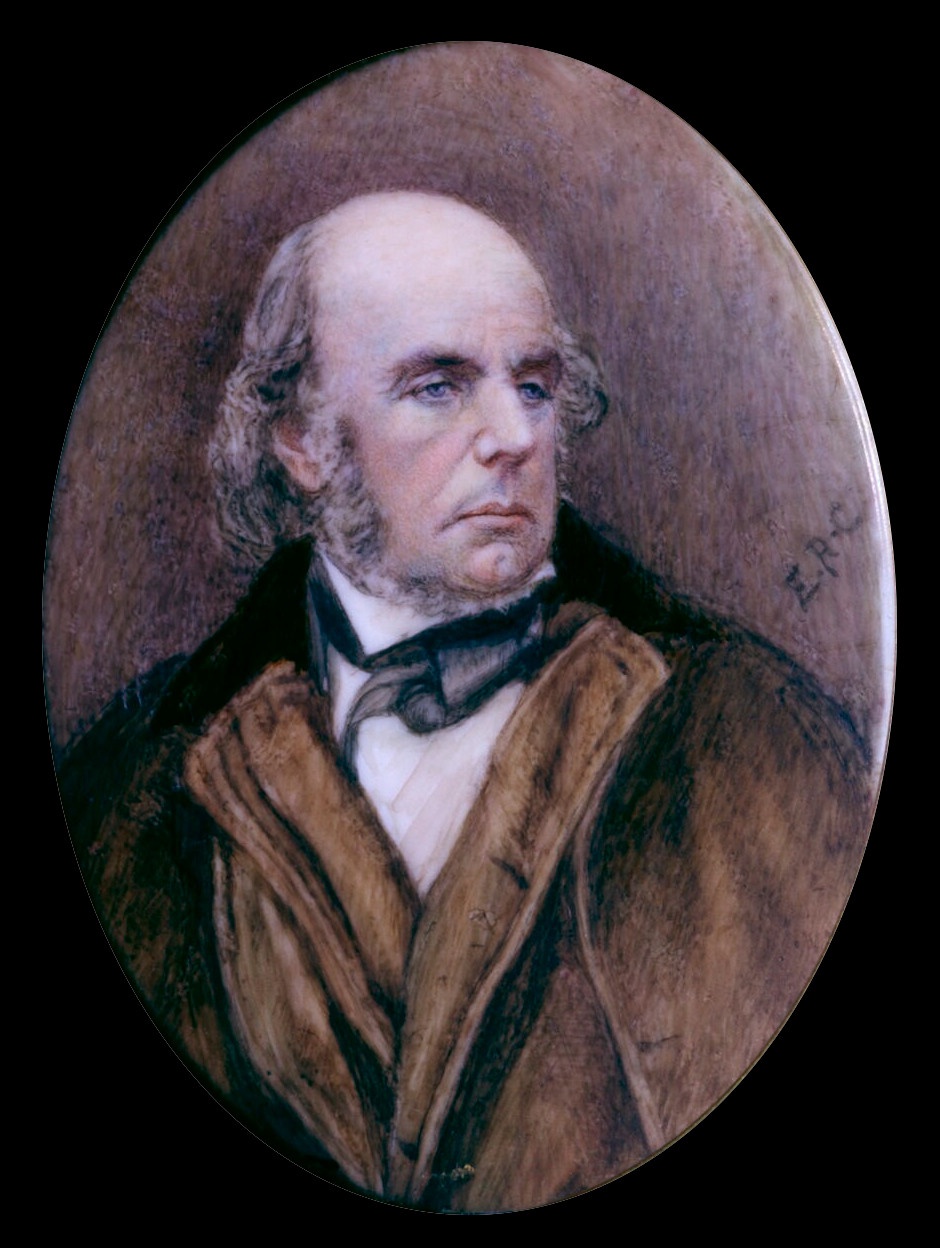
Edward FitzGerald
English poet and writerWikipedia
43
MENTIONS
10
EPISODES
9
PODCASTS
Search complete. 43 mentions across 10 episodes found for "Edward FitzGerald".
Oct 4, 2026
Victorian Literature-Clement Shorter
D
49:34Dave PortnoyADVERTISER
have
S
49:35speaker_7NARRATOR
been fairly conspicuous in the poetry of the epoch and the term celtic renaissance has begun to be used hopefully by lovers of ireland who desire that country to have a literature as distinctly irish as scotland has a literature definitely scottish thomas more seventeen seventy nine to eighteen fifty two was the pioneer of this movement he had it is true done all his work before the queen came to the throne although he lived yet another fifteen years his irish melodies began to appear in la la roque was published in eighteen seventeen and the life of byron in eighteen thirty more was as much an inspiration to modern ireland as burns to modern scotland and the one country holds the name of its poet as reverentially in memory as does the other more however lacked the note of passionate sincerity which pertained to burns although we may fairly ask what would have been the career of burns had he been thrown early into the literary and social life of london the london of byron's time the influence of more was strong in thomas davis eighteen fourteen to eighteen forty five whose national and historical ballads songs and poems caused so great a ferment in the heart of young ireland many other irish writers deserve to be named such as james clarence mangan eighteen o three to eighteen forty nine sir samuel ferguson eighteen ten to eighteen eighty six lady dufferin eighteen o seven to eighteen sixty seven and john bannam seventeen ninety eight to eighteen forty two who wrote in conjunction with his brother michael some twenty-four volumes of irish stories and verses samuel lover seventeen ninety seven to eighteen sixty eight is best known in england by his romance rory o'more and his ever popular handy andy but in ireland he is remembered as a writer of lyrics and ballads of heart-stirring character an irishman by descent although not by birth was edward fitzgerald eighteen o nine to eighteen eighty three who was born in suffolk and lived all his life in the neighbourhood of woodbridge in that county fitzgerald's letters and literary remains fill three substantial volumes but he lives for us by his translation or rather paraphrase of the rubyat of omar khayyam of nashapur which first appeared in eighteen fifty nine it is generally agreed that fitzgerald a nineteenth-century pagan always reverently questioning the mystery of existence superadded his own personal thoughts and feelings to the verses of the old persian singer in doing this he touched deeply a certain aspect of the second half of the nineteenth century and founded a cult fitzgerald's verses however have been ardently admired by many who are far from accepting their pessimist view of life hartley coleridge seventeen ninety six eighteen forty nine wrote and published his admirable sonnets before eighteen thirty seven he was a son of samuel taylor coleridge seventeen seventy two to eighteen thirty four whose literary remains were edited by henry nelson coleridge a nephew and son-in-law h n coleridge married the great poet's only daughter sarah coleridge eighteen o three to eighteen fifty two who wrote one poem phantasmeon and whose letters throw much light on an important chapter of literary history brian waller proctor seventeen eighty seven to eighteen seventy four better known as barry cornwall was at school with lord byron at harrow his dramatic scenes marcian colonna and mirandola were much talked of in their day proctor was admired as a poet by byron more and other famous contemporaries but no one reads him now a happier fate has befallen his daughter adelaide anne proctor eighteen twenty five to eighteen sixty four whose legends and lyrics are still widely popular winthrop mackworth praed who wrote much admirable humorous and satirical verse is not a victorian author although his present popularity makes that rather hard to realize he died in eighteen thirty nine richard hengist horn eighteen o three to eighteen eighty four on the other hand although he lived into our time is now remembered only by his friendship with mrs browning and by the humorous freak of publishing his epic orion at a farthing he was the author of a miracle play entitled judas iscariot a tragedy entitled the death of marlowe and many other works another writer of well-nigh forgotten tragedies was thomas lovel of eighteen o three to eighteen forty nine who wrote the bride's tragedy and death's jest book a like extinction it is to be feared has befallen ebenezer jones and ebenezer eliot the former of whom belonged to that spasmodic school of poets of which alexander smith and philip james bailey were supposed to be the leaders ebenezer jones eighteen twenty to eighteen sixty
D
54:52Dave PortnoyADVERTISER
wrote studies in sensation and event
S
54:55speaker_7NARRATOR
to which in eighteen seventy nine his brother sumner jones attached an interesting biography there is very genuine poetry in the volume but it is not likely to be republished ebenezer eliot seventeen eighty one to eighteen forty nine had a very different fate he enjoyed for many years the suffrages of the multitude his corn law rhymes played a considerable part in the political agitation of the period james montgomery called him the poet of the poor another writer with a fine democratic impulse was gerald massey eighteen twenty eight who was associated with the chartist movement and wrote poems and charms voices of freedom and lyrics of love another chartist was thomas cooper eighteen o five to eighteen ninety two who wrote the purgatory of suicides and many other poems and an entertaining autobiography cooper was an active political agitator and was imprisoned for two years in stafford gaol first edition a poet who holds a great place in the minds of many is william barnes eighteen twenty to eighteen eighty six who kept a school for a time in mr thomas hardy's town of dorchester he afterwards became a clergyman and rector of winterbourne came he was a philologist as well as a poet and published many works on language his interest for us here is in his poems of real life in the dorset dialect eighteen forty four another poet clergyman of great learning was robert stephen hawker eighteen o three to eighteen seventy five whose work reflects devonshire and cornwall as barnes reflects dorsetshire he wrote the song of the western men which he deceived macaulay into believing to be an old cornish ballad and the great historian introduced it into his history of england as an example of the excitement caused by the arrest of the seven bishops its stirring refrain and shall trelawney die and shall trelawney die then thirty thousand cornish boys will know the reason why we'll always keep hawker in remembrance he was vicar of morenstow and wrote several volumes of poems and some prose including footprints of former men in far cornwall two poets father and son made the name of marston honored in their days john westland marston eighteen nineteen to eighteen ninety was born at boston lincolnshire he wrote two dramas strathmore and marie de mirany which had much success some years ago another work a hard struggle obtained the enthusiastic praise of dickens dr garnett claims for marston that he was long the chief upholder of the poetical drama on the english stage philip burke marston eighteen fifty to eighteen eighty seven a son of westland marston should not have failed of literary success as he had for
Kelly's Picks: The Rubaiyat of Omar Khayyam
A
11:59Amanda McGowanHOST
But then in the year 1852, there was this young scholar in England named Edward Carroll, and he was walking through the stacks of a library at Oxford, just poking around, and he came across this beautifully decorated 16th-century manuscript, and it was a collection of Omar Khayyam's rubayat Now Carroll, the scholar, knew someone who would actually really, really like this manuscript.
A
12:23Amanda McGowanHOST
So he made a copy of it, and he gave it as a gift to one of his good friends, a man named Edward Fitzgerald.
A
12:30Amanda McGowanHOST
And yes, apparently everyone in Victorian England was named Edward.
A
12:34Amanda McGowanHOST
Fitzgerald was kind of an interesting guy.
A
12:36Amanda McGowanHOST
He was born to rich, rich, rich, rich parents, very rich parents.
A
12:41Amanda McGowanHOST
He never had to have a real job in his life, but he loved literature and learning languages.
A
12:47Amanda McGowanHOST
Edward Carroll was actually one of his language teachers and one of his great friends.
A
12:51Amanda McGowanHOST
Some historians say that Fitzgerald may have been in love with him.
P
Unknown podcast
Second Rubaiyat Miscellany-Louisa Stuart Costello, Edward Byles Cowell, Nathan Haskell Dole, Henry George Keene, Rex Löwenberg
Sep 27 · 1 Mention
A
63:57Algie PuggNARRATOR
Section 4 of A Second Rubaiyat Masalini This LibriVox recording is in the public domain.
A
64:06Algie PuggNARRATOR
Uma of Nishapur by Charles J. Pickering reprinted from the national review december eighteen ninety part one of the comparatively few oriental writers who have become well known in europe alkayam has perhaps been the least fortunate ignored by d'herboulon misrepresented and maligned by von and made the mouthpiece of a purely modern pessimism by his most successful translator the shade of the old hakim were it not long ago well lulled to sleep beneath the ancestral roses might justly have risen in reproach of a misbelieving and unsympathetic generation which deems itself wiser than the children of the dawn the brilliant paraphrase of edward fitzgerald has made the name of ulmar somewhat of a household word as an english poem it is so nearly faultless that for those to whom its haunting music has been a companion of years to balance calmly its merits and defects would be no easy task but when we compare it with the original we are surprised to find how much of the english version is original too and this is not all of the indictment il traduttore traditore runs the italian proverb and rarely could it find an apter illustration than the case in point among a considerable section of his oriental readers as in the parallel case of hafez and since von hummer's time in europe generally humain has had to bear the character of a poetic black sheep following in the track of the author of the geschichte der schönen rede kunste persians the translator while investing his subject with a beauty of rhythm and phrase that reminds us rather of the laureate than of any eastern songster throws the sceptical side of humo's genius into still darker shadow so that the vacillating doubt and despondency of the persian grow in his hands a pan of passionate denial and defiance edward however be unfair to contend that for this there is positively no warrant in the original lawless and uncertain thoughts occur but they seem rather to be thrown out at random stray sparks from the furnace of a fiery spirit ill at ease with itself than parts of a deliberate system of heinesque mockery or of byronic scorn phrases scattered here and there throughout the rubaiyat are given an emphasis and used in the sequence their author would probably have been the first to disown indeed at the outset it would have been better pache the calcutta reviewer to whom we owe a debt of gratitude for his delightful biographical sketch to have taken umar as a mind of the horatian rather than of the lucretian order for system of all things is what is least conspicuous in the kaleidoscopic pages of the rubaiyat well does mr winfield his english editor say with reference to the philosophic kinship of the poet the parallel often sought to be traced between him and lucretius has no existence whatever he was he was not an atheist to him as to other mohammedans of his time to deny the existence of the deity would seem to be tantamount to denying the existence of the world and of himself it must be borne in mind that al-kayam if the bulk of what has come down to us as his be genuine is a man of many moods that he had been initiated into all the mysteries of tazawoof can hardly be questioned even mr fitzgerald who rejects the sufism of hafez and a fortiori that of admits some traditional presumption in favour of this view and that his powerful and original intellect sometimes led him to the threshold of a broader truth faith in which had risen on the basis of an honest doubt which feebler minds so little understood seems no less certain footnote the words of a powerful though obscure english poet of the seventeenth century are here peculiarly applicable in both temperament and experience there was much in common between the two men though truth and falsehood be near twins yet truth a little elder is Be busy to seek her, believe me this.
A
68:47Algie PuggNARRATOR
He's not of none, nor worst, that seeks the best.
A
68:51Algie PuggNARRATOR
To adore, or scorn an image, or protest, may all be bad.
P
Unknown podcast
Second Rubaiyat Miscellany-Louisa Stuart Costello, Edward Byles Cowell, Nathan Haskell Dole, Henry George Keene, Rex Löwenberg
Sep 23 · 4 Mentions
A
70:42Algy PugVOICE_ACTOR
In Le Quatrain de Keam, Paris, 1867, Monsieur Nicolas has collected upwards of 460 rubles, or rather has republished that collection lithographed in Tehran some years before.
A
70:57Algy PugVOICE_ACTOR
It is, however, only fair to state that Mr. Fitzgerald based his version on the very small Récu in the Berdlian, manuscript Usely, 140, containing several quatrains not found in the editions of the imperial dragoman which seems to have appeared just too late to be of any practical use to the english poet the oxford codex which scanty as it is must be admitted to be one of the oldest redactions it was transcribed in fourteen sixty one is well represented in Mr. E. H. Winfield's scholarly edition of the Rubaiyat, Khubna, 1883, to which the reader is referred for bibliographical and biographical particulars.
A
71:42Algy PugVOICE_ACTOR
End footnote.
A
71:44Algy PugVOICE_ACTOR
In the Tariq ul-Hakumah, a philosophical compendium of great value, whose original author, Jamal-ud-Din Ali, died not much more than a century after Umar, we find an interesting notice of him which though written from an unfriendly point of view supports our contention that alkayam's temper was not purely pyrrhonic if indeed it was pyrrhonic at all umma alkayam imam of kurresan and the profoundest savant of his time was learned in the science of the greeks he was ever urging the quest of the one only judge by means of the purification of bodily motions and the sublimation of the human soul and he enjoined the zealous study of political science according to the principles of the greek philosophic school the moderns of the sufi sect have adopted and adapted to their own system the exoteric sense of part of his makings and bring it up for discussion in their assemblies and private gatherings but their esoteric sense consists in axioms of comparative religion and maxims of universal obligation but since the people of his day reviled him for his belief and exposed to view the secrets he had veiled from them he feared for his blood and reined in the bridle of his tongue and pen he made the pilgrimage not from piety but as the result of a chance recontre wherein also he betrayed the secrets of his heart's ungodliness when he got to bagdad the men of his own method in ancient science beset him but he shut on them the door with the shutting of compunction and not of companionship sada n di mi la sada n di mi and he returned from the hajj unto his city to repair morning and evening to the place of worship concealing his secret thoughts yet they could not but out he was unparalleled in astronomy and natural philosophy hikmat and his pre-eminence in these provinces would have passed into a proverb had he only safeguarded his good name la rosaccu la smarta by him there are fugitive verses whose secret sense pierces their veil of concealment and whose fount of conception is troubled by the turbidness of their hidden intent since my soul is content with an easy enough so that little sun's toil palm nor arm may procure from the turns and reversions of time it is safe guard me hand and heart's aim in my life's darkest hour in the dizzying world hath the heavens not decreed that all fortunate stars to disaster should lower then patience o soul in thy noonday repose build the base in too close thou or topplest the tower it is a remarkable fact that nearly all that is best in the history and literature of persia has come from khuda san that highland region whose mountains often rise to an elevation of twelve or thirteen thousand feet seems to have been peculiarly fitted to foster a strain of hardy intellectual growth which grafted on the product of the rich soil of historic iran was to blossom in strange and beautiful fertility the banu barmak the premier clan of the old guibra aristocracy of persia extirpated at one fell swoop by the relentless suspicion of the most fortunate of the caliphs originated in khorasan the alus saman the nursing fathers of persian letters trace their ancestry to a like source and it was at the brilliant court of abu nasr the lord of khursan and transoxiana that the genius of master rudadji the proto poet of modern iran was cultivated to an almost phenomenal activity by showers of unstinted gold and here it was that persia's loftiest and most human singer the immortal firdousi was born umar therefore from his cradle could not but have been breathing a poetic air and his love for his native land is testified by the heimweh which led him in the full sunshine of imperial favour and at the apex of his scientific fame to seek retirement for the rest of his days at nishapur one need not linger over the circumstances of umar's career which are sufficiently well known born about the end of the eleventh century's third decade in a township of nishapur at the imperial madrash of that city he not only received from the imam muwafiq a time-white father of eighty or ninety summers the solid foundations of a knowledge of the best science of the time but made in the person of abul quasim better known as nizam ul mulk the future chancellor of three sultans and the most enlightened administrator of mediaeval asia a friendship which was to have a signal effect upon his own fortunes and was only to be severed by death it was the nizam's first action when he had attained the supreme power in the state under alp ashlan the salyuk to offer office to his old schoolfellow but umar like the true sage hakim that he was requested nothing but a modest pension that would suffer him to be true to himself the generous friend made over to him the revenue of his native place and umar spent the remainder of his peaceful days at nishapur busy in winning knowledge of every kind and especially in astronomy says nazm ul mulk himself one journey of his is recorded when in the splendid reign of malik shah he visited mar and the sultan lavished praises and honours on his famous geometer whose labours had effected that rectification of the calendar and which still holds good in the mohammedan east and according to gibbon or rather hyde approaches the correctness of the gregorian style footnote an algebraic tract edited by m werpke paris eighteen fifty one is the only extant scientific production of humars his work seems to have been silently absorbed in that of later mathematicians footnote the snatches of song which have immortalized his name seem to have been his relaxation from the strain of professional toil in this he offers a striking resemblance to two of the greatest poets of europe dante and goethe to whom the pursuit of knowledge was the business of life and to sing of it their recreation a passionate devotion to natural science is characteristic of all three and in each we see a yearning love of human sympathy and a power of pure and lofty friendship which reminds us of the antique world but from all accounts it seems as indeed one might gather from his verses that umar's devotion even to science was not that of an anchorite Persian chroniclers tell us, says Monsieur Nicolas, that Kayam was much given to converse and quaff with his friends in moonlit evenings on the terrace of his house.
25 MINS LATER
A
103:57Algy PugVOICE_ACTOR
wearied with beating his wings against the bars of this insoluble problem he falls back upon a pathetic remonstrance and lament of clay and water hast thou kneaded me what can i hast woven me of silk and wool to be what can i and every deed i give to life be it good or ill was written on my soul by thy decree what can i al kayam's final appeal for remission if we may so regard it is not without an added interest for us as having been the subject of one of the most daring inversions in literature the following is a bald reproduction of umar's words as they stand in the teheran text O knower of the secrets of the heart of every man, who in the hour of weakness beest the part of every man, accept, O Lord, my penitence, and me forgiveness give,
S
104:52speaker_4ADVERTISER
thou who forgiver and excuser art of every man.
A
104:56Algy PugVOICE_ACTOR
This quatrain, as Mrs. Cadell was the first to point out, is the sole known warrant for that startling passage in Mr. Fitzgerald's poem, which has so largely affected our conception of Umar.
A
105:10Algy PugVOICE_ACTOR
o thou who man of baser earth didst make and e'en with paradise devised the snake for all the sin wherewith the face of man is blackened man's forgiveness give and take khayyam was bold enough at times remarks the critic but we do not think he reached the point of offering god forgiveness for man's sins the allusions in the second and third lines do not seem to be traceable in any extant text of the Let us now examine a few rubyat of the strictly mystical class, that which we would consider characteristic of his later and graver years.
P
Unknown podcast
Rubáiyát of Omar Khayyám (Fitzgerald 5th edition)-Omar Khayyám
Sep 21 · 11 Mentions
S
0:55speaker_2ADVERTISER
For a family operation that treats you right, transfer to Midas.
N
1:00NathanNARRATOR
This is part one of The Rubaiyat of Omar Khayyam, translated by Edward Fitzgerald.
N
1:09NathanNARRATOR
This is a LibriVox recording.
N
1:12NathanNARRATOR
All LibriVox recordings are in the public domain.
N
1:16NathanNARRATOR
For more information or to volunteer, please visit LibriVox.org.
N
1:21NathanNARRATOR
Recorded by Nathan at antipodeanwriter.wordpress.com.
N
1:26NathanNARRATOR
The fifth edition of The Rubaiyat of Omar Khayyam, translated by Edward Fitzgerald.
N
1:34NathanNARRATOR
Part one, quatrains one to twenty.
Flowers of Freethought (First Series)-George William Foote
M
79:56Matea BracicNARRATOR
That is a great thickness, but is it quite as thick as the heads of the fools who believe it? Our belief is that hell is far nearer than the clergy teach.
M
80:07Matea BracicNARRATOR
Omar Khayyam, the grand old Persian poet, the large infidel as Tennyson calls him, wrote as follows, in the splendid rendering of Edward Fitzgerald.
M
80:17Matea BracicNARRATOR
I sent my soul through the invisible, some letter of that afterlife to spell, and by and by my soul returned to me, and answered, I myself am heaven and hell.
M
80:30Matea BracicNARRATOR
Hell, like heaven, is within us, and about us in the hearts of our fellow men.
HORROR BY GASLIGHT: Victorian Murders Nobody Ever Hanged For
D
21:40Darren MarlarHOST
The police started interviewing everyone connected to the East River Hotel.
D
21:44Darren MarlarHOST
They used a particularly creepy interrogation method, arrest all potential witnesses and hold them at the house of detention while you interrogated them.
D
21:54Darren MarlarHOST
These included Eddie Fitzgerald, Mary Miniter, and a number of prostitutes who had been with Carrie Brown earlier that night.
D
22:01Darren MarlarHOST
They were especially eager to discover the identity of the enigmatic C. Nicolai, who had joined Brown in Room 31.
6 MINS LATER
D
27:45Darren MarlarHOST
The trial started June 24, 1891, and featured one of the district attorney's most skilled prosecutors, Francis Wellman, for the state against Ali.
D
27:56Darren MarlarHOST
The prosecution's case hinged on the link between Ali and the blood found at the crime scene.
D
28:02Darren MarlarHOST
During the trial, expert witnesses testified that blood discovered beneath Ali's fingernails included roundworm eggs and bowel liquid that corresponded with the specific portion of Brown's intestines that had been sliced during the attack, the part of the small intestines just before they empty into the large intestines.
D
28:21Darren MarlarHOST
Brown's blood also displayed signs of leukemia, a relatively rare disease back then, and the blood under Ali's fingernails did as well, the experts noted.
Castle Rackrent-Maria Edgeworth
N
61:55Noel BadrianNARRATOR
We can almost overhear some of their talk as they walk together under the shade of the trees of the park.
N
62:03Noel BadrianNARRATOR
one can imagine him laughing in his delightful hearty way half joking half caressing lockhart has used some phrase it is lockhart who tells us the story which conveys the impression that he suspects poets and novelists of looking at life and at the world chiefly as materials for art a soft and pensive shade came over scott's face i fear you have some very young ideas in your head he says god help us what a poor world this would be if that were the true doctrine i have read books enough and observed and conversed with enough eminent minds in my time but i assure you i have heard higher sentiments from the lips of poor uneducated men and women exerting the spirit of severe yet gentle heroism or speaking their simple thoughts than i ever met with out of the pages of the bible we shall never learn to feel and respect our real calling unless we taught ourselves to consider everything as moonshine compared with the education of the heart said the great teacher maria did not listen to this without some water in her eyes her tears are always ready when a generous string is touched but she brushed them gaily aside and said you see how it is dean swift said he had written his books in order that people should learn to treat him like a great lord sir walter writes his in order that he might be able to treat his people as a great lord ought to do Years and years afterwards Edward Fitzgerald stayed at Edgeworthstown, and he also carries us there in one of his letters.
N
63:59Noel BadrianNARRATOR
He had been at college with Mr Frank Edgeworth, who had succeeded to the estate and had now, in 1828, come to stay with him.
N
64:09Noel BadrianNARRATOR
The host had been called away, but the guest describes his many hostesses.
N
65:17Noel BadrianNARRATOR
Two years later Mr. Fitzgerald is again there and writing to Frederick Tennyson.
N
65:23Noel BadrianNARRATOR
I set sail from Dublin to-morrow night, bearing the heartfelt regrets of all the people of Ireland with me.
N
65:31Noel BadrianNARRATOR
then comes a flash of his kind searching lantern i had a pleasant week with edgeworth he farms and is a justice and goes to sleep on the sofa of evenings at odd moments he looks into spinoza and petrarch people respect him very much in these parts edward fitzgerald seems to have had a great regard for his host the more he knows him the more he cares for him he describes him firing away about the odes of Pindar.
N
66:04Noel BadrianNARRATOR
They fired noble broadsides, those men of the early Victorian times, and when we listen we still seem to hear their echoes rolling into the far distance.
P
Unknown podcast
Rubáiyát of Omar Khayyám (Fitzgerald version)-Omar Khayyám
Sep 11 · 5 Mentions
A
55:06Algy PugVOICE_ACTOR
Recording by Algie Pugg.
A
55:15Algy PugVOICE_ACTOR
Section 3 of the Rubaiyat of Omar Khayyam by Omar Khayyam Translated by Edward Fitzgerald This LibriVox recording is in a public domain.
A
55:27Algy PugVOICE_ACTOR
Section 3, 3rd Edition, 1872 Wake, for the sun who scattered into flight the stars before him from the field of night, drives night along with them from heaven, and strikes the Sultan's turret with a shaft of light.
A
55:47Algy PugVOICE_ACTOR
before the phantom of false mourning died methought a voice within a tavern cried when all the temple is prepared within why nods the drowsy worshipper outside and as the cock crew those who stood before the tavern shouted
24 MINS LATER
A
80:17Algy PugVOICE_ACTOR
Ah, with the grape my fading life provide, And wash the body whence the life has died, And lay me shrouded in the living leaf By some not unfrequented garden-side.
A
80:32Algy PugVOICE_ACTOR
that e'en my buried ashes such a snare of vintage shall fling up into the air as not a true believer passing by but shall be overtaken unaware indeed the idols i have loved so long have done my credit in men's eye much wrong have drowned my glory in a shallow cup and sold my reputation for a song indeed indeed repentance oft before i swore but was i sober when i swore and then and then came spring and rose in hand my threadbare penitence a-pieces tore and much as wine has played the infidel and robbed me of my robe of honour well i wonder often what the vintners buy one half so precious as the stuff they sell yet ah that spring should vanish with the rose that youth's sweet-scented manuscript should close the nightingale that in the branches sang ah whence and whither flown again who knows would but the desert of the fountain yield one glimpse if dimly yet indeed revealed to which the fainting traveller might spring as springs the trampled herbage of the field would but some winged angel ere too late arrest the yet unfolded roll of fate and make the stern recorder otherwise enregister or quite obliterate ah love could thou and i with him conspire to grasp this sorry scheme of things entire would we not shatter it to bits and then remould it nearer to the heart's desire yon rising moon that looks for us again how oft hereafter will she wax and wane how oft hereafter rising look for us through this same garden and for one in vain and when like her o saki you shall pass among the guests star-scattered on the grass and in your blissful errand reach the spot where i made one turn down an empty glass End of section 3 of the Rubaiyat of Omar Khayyam, 3rd edition, 1872.
A
82:54Algy PugVOICE_ACTOR
Recording by Algie Pugg Section 4 of the Rubaiyat of Omar Khayyam, translated by Edward Fitzgerald.
A
83:08Algy PugVOICE_ACTOR
This LibriVox recording is in a public domain.
P
Unknown podcast
Castle Rackrent-Maria Edgeworth
Sep 11 · 2 Mentions
N
65:05Noel BadrianNARRATOR
A soft and pensive shade came over Scott's face.
N
65:09Noel BadrianNARRATOR
i fear you have some very young ideas in your head he says god help us what a poor world this would be if that were the true doctrine i have read books enough and observed and conversed with enough eminent minds in my time but i assure you i have heard higher sentiments from the lips of poor uneducated men and women exerting the spirit of severe yet gentle heroism or speaking their simple thoughts than i ever met with out of the pages of the bible we shall never learn to feel and respect our real calling unless we taught ourselves to consider everything as moonshine compared with the education of the heart said the great teacher maria did not listen to this without some water in her eyes her tears are always ready when a generous string is touched but she brushed them gaily aside and said you see how it is dean swift said he had written his books in order that people should learn to treat him like a great lord sir walter writes his in order that he might be able to treat his people as a great lord ought to do Years and years afterwards Edward Fitzgerald stayed at Edgeworthstown, and he also carries us there in one of his letters.
N
66:39Noel BadrianNARRATOR
He had been at college with Mr Frank Edgeworth, who had succeeded to the estate and had now, in 1828, come to stay with him.
N
66:49Noel BadrianNARRATOR
The host had been called away, but the guest describes his many hostesses.
N
67:57Noel BadrianNARRATOR
Two years later Mr. Fitzgerald is again there and writing to Frederick Tennyson.
N
68:03Noel BadrianNARRATOR
I set sail from Dublin to-morrow night, bearing the heartfelt regrets of all the people of Ireland with me.
N
68:11Noel BadrianNARRATOR
then comes a flash of his kind searching lantern i had a pleasant week with edgeworth he farms and is a justice and goes to sleep on the sofa of evenings at odd moments he looks into spinoza and petrarch people respect him very much in these parts edward fitzgerald seems to have had a great regard for his host the more he knows him the more he cares for him he describes him firing away about the odes of pindar they fired noble broadsides those men of the early victorian times and when we listen we still seem to hear their echoes rolling into the far distance mr fitzgerald ends his letter with a foreboding too soon to be realised Old Miss Edgeworth is wearing away.
N
69:06Noel BadrianNARRATOR
She has a capital bright soul, which even now shines quite youthfully through her faded carcass.