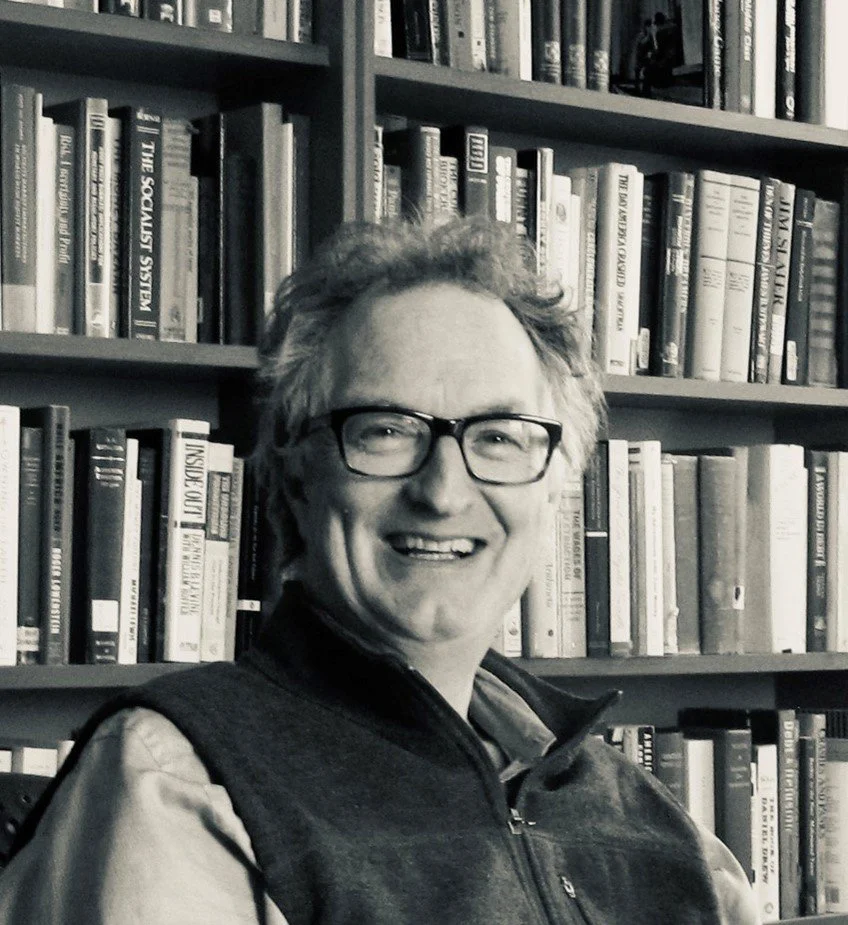
Edward Chancellor
HistorianWikipedia
14
MENTIONS
12
EPISODES
12
PODCASTS
Search complete. 14 mentions across 12 episodes found for "Edward Chancellor".
Oct 27, 2026

Nathan BeauvaisHOST
And now with the shot clock back on and a sense of urgency injected to the economy, I think more and more people will likely have time preferences that don't match the investment time horizon of some of the more speculative investments that are out there.
Nathan BeauvaisHOST
So in his book, The Price of Time, it's called The Real Story of Interest by Edward Chancellor.
Nathan BeauvaisHOST
He shows how unprecedented and unnatural the past 10 years have been with interest rates near zero and even negative.
Nathan BeauvaisHOST
So in the 5000 years in which there are records of interest rates, it wasn't until the 20th century that rates touched zero.

George AliferisHOST
Yes, yes.
George AliferisHOST
We also interviewed a historian, Edward Chancellor, who wrote a book about interest rates a few years ago.
George AliferisHOST
And he was definitely calling those changes.
George AliferisHOST
And that brings me a bit to... how you address that specifically, because it's not just a macroeconomic bet where you say, okay, I can forecast, I can see that this film will change tomorrow, right? Can you tell us the big picture of how you approach your strategy?

James DavolosGUEST
I have really good friends at Hosking Partners.
James DavolosGUEST
Ed Chancellor wrote the Capital Cycle book.
James DavolosGUEST
But never forget, I have it written on my desk between my screens.
James DavolosGUEST
Obviously, it's very germane to what I do.

Peter Thal LarsenHOST
What creates them, how they develop, and what happens when they pop.
Peter Thal LarsenHOST
Edward Chancellor is a financial historian, the author of several books on finance, including most recently, The Price of Time, A History of Interest, and last but definitely not least, a regular contributor to Reuters Breaking Views.
Peter Thal LarsenHOST
And he joins me here in the studio in London.
Peter Thal LarsenHOST
Eddie Chancellor, welcome to The Big View.

Ivan YatesHOST
Okay.
Ivan YatesHOST
So we spoke to Edward Chancellor and he traced bubbles back to Mississippi and South Sea schemes.
Ivan YatesHOST
Just recap for us some of the things he told us historically.
Ivan YatesHOST
Okay,
Alan O'SullivanHOST
so Edward Chancellor is a very famous financial historian, a winner of the Hayek Book Prize in 2023.
Alan O'SullivanHOST
And what Edward Chancellor did, spoke of during our interview, was historical bubbles, asset price bubbles.
Alan O'SullivanHOST
If you look at, you mentioned the Mississippi bubble, you talk about the tulip bubble in Holland where people were basically, had speculated that a flower was equivalent to the price of a townhouse, okay? You're talking about the financial crisis in 1929, the Wall Street crash.
Alan O'SullivanHOST
Back to my point at the very start.

Mike DHOST
It became the foundation of civil law across much of Europe and Latin America, and it's where a lot of our financial vocabulary gets its legal DNA.
Mike DHOST
Edward Chancellor in The Price of Time points out that our word for interest comes directly from Latin.
Mike DHOST
Under Roman law, the phrase id quad, interest meant that which is in between.
Mike DHOST
The compensation owed to the debtor who didn't pay on time for the loss the lender suffered in the meantime.

Sid PowellGUEST
So banks are a construct of... banks wouldn't exist the way that they do in the wild, right? Because in the 1800s, there's a fantastic book called The Price of Time.
Sid PowellGUEST
I think it's by Edward Chancellor.
Sid PowellGUEST
But he looks at the original banks in the 1800s.
Sid PowellGUEST
And so when the bank had to manage its own liquidity, it would originate loans, and then it would have to manage all the withdrawals using its own balance sheet and provision for liquidity, right? Now, when you had a bank run every 25 years, a bunch of banks would fault.

Jim BiancoGUEST
There is not one syllable in that book about negative interest rates.
Jim BiancoGUEST
Here is Ed Chancellor's Price of Time.
Jim BiancoGUEST
He talks about interest rates going back 2,000 years.
Jim BiancoGUEST
There's not one syllable about negative interest rates.

David McAlvanyGUEST
Um, and unfortunately, some of the things that I'm interested in reading are pretty boring, um, to, to most.
David McAlvanyGUEST
But, you know, I mean, like, you know, Edward Chancellor's The Price of Time is, is a great way of diving into macro analysis and appreciating what interest rates are and how important they are to every asset class, whether it's gold, whether it's stocks and bonds, um, you know, fiscal, uh, the fiscal position of any, any given country.
David McAlvanyGUEST
That is, that is, I think, a, a, an important read and, and written in a very accessible way.
David McAlvanyGUEST
Um, I, I think as people think about the w- the role that gold has in a portfolio, um, it would be helpful them to, for them to figure out what they want in liquidity.
2 more episodes mention Edward Chancellor.
Create an account to see the whole feed, search across every transcript, and follow the entities you care about.