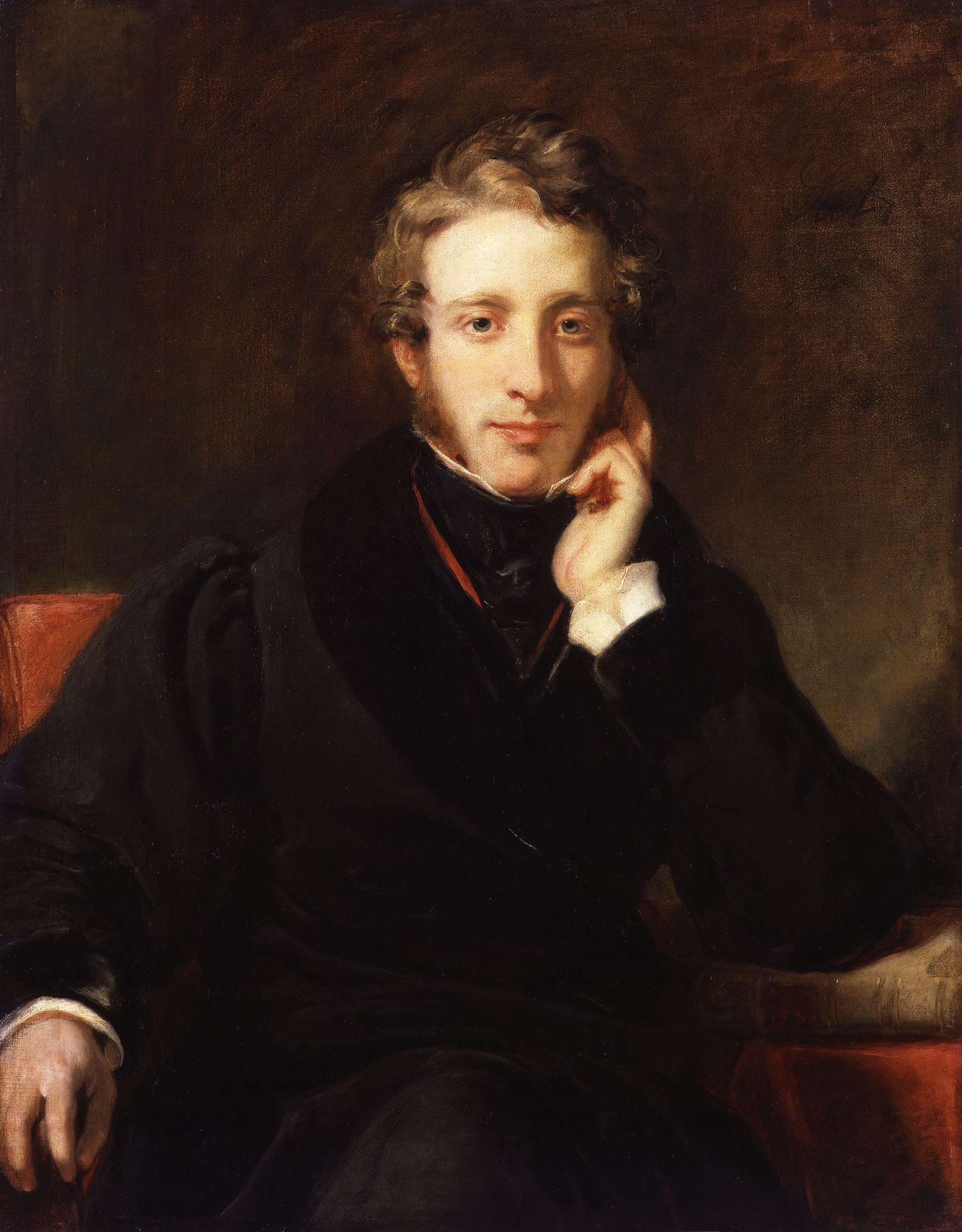
Edward Bulwer-Lytton
Writer and former Secretary of State for the Colonies of the United KingdomWikipedia
134
MENTIONS
44
EPISODES
44
PODCASTS
Search complete. 134 mentions across 44 episodes found for "Edward Bulwer-Lytton".
Sep 16, 2026

Philip GouldNARRATOR
Of late years it has been common enough for authors to comment on the political and social tendencies of their own day by drawing fancy pictures of the state of the world many generations hence, when these tendencies have been worked out to their full development.
Philip GouldNARRATOR
From Lord Lytton's Coming Race, published in 1871, down to mr bellamy's looking backward and mr wells's when the sleeper wakes at least a dozen books have been written on these lines but till last year i was not aware how far back the catena of this prophetical literature could be followed working through the wrecks of an eighteenth-century library in the old-world town of burford i came upon the reign of george the sixth a little book of one hundred ninety two pages issued anonymously as long ago as seventeen sixty three as it deals with the years nineteen hundred to nineteen twenty five there seems to be a special appropriateness in republishing it just as the period of which it treats is coming upon us the reader will i think allow that the interest of its contents is sufficient to justify its reissue for his benefit there is a good deal of amusement as well of instruction to be got from studying this forecast of the history of our own time, drawn four generations ago by an acute political thinker of the early years of George III.
Philip GouldNARRATOR
Like all books of its kind, the reign of George VI has two sides.
Philip GouldNARRATOR
The author was not merely exercising the faculty of prophecy according to his lights, but was intending to influence the men of his own day by pointing out, in the actions of his puppets, George VI, the dukes of bedford and suffolk and the rest what ought to be done and what avoided in the year of grace seventeen sixty three in domestic politics he was a tory his nightmare was the perpetuation of that battle of the kites and crows the objectless strife of the whig factions which had endured for the last two generations his panacea was the more active interference of the king with his ministers and the recent doings of george the third had much encouraged him like the monarch whom he would fain advise he must have been reading bolingbroke's patriot king and dreaming of the realization of its ideals unfortunately the young sovereign from whom he hopes so much is not the farmer george of reality but a sort of more amiable Frederick the Great, a heaven-sent general who was also an enthusiastic patron of arts and letters.

speaker_5VOICE_ACTOR
Yet this two hours a day, which would give you three months of free time every year, is frittered away, you scarcely know how, in aimless matters that lead to nothing.
speaker_5VOICE_ACTOR
A famous writer of our century, some of whose books you have read, Edward Bulwer-Lytton, devoted only four hours a day to writing.
speaker_5VOICE_ACTOR
Yet he produced more than sixty volumes of fiction, poetry, drama, and criticism of singular literary merit.
speaker_5VOICE_ACTOR
The great naturalist Darwin, a chronic sufferer from a depressing malady, counted two hours a fortunate day's work for him.
speaker_5VOICE_ACTOR
Doubtless there are classes of literature in which form or expression predominates, and we cannot read poetry, for example, or the drama, or even the higher class of fiction, without lingering upon the finer passages to get the full impression of their beauty.
speaker_5VOICE_ACTOR
In reading works of the imagination, we read not for ideas alone, but for expression also, and to enjoy the rhythm and melody of the verse, if it be poetry, or if prose, the finest rhetoric and the pleasing cadence of the style.
speaker_5VOICE_ACTOR
It is here that the literary skill of an accomplished writer and all that we understand by rhetoric becomes important, while in reading for information only, we may either ignore words and phrases entirely or subordinate them to the ideas which they convey.
speaker_5VOICE_ACTOR
In reading any book for the knowledge it contains, I should as soon think of spelling out all the words as of reading out all the sentences.

Philip GouldNARRATOR
Of late years it has been common enough for authors to comment on the political and social tendencies of their own day by drawing fancy pictures of the state of the world many generations hence, when these tendencies have been worked out to their full development.
Philip GouldNARRATOR
From Lord Lytton's Coming Race, published in 1871, down to mr bellamy's looking backward and mr wells's when the sleeper wakes at least a dozen books have been written on these lines but till last year i was not aware how far back the catena of this prophetical literature could be followed working through the wrecks of an eighteenth-century library in the old-world town of burford i came upon the reign of george the sixth a little book of one hundred ninety two pages issued anonymously as long ago as seventeen sixty three as it deals with the years nineteen hundred to nineteen twenty five there seems to be a special appropriateness in republishing it just as the period of which it treats is coming upon us the reader will i think allow that the interest of its contents is sufficient to justify its reissue for his benefit there is a good deal of amusement as well of instruction to be got from studying this forecast of the history of our own time, drawn four generations ago by an acute political thinker of the early years of George III.
Philip GouldNARRATOR
Like all books of its kind, the reign of George VI has two sides.
Philip GouldNARRATOR
The author was not merely exercising the faculty of prophecy according to his lights, but was intending to influence the men of his own day by pointing out, in the actions of his puppets, George VI, the dukes of bedford and suffolk and the rest what ought to be done and what avoided in the year of grace seventeen sixty three in domestic politics he was a tory his nightmare was the perpetuation of that battle of the kites and crows the objectless strife of the whig factions which had endured for the last two generations his panacea was the more active interference of the king with his ministers and the recent doings of george the third had much encouraged him like the monarch whom he would fain advise he must have been reading bolingbroke's patriot king and dreaming of the realization of its ideals unfortunately the young sovereign from whom he hopes so much is not the farmer george of reality but a sort of more amiable frederick the great a heaven-sent general who is also an enthusiastic patron of arts and letters did our author we wonder survive to learn the modesty of king george's military aspirations or to hear of his interesting literary criticism as to Shakespeare's works being sad stuff, only one must not say so.

Gordon MousinhoHOST
story.
Gordon MousinhoHOST
In case anybody wants to read this fantastic book, The Coming Race, it's by Edward Bulwer-Lytton.
Gordon MousinhoHOST
That's it.
Gordon MousinhoHOST
And it came out in 1871.

Celine MajourNARRATOR
It can thus be guessed that Haskins was in love, genuinely in love, and for the first time in his life.
Celine MajourNARRATOR
As Bulwer-Lytton says, "There are many counterfeits, but only one Eros." This was Haskins' experience.
Celine MajourNARRATOR
He had loved in an earthly way many times in his life and several times had mistaken the false for the true.
Celine MajourNARRATOR
A fastidious mind had saved him from the commercial passion of the ordinary man, and he had usually approached women in the belief that they were goddesses.

Ben AdamsNARRATOR
Schopenhauer, Byron, Glysis, Hartley, Rousseau, Iamblichus, Hypatia, Diogenes, Quintus Sextus, Ovid, Plutarch, Seneca, Apollonius, the apostles Matthew, James, James the Less, Peter The Christian Fathers, Clement, Tertullian, Origen, Chrysostom, St. Francis d'Assisi, Cornaro, Leonardo da Vinci, Milton, Locke, Spinoza, Voltaire, Pope, Gassendi, Swedenborg, Thackeray, Linnaeus, Shelley, Lamartine, Michelet, William Lamb, Sir Isaac Pitman, Thoreau, Fitzgerald, Herbert Burrows, Garibaldi, Wagner, Edison, Tesla, Marconi, Tolstoy, George Frederick Watts, Maeterlinck, Vivekananda, General Booth, Mrs. Besant, Bernard Shaw, Reverend Professor John E.
Ben AdamsNARRATOR
B. Mayer, Honorable E. Littleton, Reverend R. J. Campbell, Lord Charles Beresford, General Sir Edward Bulwer, etc., etc., etc.
Ben AdamsNARRATOR
The following is a list of the medical and scientific authorities who have expressed opinions favoring vegetarianism.
Ben AdamsNARRATOR
M. Prouchet, Baron Cuvier, Linnaeus, Professor Lawrence F.R.S., Sir Charles Bell F.R.S., Gassendi, Florence, Sir John Owen, Professor Howard Moore, Sylvester Graham M.D., John Ray F.R.S., Professor H.

Matthew EhretHOST
He, um, went through some, some ritual.
Matthew EhretHOST
Something, something happened, but he found himself at a very young age, um, as a disciple of, of Sir Edward Bulwer-Lytton, who for those who have listened to my, uh, Tesla class series, they would be, they would've been introduced to, uh, Sir Edward Bulwer-Lytton as the father of the Rosicrucian revival of the 19th century, a leading Satanist, and this guy became his, uh, adept, his, uh, his hierophant.
Matthew EhretHOST
[lip smacks] And so he was intro- in- initiated into that society, uh, in 1861.
Matthew EhretHOST
He worked as a surgeon in Giuseppe Garibaldi's army, uh, for, in Italy for two years.
Matthew EhretHOST
Um, and this was part of a, a ritual murder.
Matthew EhretHOST
Robert Dawson wrote of his experiences saying that, "My interest in the effects of mind upon matter once more awoke, and my physiological studies and researches were accompanied by psychological experiments.
Matthew EhretHOST
I read Bulwer-Lytton's Zanoni at this time with great zest, and longed excessively to know its author, little dreaming that I should one day be the pupil of the great magest Bulwer-Lytton, the one man in modern times for whom all systems of ancient and modern magic and ma- magism and magic, white or black, held no secrets." And there's a, uh, picture featuring the Hermetic Order of the Golden Dawn's cross, uh, symbol under the, the, a more recent production of Zanoni.
Matthew EhretHOST
Um, this inspired-- This was on the manda- mandatory reading list of Madame Blavatsky's Esoteric Section.

Michael FassioNARRATOR
Edited by Mabel E. Wotton.
Michael FassioNARRATOR
Edward Lord Lytton, 1803-1873.
Michael FassioNARRATOR
From S.C. Hall's Retrospect of a Long Life.
Michael FassioNARRATOR
A young man whose features, though of a somewhat effeminate cast, were remarkably handsome.

speaker_13NARRATOR
But, Brithy, do not you forget He's not at all an ass.
speaker_13NARRATOR
because the books that he doth buy that on his shelf do stand hold not one page his eagle eye hath not completely scanned and while this man's orthopy may not be what it should he knows what books contain and he can quote em pretty good End of poem This recording is in the public domain i feel that i am quite as smart as edward bulwer leighton bart i'm also every bit as bright as walter scott the scottish knight and in my own peculiar way i'm just as good as thackeray but woe is me that it should be they got here years ahead of me and all the tales i would unfold By them already have been told.
speaker_13NARRATOR
A pleasing thought by John Kendrick Banks Read for LibriVox.org by B. L. Newman
speaker_14NARRATOR
they speak most truly who do say we have no writing folk to-day like those whose names in days gone by upon the scroll of fame stood high and when i think of smollett's tales of waspish pope's ill-natured rails of fielding dull of stern too free of swift's uncurbed indecency of dr johnson's bludgeon wit i must confess i'm glad of it End of poem.

Philip GouldNARRATOR
Of late years it has been common enough for authors to comment on the political and social tendencies of their own day by drawing fancy pictures of the state of the world many generations hence, when these tendencies have been worked out to their full development.
Philip GouldNARRATOR
From Lord Lytton's Coming Race, published in 1871, down to mr bellamy's looking backward and mr wells's when the sleeper wakes at least a dozen books have been written on these lines but till last year i was not aware how far back the catena of this prophetical literature could be followed working through the wrecks of an eighteenth-century library in the old-world town of burford I came upon The Reign of George VI, a little book of 192 pages, issued anonymously as long ago as 1763.
Philip GouldNARRATOR
As it deals with the years 1900 to 1925, there seems to be a special appropriateness in republishing it, just as the period of which it treats is coming upon us.
Philip GouldNARRATOR
The reader will, I think, allow that the interest of its contents is sufficient to justify its reissue for his benefit.
34 more episodes mention Edward Bulwer-Lytton.
Create an account to see the whole feed, search across every transcript, and follow the entities you care about.