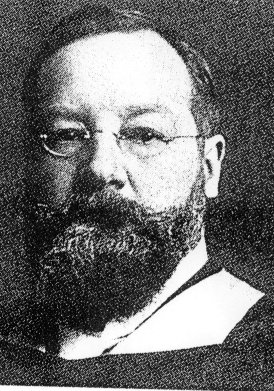
Edward B. Titchener
English psychologistWikipedia
22
MENTIONS
8
EPISODES
7
PODCASTS
Search complete. 22 mentions across 8 episodes found for "Edward B. Titchener".
Nov 20, 2026

speaker_7NARRATOR
Royce, Outlines of Psychology, 1903, pages 16 to 18.
speaker_7NARRATOR
Titchener, Textbook of Psychology, 1909, pages 15 to 25.
speaker_7NARRATOR
G. E. Moore, The Nature and Reality of Objects of Perception, Proceedings of the Aristotelian Society, New Series, Volume 6, 1905 to 1906, pages 102 to 1104. none of these authors explicitly presents a theory of introspection so that we cannot say positively that they agree with stout and footnote the objections to stout's theory are not of the same order as the objections to the theory of james although just as profound There can be no denial of the existence of the thing knowing, which is alleged to be known or observed, in this sort of introspection.
speaker_7NARRATOR
The allegation that the knowing is observed is that which may be denied.
5 MINS LATER
speaker_7NARRATOR
we might keep the word to apply to the processes we have described above, observation of feelings and of kinesthetic and synesthetic sensations, a term by which to designate the observation of these factors would be very useful, and introspection is the legitimate term for the purpose since these factors are the real inner ones of which psychology has been talking for so long a time.
speaker_7NARRATOR
but in view of the world's quite disreputable past it is probably better to banish it for the present from psychological usage knight dunlap the johns hopkins university Note.
speaker_7NARRATOR
After the foregoing discussion was placed in the hands of the editor, Professor Titchener's interesting Prolegomena to a Study of Introspection appeared in the July number of the American Journal of Psychology.
speaker_7NARRATOR
Professor Titchener discards the Hamiltonian doctrine of the mind being self-conscious in every cognition.

speaker_9NARRATOR
Attention, 1908, p. 212-217.
speaker_9NARRATOR
Royce, Outlines of Psychology, 1903, pages 16 to 18, Titchener, Textbook of Psychology, 1909, pages 15 to 25, G. E. Moore, The Nature and Reality of Objects of Perception, Proceedings of the Aristotelian Society, New Series, Volume 6, 1905 to 1906, pages 102 to 1104. none of these authors explicitly presents a theory of introspection so that we cannot say positively that they agree with stout and footnote the objections to stout's theory are not of the same order as the objections to the theory of james although just as profound There can be no denial of the existence of the thing knowing, which is alleged to be known or observed, in this sort of introspection.
speaker_9NARRATOR
The allegation that the knowing is observed is that which may be denied.
speaker_9NARRATOR
Knowing there certainly is, known the knowing certainly is not.
5 MINS LATER
speaker_9NARRATOR
but in view of the word's quite disreputable past, it is probably better to banish it for the present from psychological usage.
speaker_9NARRATOR
Knight Dunlap The Johns Hopkins University Note.
speaker_9NARRATOR
After the foregoing discussion was placed in the hands of the editor, Professor Titchener's interesting Prolegomena to a Study of Introspection appeared in the July number of the American Journal of Psychology.
speaker_9NARRATOR
Professor Titchener discards the Hamiltonian doctrine of the mind being self-conscious in every cognition.

Alan WallaceGUEST
So it fell apart, but they gave up too soon.
Alan WallaceGUEST
And they didn't go through a 10 or 20,000 hours training Not Wilhelm Wundt, not Titchener at Cornell, not James at Harvard.
Alan WallaceGUEST
This requires training.
Alan WallaceGUEST
If it's going to be professional, don't give them five hours of training or a week of training.
John Thomas Coos-KasmarskyNARRATOR
They inspired Hall's pioneer efforts at Johns Hopkins, leading to doctorates in psychology, of which I happened to be the first recipient.
John Thomas Coos-KasmarskyNARRATOR
The most complete parallel of Leipzig in America was established cosmopolitantly at a new world Ithaca by a British Titchener, who, in Oxford gown and manner, inducted Yankee disciples into Teutonic methods.
John Thomas Coos-KasmarskyNARRATOR
Up to the end, in 1927, he resisted the tidal wave of innovation all along the psychological front, particularly the swarming hosts of applied psychology, resolved that the academic robe of pure psychology should not be defiled by the overalls of practice.
John Thomas Coos-KasmarskyNARRATOR
To him, psychology was a fach, a pedigree weisenschaft.
John Thomas Coos-KasmarskyNARRATOR
What to Titchener was the glory of psychology was to James and Hall, and to each differently, the warrant of its failure.
John Thomas Coos-KasmarskyNARRATOR
They looked beyond horizons as we do today ever more hospitably, more world-consciously.
John Thomas Coos-KasmarskyNARRATOR
Experiment continues to be the major occupation of psychologists.
5 HRS 32 MINS LATER
Matt PerardNARRATOR
Such psychology, practiced as it were in vitro, has fallen short of clarifying the nature of perception in everyday life, much as did the old nerve-muscle psychophysiology fall short of explaining behavior in everyday life.

Douglas FlemonsGUEST
But is there a logic to the development of a definition that people could rally around? The word comes into English in the early 1900s.
Douglas FlemonsGUEST
Edward Titchener, the psychologist, coins the word, translating the German word Einfallung.
Douglas FlemonsGUEST
And he was searching around for a word that would capture the sense of Einfallung, which means to feel into something.
Douglas FlemonsGUEST
And it came out of German aesthetic philosophy, trying to understand how it is that a work of art can move you.

Sam VakninHOST
But Wilhelm Wundt, the German at the end of the 19th century, tried to place psychology on a more scientific basis, more scientific grounds.
Sam VakninHOST
and it was later strongly influenced by Edward Bradford Titchener, one of the founding fathers of psychology.
Sam VakninHOST
So structuralism defines psychology as the study of mental experience and seeks to investigate the structure of such experience through a systematic program of experiments based on trained introspection that came to be known as structural psychology.
Sam VakninHOST
And so the narcissist is incapable of a structural approach to his or her own experience.

John Thomas KuzmarskiNARRATOR
They inspired Hall's pioneer efforts at Johns Hopkins, leading to doctorates in psychology, of which I happen to be the first recipient.
John Thomas KuzmarskiNARRATOR
The most complete parallel of Leipzig in America was established cosmopolitantly at a new world Ithaca by a British Titchener, who, in Oxford gown and manner, inducted Yankee disciples into Teutonic methods.
John Thomas KuzmarskiNARRATOR
Up to the end, in 1927, he resisted the tidal wave of innovation all along the psychological front, particularly the swarming hosts of applied psychology, resolved that the academic robe of pure psychology should not be defiled by the overalls of practice.
John Thomas KuzmarskiNARRATOR
To him, psychology was a fach, a pedigree weisenschaft.
John Thomas KuzmarskiNARRATOR
What to Titchener was the glory of psychology was to James and Hall, and to each differently, the warrant of its failure.
John Thomas KuzmarskiNARRATOR
They looked beyond horizons as we do today ever more hospitably, more world-consciously.
John Thomas KuzmarskiNARRATOR
Experiment continues to be the major occupation of psychologists.
5 HRS 38 MINS LATER
Matt PerardNARRATOR
Such psychology, practiced as it were in vitro, has fallen short of clarifying the nature of perception in everyday life, much as did the old nerve-muscle psychophysiology fall short of explaining behavior in everyday life.