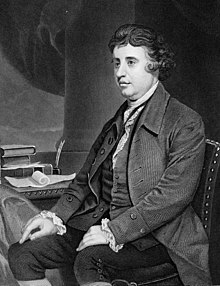
Edmund Burke
Writer and former Member of Parliament of the United KingdomWikipedia
311
MENTIONS
159
EPISODES
129
PODCASTS
Search complete. 311 mentions across 159 episodes found for "Edmund Burke".
Oct 28, 2026

Heather BigleySOUNDBITE_SPEAKER
Another way to understand awe is through the sublime.
Heather BigleySOUNDBITE_SPEAKER
If you studied the writings of Edmund Burke from the 18th century, and
Marcus SmithHOST
I know you have,
Heather BigleySOUNDBITE_SPEAKER
You'll know he associates the sublime with terror, that feeling of hiking along a narrow path through snow-capped mountains and one side of the trail drops into an abyss.

Emily JonesGUEST
So this is the second of two books.
Emily JonesGUEST
My first book was about understanding how Edmund Burke became transformed from kind of Irish, potentially mad, inconsistent Whig on his death in 1797 to the founder of modern conservatism and Burkean conservatism.
Emily JonesGUEST
And this will have to be
Georgina DownerHOST
another podcast, Emily, because there's a lot of interest in birth as well.

Seth LeibsohnHOST
It's from the Wall Street Journal, by the way.
Seth LeibsohnHOST
In the reflections on the revolution in France, Edmund Burke predicted that a general would seize control of the French Republic, and certainly we had the Obligation of Napoleon Bonaparte.
Seth LeibsohnHOST
A lasting export was a set of assumptions that an enlightened vanguard may act in the people's name, that the state can remake society from above, and that legitimacy will be settled in the street.
Seth LeibsohnHOST
The Bolsheviks modeled themselves on the Jacobins.

Sean TrendeHOST
And we didn't, but we shouldn't say that everyone saw things the way Madison did.
Sean TrendeHOST
And I throw this in because, just to preview a little bit, this might be the only time in history that political scientists have taken the side of Edmund Burke.
Jay CostHOST
I
Sean TrendeHOST
do feel the need to point out, um, that, that at the same time, Edmund Burke is writing in England and he is England is a little different, but, but they have, you know, the people who see themselves as the protectors of the glorious revolution, the people who see themselves as more of the protectors of the, the, the privileges of the monarchy and the upper class.
Sean TrendeHOST
Um, And Burke basically said, and people are getting worried about the formation of parties in England, and Burke is basically saying to himself, why are we getting worried about this? This is a good thing.
Sean TrendeHOST
And what Burke's view, and it's kind of in contrast to Madison, what Burke is saying is, look, people have different visions of what the good life is.

Lydia SchaibleHOST
And because of her friendship with Garrick, who had a lot of different connections, Hannah made connections with various literary and political elites.
Lydia SchaibleHOST
People like Horace Walpole, Edmund Burke were some of the more famous people.
Lydia SchaibleHOST
but this also included the Blue Stocking Circle.
Lydia SchaibleHOST
This was a collection of women who were determined to think carefully and engage in thoughtful conversation about current issues, politics, theology, the cultural morals of the time.

Jim SchneiderHOST
And great point.
Jim SchneiderHOST
Even, Debbie, I mean, Edmund Burke, you know, all it takes for evil to triumph is for good men to do nothing.
Jim SchneiderHOST
And he really lays it out there.
Jim SchneiderHOST
What a passion.

Joe ThomasHOST
He said, you need to be willing to stand up against everyone in your world if you find something to be right.
Joe ThomasHOST
And that was what happened when the Declaration of Independence arrived in London and a member of parliament named Edmund Burke found it, saw it and said, hey, you know, this kid's got us get dead to rights on Magna Carta.
Joe ThomasHOST
And everyone said, but the king.
Joe ThomasHOST
And he said, yeah, but the king's wrong.

Hannah GurmanGUEST
It's not Deneen who invented it.
Hannah GurmanGUEST
It really goes back to Edmund Burke, who was the founder of the modern conservative ideology in the 18th century and his reaction against the French Revolution.
Hannah GurmanGUEST
watching the events from Britain.
Hannah GurmanGUEST
And he also promoted this idea that it is elites who understand what the people really want and what they need.

Kevin D. WilliamsonGUEST
I was more of a Milton Friedman kind of libertarian, which is not too far away from where Bill was.
Corey NathanHOST
Even back then, I'm imagining a 16-year-old kid who even had... enough of an understanding of great thinkers to be able to say, oh, you know, I might have been able to say I'm an Alex P. Keaton conservative, but I don't know if I would have known Edmund Burke at the time, you know?
Kevin D. WilliamsonGUEST
Yeah, I was insufferable, of course.
Kevin D. WilliamsonGUEST
And I thought I knew everything.

Robert McTeigueHOST
Well, some people figured out, even while it was taking place, that this was a bad idea.
Robert McTeigueHOST
My fellow Irishman, Edmund Burke, wrote this regarding the French Revolution.
Robert McTeigueHOST
He says, the age of chivalry is gone.
Robert McTeigueHOST
That of sophisters, economists, and calculators has succeeded.
149 more episodes mention Edmund Burke.
Create an account to see the whole feed, search across every transcript, and follow the entities you care about.