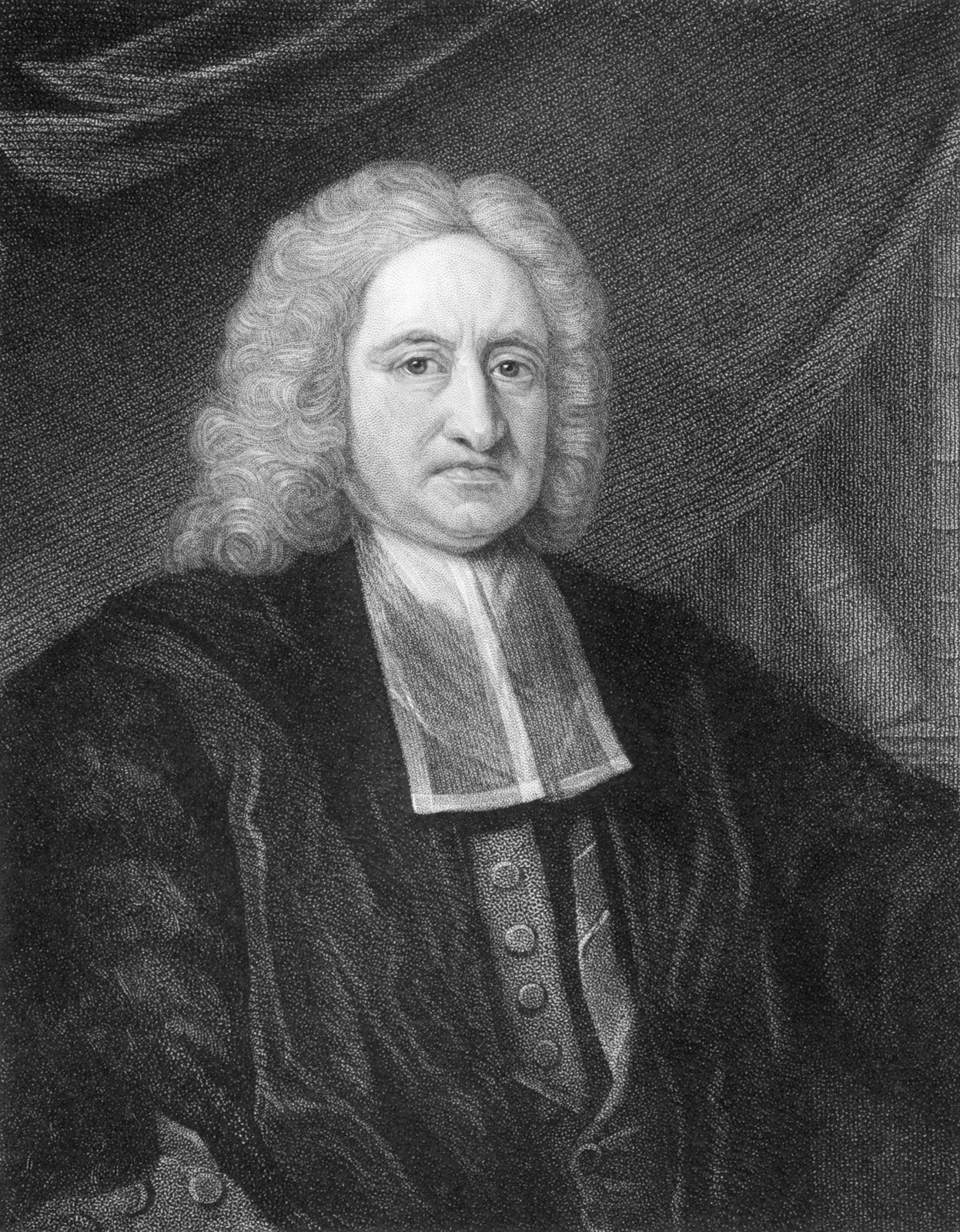
Edmond Halley

Edmond Halley

English astronomer and mathematicianWikipedia

Search complete. 48 mentions across 18 episodes found for "Edmond Halley".

Sep 21, 2026

JohnHOST
31:23
We have to go back to 1693.
JohnHOST
31:25
The astronomer Edmund Halley published a life table for the city of Breslau.
DianeHOST
31:30
The comic guy.
JohnHOST
31:31
The very same.

Unknown podcast

Edward II – Favours, Rebellion and a Deposed King

Sep 12 · 1 Mention

speaker_1UNKNOWN
8:26
That early work, written in Latin, survived only because it was kept among family papers.
speaker_1UNKNOWN
8:32
And then comes the moment when Newton's quiet musings gain public life, thanks to his friend Edmond Halley, a fellow astronomer and the second Astronomer Royal.
speaker_1UNKNOWN
8:42
In sixteen eighty-six, Halley persuaded Newton to publish what became the Principia Mathematica, a Latin masterpiece that combined calculus with physical observation.
speaker_1UNKNOWN
8:52
The result is three laws of motion plus the universal gravitation formula, unifying planetary and terrestrial physics under one elegant theory.

Unknown podcast

Who Were the Druids? Rethinking Rome’s View of Celtic Priests

Sep 12 · 1 Mention

speaker_1UNKNOWN
10:26
His invention prefigured James Watt's later improvements and helped Britain pivot from agrarian to mechanical society in a few generations.
speaker_1UNKNOWN
10:36
Another notable member was Edmond Halley, who made a living on the seas before settling into academia.
speaker_1UNKNOWN
10:42
In seventeen and five, he used Newtonian mechanics to predict the return of his eponymous comet, confirming that celestial bodies obeyed predictable laws rather than random divinity or caprice, a striking demonstration of the power of scientific reasoning.
speaker_1UNKNOWN
10:58
He also held the post of Astronomer Royal after Flamsteed, and he was a key figure in early navigation theory that guided British ships across uncharted waters.
AnnaHOST
19:10
Halley's dust gives us the Eta Aquariids every May, a decidedly southern shower.
AnnaHOST
19:16
And Edmond Halley made his name by sailing to St. Helena at 20 to catalog the southern stars no European had properly charted.
AnnaHOST
19:25
He was a southern sky observer before he was a comet man.
AveryHOST
19:29
Last story, and it's a change of subject entirely.
SageHOST
1:52
But for a long time, we could only imagine what was at the center of this big blue marble.
SageHOST
1:57
Back in 1692, Edmund Halley was the first to describe Earth's core as something separate and disconnected from its shell.
SageHOST
2:04
He described an internal structure known as the hollow Earth model, where a series of hollow spheres rotated around a central core.
SageHOST
2:12
He argued that both Earth's shell and core had something called a magnetic field, each with two poles, or points of attraction and repulsion.

Unknown podcast

The Harsh Reality of How Dark Space Really Is

Sep 5 · 5 Mentions

speaker_3NARRATOR
10:53
stretching back nearly 250 years before Olbers put pen to paper.
speaker_3NARRATOR
10:58
The English astronomer and mathematician Thomas Diggers was arguably the first to confront the darkness directly.
speaker_3NARRATOR
11:04
In 1576, Diggers published a revised edition of his father's almanac that included a radical addition He translated and expanded the Copernican model of the solar system, and went further than Copernicus himself, proposing that the stars were not fixed to a single celestial sphere, but scattered outward through an infinite universe.
speaker_3NARRATOR
11:25
This was a revolutionary claim, and Diggers immediately recognised the problem it created.
speaker_3NARRATOR
12:26
But it rested on an assumption about cosmic boundaries that later thinkers would challenge fiercely.
speaker_3NARRATOR
12:32
An infinite universe had powerful philosophical appeal, and many astronomers were reluctant to abandon it.
speaker_3NARRATOR
12:38
More than a century after Kepler, the celebrated English astronomer Edmund Halley revisited the problem in papers published in 1720 and 1721.
speaker_3NARRATOR
12:48
Halley sided with Diggies, arguing that in an infinite universe, the light from extremely distant stars would simply be too feeble to register.
Riley KnightHOST
0:04
We've got a mysterious gas cloud killing thousands.
Riley KnightHOST
0:07
And we've got Edmund Halley discovering something very important about the famous comet that still bears his name today.
Riley KnightHOST
0:13
All that and more this week in history.
Riley KnightHOST
0:33
Week number 34 now as we make our way towards the end of August.
Riley KnightHOST
4:31
And at the time that it happened, people were baffled.
Riley KnightHOST
4:34
They were mystified.
Riley KnightHOST
4:36
by what had happened and how it had happened and and what it meant i won't spoil it for you here if you want to find out more about the lake neos disaster and what actually happened with this mysterious cloud of deadly gas uh again quarter ice history episode 133 and go back and have a listen to that to find out more Anyway, we leave the death, destruction and disaster behind now and we can talk about something a little more optimistic as we begin the tale of Edmund Halley observing his comet, something that took place this week in history.
Riley KnightHOST
5:09
You've probably heard of Halley's Comet.

Unknown podcast

Space Is Dark For a Reason... And It_s Terrifying

Aug 31 · 1 Mention

speaker_3NARRATOR
10:54
Over the following two centuries, other scientists took their turns wrestling with the paradox.
speaker_3NARRATOR
11:00
Edmund Halley addressed it.
speaker_3NARRATOR
11:02
In 1720, the Swiss astronomer Jean-Philippe de Chaizeau explored it in 1744, providing some of the first rigorous mathematical treatments of how starlight should accumulate in an infinite universe.
speaker_3NARRATOR
11:16
But it was Olbers in 1823 who gave the paradox its widest audience and whose name became permanently attached to it.
DianaHOST
15:54
Ptolemy thought it was a star.
DianaHOST
15:57
Nearly 1500 years later, Edmund Halley realized it looked more like a fuzzy cloud.
DianaHOST
16:04
Then, in the 1830s, John Herschel finally resolved it into a swarm of individual stars.
DianaHOST
16:11
Three astronomers, 17 centuries, better telescopes each time, each one getting a little closer to the truth.
Jeremy CordeauxHOST
18:15
Live dangerously.
Jeremy CordeauxHOST
18:18
English astronomer Edmund Halley first observes the comet named after him.
Jeremy CordeauxHOST
18:22
1682 was the year.
Jeremy CordeauxHOST
18:26
The first Earl Mountbatten of Burma, cousin of Queen Elizabeth II and the last Viceroy of India, is killed along with three companions, two of them children, by the IRA when his boat is blown up near Sligo in Northern Ireland on this day in 1979.

8 more episodes mention Edmond Halley.

Create an account to see the whole feed, search across every transcript, and follow the entities you care about.

We value your privacy

We use cookies to understand how you use our platform and to improve your experience. Click “Accept All” to consent, or “Decline non-essential” to opt out of non-essential cookies. Read our Privacy Policy.