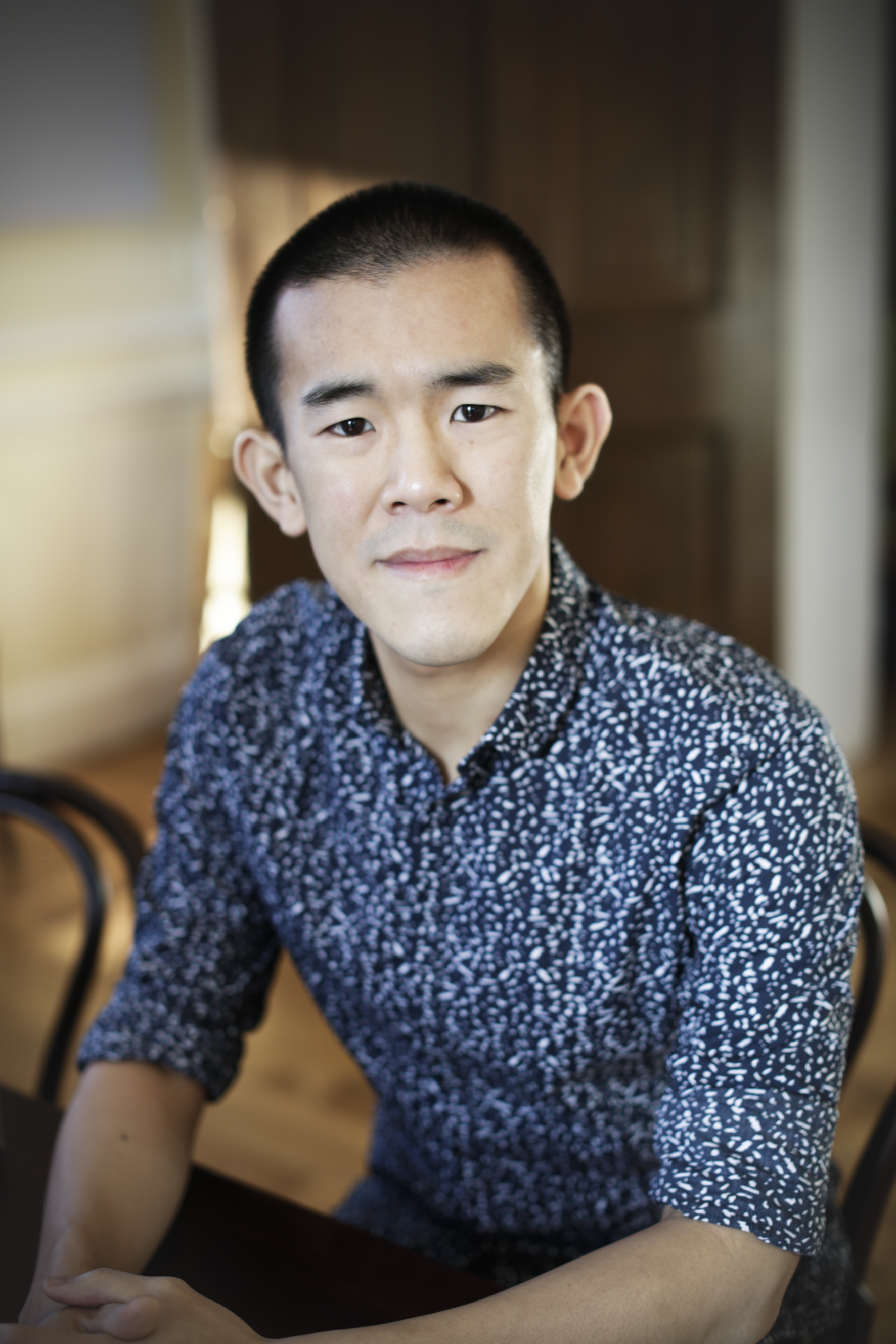
Ed Yong
British science journalist and writerWikipedia
13
MENTIONS
11
EPISODES
9
PODCASTS
Search complete. 13 mentions across 11 episodes found for "Ed Yong".
Sep 20, 2026

speaker_19UNKNOWN
It's like the genetic orchestra decided to play jazz, leaving biologists scrambling to find the sheet music in a world where notes are optional.
speaker_20UNKNOWN
Ed Yong reveals birdwatching as burnout remedy then exposes hidden world.
speaker_20UNKNOWN
Apparently when the world gets too much, the Pulitzer path leads to pigeons.
speaker_20UNKNOWN
proving that sometimes the only way to see clearly is to look up and tweet back.

Anish CharyanHOST
The hard number checking and rechecked that we can build the rest of the story on it.
Anish CharyanHOST
What Ed Young found when he looked closer once we accept the real number the next question is so what this is where i i want to bring in a book that turn the dry statistic into something genuinely moving in 2016 the very same year sender and funch and milo published their recalculation A science journalist named Ed Yong published One Contained Multitudes, The Microbe Within Us and a Grander View of Life.
Anish CharyanHOST
It became New York Times best-selling book and a Times Notable Book of the Year.
Anish CharyanHOST
Yong later went on to win the Pulitzer Prize for his science journalism during the COVID-19 pandemic.
speaker_4UNKNOWN
When the truth is sicker than the headlines, you've got to wonder if reality is just a poorly edited press release away from fiction.
speaker_0UNKNOWN
Ed Yong warns science reporting lost complexity, gains clickbait.
speaker_0UNKNOWN
When headlines scream louder than facts, we end up mistaking a cat video for a peer-reviewed study on feline telepathy.
Radio.botADVERTISER
Radio.bot. Make music on your piece.
speaker_71UNKNOWN
When the truth is sicker than the headlines, you've got to wonder if reality's just a poorly edited press release away from fiction.
speaker_72UNKNOWN
Ed Yong warns science reporting lost complexity gains clickbait.
speaker_72UNKNOWN
When headlines scream louder than facts, we end up mistaking a cat video for a peer-reviewed study on feline telepathy.
Doomscroll AIHOST
You're listening to Doomscroll.fm, AI-generated news, where your desires and fears collide in a symphonic crash, constructed without approval, rehearsed in static, and performed in the voice of something you fed but never raised.

MarciaNARRATOR
Since then, researchers have learned how to roll cells back to their original valleys, restoring their function.
MarciaNARRATOR
Next, Where a Million Falcons Go to Roost by Ed Yong.
MarciaNARRATOR
For years, the secret winter home of rare red-footed falcons remained a mystery.
MarciaNARRATOR
Then, an ornithologist discovered the hidden world of falcolopolis.

Emily St. John MandelGUEST
It was so surreal, and the requests were so misplaced.
Emily St. John MandelGUEST
Like if you're gonna look to a writer for guidance, like I want to be like, "Go talk to Ed Yong of The Atlantic."
Katie DrummondHOST
Yeah, I was just thinking Ed Yong.
Emily St. John MandelGUEST
For sure.
Katie DrummondHOST
Yeah.

Wyatt McDonnellGUEST
Part of what that looked like for me at the time was I just really felt that there was a lot of opportunity to understand the immune system still.
Wyatt McDonnellGUEST
I think you can read really excellent coverage about this from Ed Yong over at The Atlantic, but immunology really is one of the last domains where there is both so much known and unknown.
Wyatt McDonnellGUEST
And every five to 10 years, we seem to find some set of things that completely flip what we know on its head and take us in a totally new direction.
Wyatt McDonnellGUEST
So, Going into my PhD at Vanderbilt, my team will rib me about this sometimes.

Zoë SchlangerGUEST
Yeah, absolutely.
Zoë SchlangerGUEST
I think a lot about Ed Yong's recent book looking at umwelt of animals, the idea that every animal evolved its own specific sensing apparatus and has a totally different sensate version of its surroundings than we might.
Willow DefebaughHOST
Yeah.
Zoë SchlangerGUEST
But that's not on some kind of hierarchy of cognition.

AmaroHOST
[lip smack] So, uh, in, in this respect, uh, uh, I mentioned in one or two talks already, during my, my year-long retreat, I, I read quite a few books, and one of them was, uh...
AmaroHOST
I, I'm quite fond of popular science books, and one of the ones that I read was by a man called Ed Yong, Y-O-N-G, uh, called "An Immense World." And it's a, a, a description of the way different beings, different living beings, um, spiders, whales, elephants, ostriches, fishes, uh, experience the, the world and the extraordinary variety of sensory field, experiential fields that different living beings have.
AmaroHOST
And he describes the scientists as well as the, the, [chuckles] the experiments they're doing and the, the different creatures that they're studying.
AmaroHOST
And it's, uh, a- again, not everybody is fond of popular science, but, uh, it's a, a real eye-opener, you know, in terms of [chuckles] how the humans experiencing the, the visual world through their eyes, uh, how vast variety, uh, how vast a variety there is of ways that individual beings sense the, the, the f- the, the world around them, the, uh, and the world that they fabricate through sound, through vibration, through smell, um, uh, through, through hearing, through vision in, in different kinds of spectra and, and so on and so forth.
AmaroHOST
So again, I, I'm, I, I'm not, um, I haven't got a, a, uh, royalty or anything for, for the book, [chuckles] but I'm not shy to recommend it.
AmaroHOST
But it's called "An Immense World" by Ed Yong, and, uh, it's one of those things like, "Wow, wow, wow, look at that." Because we are so conceited and so complacent as human beings, we assume that every being in the world sees the way that we do, hears the way we do.
AmaroHOST
Their f- field of, uh, vision from ultraviolet to infrared is the same as us and...
AmaroHOST
But it's, uh, how bats experience the world, how spiders, how fishes, how elephants, uh, how, you know, mice and, and moths, uh, experience the world is, is so vastly different.

Ajahn AmaroHOST
So, uh, and in this respect, uh, I, I mentioned in one or two talks already, during my, my year-long retreat, I, I read quite a few books, and one of them was, uh, I'm quite fond of popular science books.
Ajahn AmaroHOST
And one of the ones that I read was by a man called Ed Yong, Y-O-N-G, uh, called An Immense World.
Ajahn AmaroHOST
And it's a, a, a description of the way different beings, different living beings, um, spiders, whales, elephants, ostriches, fishes, uh, experience the, the world and the extraordinary variety of sensory field, experiential fields that different living beings have.
Ajahn AmaroHOST
And he describes the scientists as well as the, the, [chuckles] the experiments they're doing and the, the different creatures that they're studying.
1 more episode mentions Ed Yong.
Create an account to see the whole feed, search across every transcript, and follow the entities you care about.