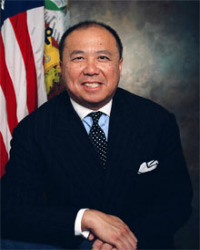
Edmund C. Moy
Businessman and former Director of the United States Mint
6
APPEARANCES
3
PODCASTS
Sep 28, 2026


Ed MoyGUEST
and BRICS is only going to be buying more and more gold because one of the stated goals of what was agreed to a few weeks ago when they met was they're going to... reduce the friction of trades with each other.
Ed MoyGUEST
So when they buy and sell goods among the BRICS countries, they want to bring down those barriers.
Ed MoyGUEST
Countries, when they trade, 90% of all the foreign exchange out there involves dollars.
Ed MoyGUEST
And that's because since World War II, the US dollar has been the world's reserve currency.
Ed MoyGUEST
It was mainly because after World War II, everyone looked at each other and said, we printed way too much money to fund this global war.
6 MINS LATER
Mike BarnesHOST
It sounds to me like the next time the BRICS nations meet, I need to really pay attention because it affects the goal that I have in my IRA account.


Ventris GibsonGUEST
But you know what? Sometimes you have to have some old way of thinking to influence new ways of doing business.
Ed MoyGUEST
Many people think, well, gosh, with the greater use of credit cards and ACH and all other stuff, why do we still have any currency at all? There's two emerging reasons for that.
Ed MoyGUEST
There's a noticeable portion of our population that is either transient, so they don't have a permanent address, they don't earn enough money to warrant a bank to want to be their client, and thus they don't have credit cards.
Ed MoyGUEST
And to them, even getting $0.04 change back is important and could mean the difference between having a meal on their table or not.
Ed MoyGUEST
Until we address the unbanked, there will be a need for hard currency, both in bills and in coin.
7 MINS LATER
17:23

Ed, what's your view on the future of coining and what might be the top three things that you would be mindful of looking forward?
Ed MoyGUEST
And I want to help educate Americans, which I do in all walks of my life, on what that really feels like so that people have a more personal understanding of what the national debt is.
Ed MoyGUEST
Well, if you were to think of the national debt as credit card debt and the U.S. government as a household, just think about this.
Mike BarnesHOST
How do you think this affects people as they're planning their retirement? Because this has to affect us some way.
Mike BarnesHOST
Let me just have that money all the time and let me invest in different things, diversify into gold and silver, and I'd have so much more money than I do in Social Security.
Ed MoyGUEST
That would be a great solution, although all the money that we paid in doesn't belong to us anymore because Social Security is a pay-as-you-go program.
Ed MoyGUEST
And so the money that you've paid in has already gone out to pay for somebody else's benefits who's already there.
Ed MoyGUEST
So the best thing for people in this position to do is to diversify your retirement investments.
Ed MoyGUEST
So just don't depend on Social Security, but take advantage of your company's 401k program, or if you're self-employed, do IRAs.
Ed MoyGUEST
And not only diversify where you put those standard investments, but also take a look at what you're investing in.
Mike BarnesHOST
Ed, I like what you said, that gold will never be worth zero, but why were you at the forefront of liking gold so much for IRAs back 15 years ago?
Ed MoyGUEST
And, you know, bottom line is, uh, one of the questions I get asked and, and the starting point is, "Is it legal?" And really, gold IRAs, uh, weren't created until 1997, so it's a relatively new product.
Ed MoyGUEST
And when Congress passed the law allowing for the existence of gold IRAs, uh, it was a very complicated transaction at the time.
Ed MoyGUEST
You needed a self-directed IRA administrator who would oversee the custody of the gold from where you purchased the gold to the depository that it went into.
Mike BarnesHOST
Now, Ed, did you get the VIP treatment when you did yours, or was it just common folk type of thing?

Wailin WongGUEST
His immigrant parents ran a Chinese restaurant when he was growing up and he started manning the cash register at age 10.
Ed MoyGUEST
When I was bored, I would paw through the, uh, change drawer and, uh, pick out coins that looked all silver or just unusual designs and that s- uh, began kind of a lifelong interest, uh, in, in the coin area.
Ed MoyGUEST
Little did I know that fast forward 40 years later I would become director of the United States Mint.
Ed MoyGUEST
This is the run-up toward the financial crisis, and, um, the economy was still kind of hot in 2006 so, uh, base metals, uh, started increasing in price.
Ed MoyGUEST
And all of a sudden, uh, this penny that was made of 97.5% zinc, 2.5% copper, uh, started creeping up above one penny to make.