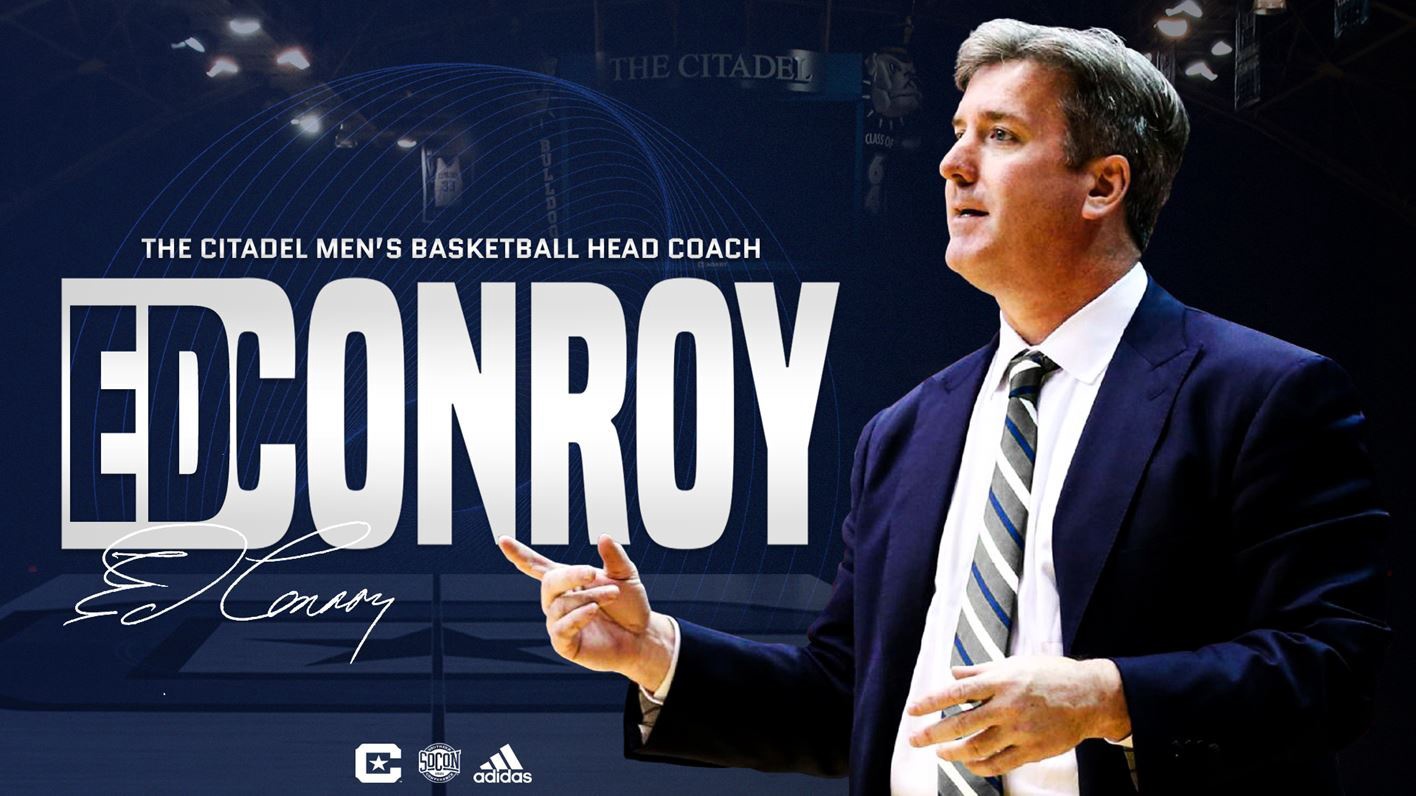
Ed Conroy
American basketball coach
46
APPEARANCES
2
PODCASTS
Sep 11, 2026


Ed ConroyGUEST
Well, I'll tell you something, Shane, I've actually spent the last day and a half digitizing tapes that people sent me of the day unfolding, right? A lot of people at the time stuck a VHS tape in their VCR.
Ed ConroyGUEST
And so I've been going through like these incredible recordings because it's one thing to look at it now, you know, and say, oh, you know, here's the highlights of the way that it was reported.
Ed ConroyGUEST
But to watch it as it unfolded, you know, most people obviously started to tune in to CNN or CP24 or whoever when already the first plane had hit.
Ed ConroyGUEST
But it's just blowing my mind, Shane, the naivety that was on display for that first kind of 15 minutes when they all thought this was just a freak accident.
Ed ConroyGUEST
And, you know, I'd say between $15 and $25 was about your average price unless you got a discount.
Ed ConroyGUEST
I mean, it's crazy when you think about buying CDs for one song, which is, let's be honest, what most of us did, right? I mean, you heard a great song and you went out.
Ed ConroyGUEST
bought the CD and then you just had that one song on repeat and now I mean let's talk about now because you know I'm a I'm a huge proponent of physical media you know I love my records I love my CDs all that stuff the streaming era I think the golden age of the streaming era is over now and I think the prices have crept up.

Shane HewittHOST
I feel like we've been robbed so many times, Ed, that that could be a big part of it.

Ed ConroyGUEST
That game ended, we were down two, and like Corchiani was driving in for a layup at th-...
28 MINS LATER
Ed ConroyGUEST
no it's um you know when you're talking about the arts whether it's bands or or filmmakers or writers it is very very hard almost impossible i would say to create a body of work that has a beginning a middle and an end right because fate uh you could get hit by a bus tomorrow and and you leave all this work unfinished um with bands my goodness i mean i remember the rolling stones in 1989 steel wheels or as they called it uh Was it Gray Wheels Tour? You know, that was supposed to be it.
Shane HewittHOST
Little did we know that that little pocket in time, the cartoon vibe for adults really started to change.
Ed ConroyGUEST
Um, but when it started, I don't know if, if it was similar for you, but I remember kind of hearing about this.
Ed ConroyGUEST
It was like this underground thing that was buzzing along, and in, certainly in Toronto anyways, the only place you could see it was on the Global Television network, who aired it at, like, 12:30, uh, in the night on, on Fridays.
Shane HewittHOST
Goes to show how, you know, 30 years later, how f- way far ahead of their time they were.
Ed ConroyGUEST
No, and what's funny is it took, you know, I think somebody of, you know, the caliber of, say, Elon Musk to make it cool again, right? It was going on in the background, but you always need, for the space program, you need a cheerleader, right? who is going to go out and talk about why it's important that we do this, that we get off planet Earth and we go and explore strange new worlds.
Ed ConroyGUEST
I think in the 80s, certainly as a child, I remember seeing the President of the United States, Ronald Reagan, talked about this all the time.
Ed ConroyGUEST
He was always pushing for that, and he was the guy when the Challenger exploded that kind of talked about The tragedy of that and these people died, you know, trying to better society.
Shane HewittHOST
But how do you see that all of these things sort of just sort of all transpired? Because there's even the smaller shows that never did go national that were pretty awesome, too.
Ed ConroyGUEST
Yeah, I mean, if you read my book, I go into great lengths to understand what happened.
Ed ConroyGUEST
And, you know, it's all thanks to basically one school teacher who was the television executive at the CBC who oversaw the children's department.
Ed ConroyGUEST
And he believed very strongly that you could form a relationship with children through television by speaking to them on the level, which is not being condescending.
Ed ConroyGUEST
And Dungeons & Dragons, and I would say also around the same time you had the emergence of – Heavy metal as a genre of music and horror films and horror books and science fiction books and all this kind of weird stuff that was like bubbling under, I would say, the normies.
Ed ConroyGUEST
And it led to all kinds of really important people that would go on to shape the next generation.
Shane HewittHOST
and then into magic gathering and all these other things i'm basically name dropping what ryan says to me that's really what i'm doing um but i it's amazing to see it really is and i went with the reason why i talk about the strip mall stores because i went with ryan to one of those when he was here in ottawa we were in bar haven we went to one and and he's like let's just go in i was like okay show me i want to see this what does this look like right and it was it was just a bunch of kids doing kid things i mean i think that you probably could have trans for those who have never been to a store like that you could translate it to like a hobby store like the guys who like trains or airplanes or or whatever and they're making remote control airplanes in there in the store and it was exactly like that so it's it really seems to be the the the tipping point of where the avalanche started for so much that we know today
Shane HewittHOST
And so do you think it really opened up the general public's eyes to Oh, by the way, like there are different pockets and versions of all of these songs in different places around the world?
Ed ConroyGUEST
I mean like that was one of many things that became very common knowledge after the fact.
Ed ConroyGUEST
It's so difficult even though it wasn't that long ago to paint that picture of before the internet or the early days of the internet.
Ed ConroyGUEST
If you were a music fan or a DJ like you were, you would read about these things in a magazine or something that was already like months out of date.
Ed ConroyGUEST
I was a huge fan of British music, and so I would get these British NME, the music papers, and you'd get them months after and find out, oh, there's this rare extended version of something.
Ed ConroyGUEST
And then, yeah, I think suddenly the doors blew open with Napster and – It was just a feast.
Shane HewittHOST
Do you think that this was the cultural shift where we realized as, oh, the internet can give us all the things?
Ed ConroyGUEST
The kids have no idea how good they have it now, but You know, I think what's emerging, Shane, is this idea that back then, the wild west of the internet, there was something very special about it that we've lost.
Ed ConroyGUEST
And I think it comes down to now the internet is owned by about four companies, maybe.
Ed ConroyGUEST
Control everything, like literally every website, every social media app, everything that you interact with is four giant corporations.
Shane HewittHOST
Describe what an Internet meme is for those who don't realize they see them, but they don't really realize what they're seeing, because it's it's kind of like the current day comic strip, really.
Ed ConroyGUEST
comedians and comedy tv shows that stayed in canada but i have this idea that really from 1970 until modern day we had really two different kinds if you're gonna you know pigeonhole it and talk about what were these reoccurring motifs in our comedy tv shows with comedians um And the first one, of course, Trailer Park Boys comes from what I would define as hoser comedy.
Ed ConroyGUEST
So it would get sold to – at the time in Canada, we had a pay-TV channel called Super Channel.
Ed ConroyGUEST
And then I remember – you know, in high school or maybe even university thinking about it.
Ed ConroyGUEST
And then I went out to find it and it was like, no, this doesn't this doesn't exist on VHS.
Shane HewittHOST
I mean, I guess that kind of makes sense because the Washington, Oregon, sort of British Columbia Sasquatch Corridor.
Ed ConroyGUEST
But it made whatever lame 2005 song you were listening to seem a little bit cooler.
Shane HewittHOST
I mean, this is sort of pre pre house meltdown in the States time to like people were kind of happy people were trying things thing was going on before the big financial crisis hit to where what were our vibes like in 2005?
Shane HewittHOST
um okay so this is cool 1980 uh before then what's the general tone do you think before terry fox after terry fox we've talked about it here just in the last couple minutes but let's put it right into context like because it really butts against because you had this sort of darker angsty 70s vibe thing post-war feeling and then all of a sudden the bright colors and the neon came and terry fox was right in the middle of that
Ed ConroyGUEST
And it's funny because there was a documentary about Charlie Sheen that came out last year where he's rehabilitated now.
Ed ConroyGUEST
But, no, I think 2011 was the last somewhat normal year because by 2012 – The majority of the world's population is addicted to smartphones and scrolling.
Ed ConroyGUEST
And I don't know if any of your listeners watched the great program Mad Men because the season that deals with 1969 does a really good job of showing that that year can really be split into these two pieces.
Ed ConroyGUEST
Well, I'll tell you, in his biography, the creator of SNL said the 1995 season, I believe it was the 20th season, was the closest the show ever came to actually being canceled.
Ed ConroyGUEST
The 80s, look, the 80s that people think about when you make a poster of the 80s, it's like 87, right? It's the neon lights and the big hair and the synth pop and...
Ed ConroyGUEST
Yeah, I mean, I think, too, for people that, you know, weren't born then or were too young to remember, I mean, Princess Diana was arguably the most popular person on the planet, you know, in the 80s and 90s.
Ed ConroyGUEST
And as has been documented, you know, she was this fearless person that went into war zones and went into hospitals and did photo ops with people that were dying of AIDS and all kinds of stuff that just wasn't happening until she did it.
Ed ConroyGUEST
And, yeah, I mean, I think the conspiracy theories aside, you know, dying in a car driven by a drunk driver, you know, unfortunately that stuff touches a lot of people's lives, whether they're famous or not.
Shane HewittHOST
And especially when, you know, the separating from the royal family... became well it changed the behavior of the royal family in that the the citizens forced the queen's hand to react so the influence of the individual became stronger than that of the crown and i think that it might have been a tipping point
Scroll for more appearances