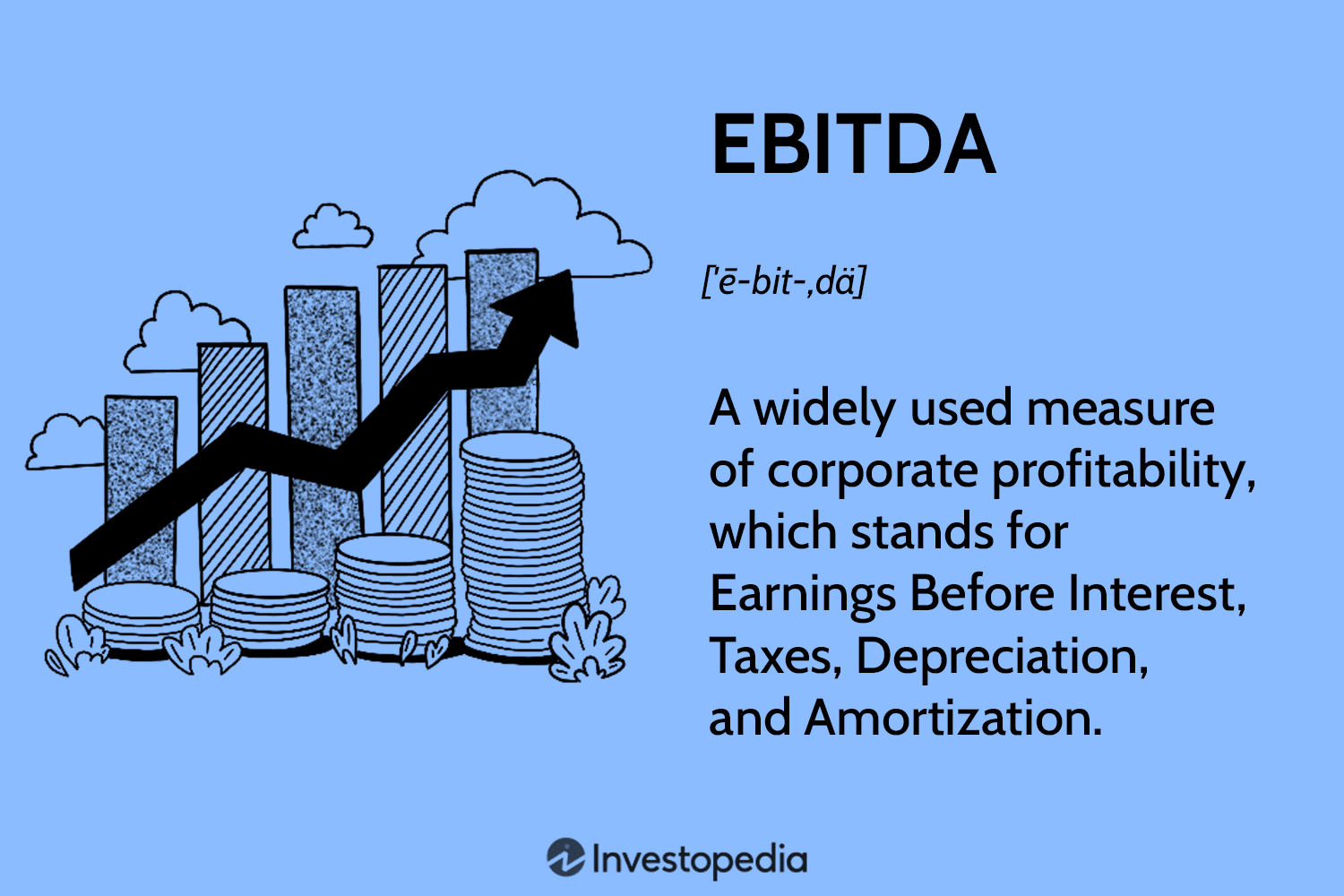
Earnings before interest, taxes, depreciation and amortization
2.7k
MENTIONS
607
EPISODES
473
PODCASTS
Search complete. 2682 mentions across 607 episodes found for "Earnings before interest, taxes, depreciation and amortization".
Oct 27, 2026

Jared LeeHOST
The more troubling part about the earnings report wasn't really the 4.4% drop in revenue.
Jared LeeHOST
It was the decline in profits, which was about 17% or the EBITDA that they refer to.
Jamie LeeHOST
I didn't even know what that ever means.
Jared LeeHOST
It's a way to show profits.
Jared LeeHOST
It doesn't include a depreciation or a capex, but it's a semblance of profits that they use.
Jared LeeHOST
I don't like EBITDA to use, but that's what they use.
Jared LeeHOST
And it's an adjusted type thing.
speaker_1ADVERTISER
okay um

Simon BrownHOST
We've seen some, we saw the numbers to June, and that was looking fairly good.
Simon BrownHOST
Adjusted EBITDA was up 17%, HEPS was 38, RAND up 9%.
Simon BrownHOST
Secunda production at a five-year high.
Simon BrownHOST
Above guidance, that was helped by the stoning plant, better coal quality.
Simon BrownHOST
Maybe it's closer to 55.
Simon BrownHOST
So H2 versus H1 tells the story, right? $92 Brent versus $66 Brent.
Simon BrownHOST
EBITDA, $40 billion versus $21 billion.
Simon BrownHOST
That $66 to $92.5 almost doubled EBITDA.

Session 20: Pricing young companies and across the market
Oct 27 · 23 Mentions
Top 30%Aswath DamodaranHOST
So if I'm not careful, if I pick stocks based on peg ratios, I'm going to find a lot of high growth stocks are cheap to me, and low growth, actually biased against low growth stocks, it's biased towards high growth stocks.
Aswath DamodaranHOST
Let's talk about EBITDA multiples.
Aswath DamodaranHOST
Remember we talked about how cross holdings kind of kick into EBITDA multiples? Here again I want to focus in on specifically the issue of cross holdings.
Aswath DamodaranHOST
If you remember in the numerator, your market value of equity plus debt minus cash, that's the enterprise value divided by the EBITDA.
Aswath DamodaranHOST
Let's suppose you have a company with a lot of cross-holdings, small holdings and other companies.
Aswath DamodaranHOST
And I put that into the pile and I compute EV to EBITDA.
Aswath DamodaranHOST
Will this company look cheap or expensive on an EV to EBITDA basis if it has a lot of cross-holdings? What happens if you have a lot of cross-holdings? Your market value will reflect the cross-holdings, right? So your market value is going to be higher.
Aswath DamodaranHOST
So you take a Tata modus, it's going to be a lot of, you know, holdings.

Sri RajagopalanHOST
Win with the customer, of course, drive profitable growth, and modernize how Kroger operates every single day.
Sri RajagopalanHOST
The financial framework, roughly 3%, comparable sales growth in 2029, excluding fuel and pharmacy, of course, adjusted EBITDA growth of 3% to 6% a year from 27 to 29, and adjusted EPS growth of 7% to 11%.
Sri RajagopalanHOST
That actually excludes the important Giant Eagle acquisition, which Kroger expects to close only in 2027, and it's also pending regulatory approval, so that adds up.
Sri RajagopalanHOST
And how does Kroger pay for this? A $4 billion structural cost takeout, which it calls its largest ever, that includes sourcing more directly, taking sourcing from under 1% today to over 10%, buying smarter and cost-to-goods, cutting indirect spending and scaling a new capability center in Bengaluru, India, with about 3,000 corporate roles impacted over time.

Jim CareyGUEST
And when those two things come together, you have, I would say, almost 100% chance of success in your investment.
Jim CareyGUEST
It translates into revenues and EBITDA and growth in a business because you've led in that sort of way in your business.
Jim CareyGUEST
And again, I could rank a bunch of our portfolio, but that's what I see as probably the two most important things that we've gotten out of leaders in our business.
Alex ShahidiHOST
And it is helpful when you have a lot of cases you can study over decades, over various market cycles, and you can see what works over time.
Jim CareyGUEST
We're very active in the wealth sector.
Jim CareyGUEST
It's a great sector for a bunch of reasons.
Jim CareyGUEST
multiples in that sector have been in the 20s, 20 times EBITDA, which is hard to sustain over a long period of time.
Jim CareyGUEST
And I think that it's been going now for three or four or five years.

KarenGUEST
And those things are the biggest metrics that drive the value of an agency is, is the agency growing? Is it profitable? And is the is that growth and performance repeatable.
KarenGUEST
The EBITDA number is 100% tied to the value of an agency because it is one of the two numbers in the equation that directly says what the value of the agency is.
KarenGUEST
It's the EBITDA times the multiple equals the value of an agency.
KarenGUEST
So if you don't know your EBITDA or what it should be, or how you compare to other agencies your size, you really are missing one of the biggest metrics inside your agency.
KarenGUEST
So that's a non-negotiable for us.
KarenGUEST
We then look at revenue per employee because it helps us with, are you staffed appropriately? Your largest controllable expense is your people.
KarenGUEST
And one of the things that drives the value of your agency more than anything is that renewable income or that retention rate.
KarenGUEST
So if you don't know your true retention, you won't know if there's something you need to do to solve it.

Jason MorrisHOST
And I think that's an important anecdote for our investors that are looking to see their money at work in a way where it can be fortuitous for them.
Jason MorrisHOST
And I want to talk analysis of that EBITDA and why it's so important, and then talk about our reservoir analysis that we use to basically stress test the company and its financial performance.
Jason MorrisHOST
Just to make sure that it can cover.
Jason MorrisHOST
So, Richie, would you mind just spending a few minutes talking about that preliminary analysis? You called it due diligence, which it totally is.
Rich JarvisHOST
you on succeed, the underwriting piece.
Richy JarvisGUEST
For any of the companies that we look at before it even gets to the reservoir analysis and we... do a little bit more in-depth vetting there.
Richy JarvisGUEST
We're living and breathing off of that EBITDA.
Richy JarvisGUEST
Sometimes advertised as seller discretionary earnings, it can go back and forth between those two.

Josh FletcherGUEST
Top line was pushing like it was right under $20 million.
Josh FletcherGUEST
EBITDA was like $3 million.
Josh FletcherGUEST
So, I mean, we were, you know.
Josh FletcherGUEST
Kicking butt, man.
15 MINS LATER
Josh FletcherGUEST
Yeah.
Josh FletcherGUEST
So the pool business, I mean, we're looking for businesses aggressively.
Josh FletcherGUEST
So across the Sunbelt, if it's a Sunbelt location, I mean, preferably if we're going to go into a new market, we'd like to have a hub like somebody with some significant EBITDA.
Josh FletcherGUEST
It's a very fragmented business.

Mike HerouxHOST
To wrap this up, management lifted the 2026 outlook.
Mike HerouxHOST
for revenue, for adjusted EBITDA and adjusted free cash flow.
Mike HerouxHOST
So everything is better than expected so far this year.
Mike HerouxHOST
That kind of like fueled the enthusiasm for investors.
6 MINS LATER
Mike HerouxHOST
I guess it's better.
Mike HerouxHOST
Guidance were reaffirmed.
Mike HerouxHOST
So they're on target for their revenue, their EBITDA, their CapEx, their free cash flow.
Mike HerouxHOST
So that's great.

Jeremy FingerGUEST
It's not with money that shows up in your bank account after all expenses are paid.
Jeremy FingerGUEST
So what a buyer is really going to look at is EBITDA, earnings before interest, taxes, depreciation, and amortization, or really, truthfully, after-tax money that shows up in your account after everything is paid.
Jeremy FingerGUEST
And so that's really what they're buying, and they're buying that stream of income ongoing.
Jeremy FingerGUEST
And the better you're able to represent... that that is going to be consistent, ongoing, and potentially increasing the bigger your sale value.
597 more episodes mention Earnings before interest, taxes, depreciation and amortization.
Create an account to see the whole feed, search across every transcript, and follow the entities you care about.