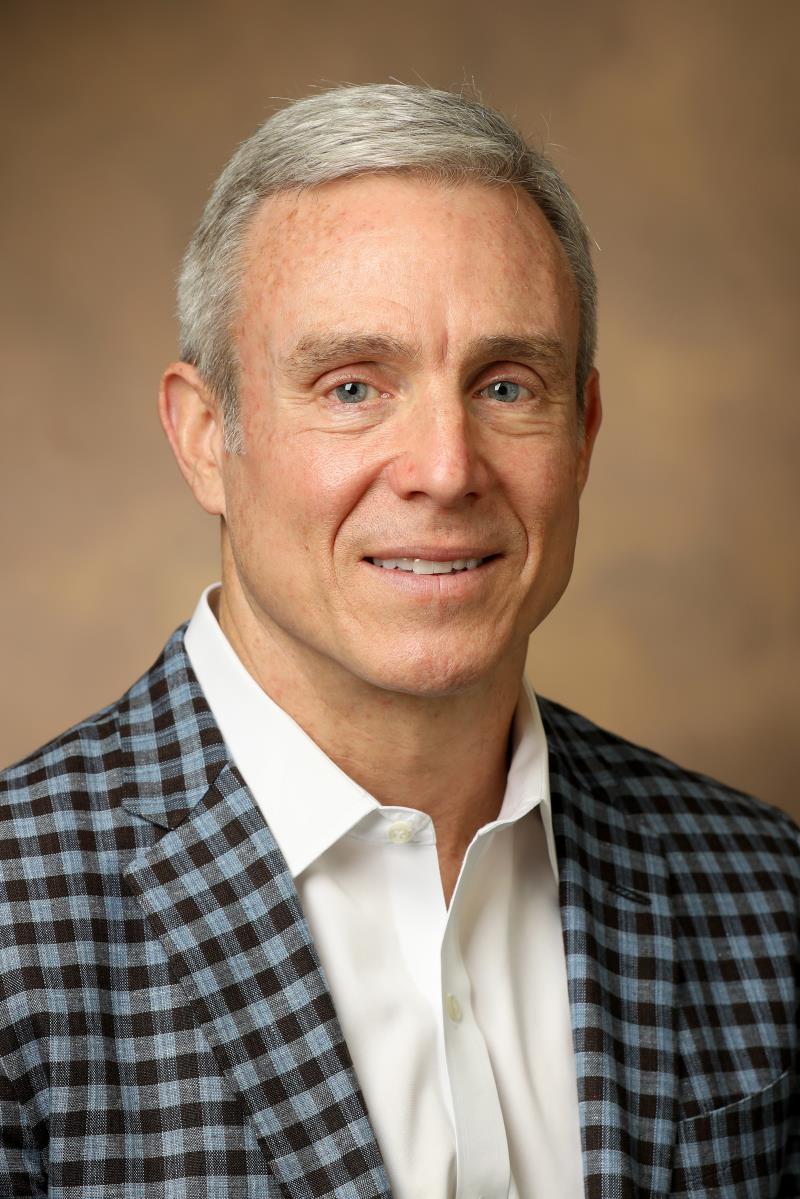
E. Wesley Ely
Physician
7
APPEARANCES
6
PODCASTS
Oct 4, 2026


Wes ElyGUEST
I'd be happy to introduce myself, and I first wanna thank all of you who were there at the meeting for caring so much about our patients and about improving the way that we care for patients who are critically ill, and by extension, patients we will never even meet because what you do today will affect the culture of how your patients in your institutions are cared for.
Wes ElyGUEST
And then down the line, even when you finish, if you help create that new and healthy culture of critical care, when you're done and gone, future patients will get better care as well.
Wes ElyGUEST
I'm 62, and I'm a critical care professor at Vanderbilt University and at the VA here.


Wes ElyGUEST
I have to start with the acknowledgement that as two intensivists, both of us ICU doctors, and what we do for a living is we care for people who have severe illness.
Wes ElyGUEST
And during COVID, I was in the COVID ICU with these patients who were dying, and I thought that when they got out of the hospital— I knew that they were going to have a severe long-term problem.
Wes ElyGUEST
And we've been studying that for 25, 30 years through federal dollars, NIH funding, VA funding.
34 MINS LATER

Wes ElyGUEST
I have to start with the acknowledgement that as two intensivists, both of us ICU doctors, and what we do for a living is we care for people who have severe illness.
Wes ElyGUEST
And during COVID, I was in the COVID ICU with these patients who were dying, and I thought that when they got out of the hospital— I knew that they were going to have a severe long-term problem.
Wes ElyGUEST
And we've been studying that for 25, 30 years through federal dollars, NIH funding, VA funding.
34 MINS LATER

BethHOST
He told me she had a sense of humor.
Wes ElyGUEST
And if we can create a community like you're doing with this podcast of people with shared suffering and shared vulnerabilities and then we can be present with one another as we all try to recover and get through our different things in life.
Wes ElyGUEST
While I do not have long COVID and I cannot pretend to understand what you have gone through and are going through, I can tell you that I want to sit alongside you in your suffering and I want to be present with you just like I was able to be present with Janet Keith the so-called refined badass.
Wes ElyGUEST
There was a picture of her standing next to the Eiffel Tower with her husband, Bill, who had a deep Southern drawl.
7 MINS LATER

Julia Moore VogelGUEST
And it's really inspiring to see the way that you've brought that into the ICU care world.


Wes ElyGUEST
And I think that I have a covenant with my patients, uh, primum non nocere, first do no harm, and I interpret, uh, uh, crossing the bright line of intentionally ending your life as c- as, as, as harm, harming you because it's creating your death.
Wes ElyGUEST
So I think that's the major con is I don't think physicians and people in healthcare professions should be involved with this at all.
Wes ElyGUEST
If society chooses to do it outside of medicine, figure out how to do that, but I don't think doctors should be involved.
Wes ElyGUEST
And then the third point I was gonna make is that, uh, with, with regard to involuntary, um, you, you brought this up about, you know, maybe somebody's unconscious, they can't d-get, can't determine or...
Wes ElyGUEST
The involuntary ph-euthanasia is also when, when the doctor does it without the patient's permission.

speaker_7UNKNOWN
You're welcome.
Wes ElyGUEST
This is anecdotal, but I have gotten in the 20 to 30 emails from physicians, scientists, people who really do know science well, who said that going on a keto diet has really helped them, which is a, uh, supposed to be lack of inflammation.
Wes ElyGUEST
Um, I'm not saying to everybody here to go on that diet, but my point is this: there's absolutely a relationship between what you eat and how this disease might go forward, and I do think that a healthy, appropriate, balanced diet is the first way to start.
Wes ElyGUEST
Whether or not you go fully on a low inflammation diet to generate ketones and avoid the inflammation that can occur with otherwise eating is something to try, and do it under the, the advice of a nutritionist.
Wes ElyGUEST
I think don't, you know, don't wing this, and have somebody professional in your life helping you figure out if this is making a difference or not.
37 MINS LATER

Alie WardHOST
And your book, too, it feels like it would give a lot of hope to patients in terms of, like, how to approach healing with the doctor's help and, and what questions to ask and what care to expect.
Wes ElyGUEST
Yeah, in, in Every Deep Drawn Breath, the beauty of it is that these are people's stories, real stories, actual quotes that I recorded with an audio device, so I didn't make them up.
Wes ElyGUEST
And all the patients' pictures are available, including Maya Angelou and some other famous people that I've had the blessing of caring for over the years, are, are online.
Alie WardHOST
It's a kind of locked-in hell," he writes, "and there's currently no cure for this disease." Thankfully, Dianna's condition has improved modestly in the last few months, but it's still extreme ups and downs.
Wes ElyGUEST
ME/CFS, or myalgic encephalomyelitis, chronic fatigue syndrome is the formal name of what we used to just call chronic fatigue, and these Venn diagrams are very overlapping.
Wes ElyGUEST
This young woman I met with yesterday thought for a year and a half that she just had ME/CFS and, and everybody was dissing her in formal medical evaluations about the possibility of long COVID, and when I reviewed her history and her actual documented times when she had positive COVID tests, her story fits perfectly for long COVID.
Wes ElyGUEST
And her d- symptom complex is broad enough that I think in her example, the ME/CFS fits underneath the umbrella of a larger diagnosis of long COVID, andMany patients would, would tell you that ME/CFS is part of their long COVID disease state.
Wes ElyGUEST
But for example, as a scientist, as a physician scientist, I'm working with a lot of people on a large trial that we are now enrolling into called Reverse Long COVID, RVLC, NIH sponsored, and we use ME/CFS tests and symptom batteries as part of our measurements to see what our intervention is doing or not doing.
10 MINS LATER