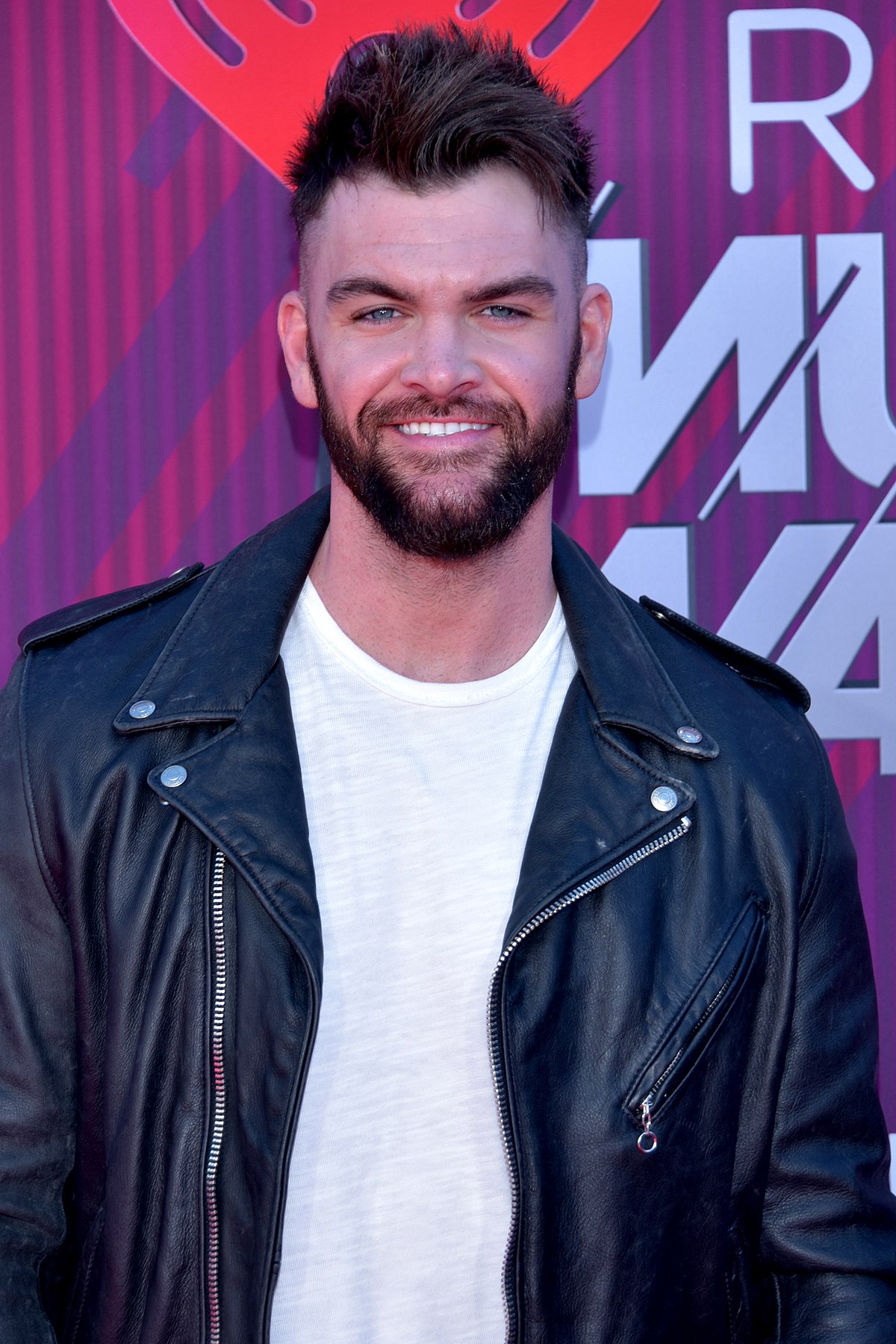
Dylan Scott
American singer-songwriter
16
APPEARANCES
9
PODCASTS
Sep 16, 2026


Sean RameswaramHOST
future.So tell us more about the scientific discovery, because you mentioned that there's promising research beyond, I'm guessing, these amyloid plaques.

Dylan ScottGUEST
I would say that it's not like the amyloid hypothesis has been invalidated, but I think it, the, our understanding of the disease, what's happened is it's become more complex.
Dylan ScottGUEST
[gentle music] And we're realizing that there's probably also a role for a different kind of protein called tau.
Dylan ScottGUEST
Your vascular health, your body's ability to just pump bud- blood through your body may also be playing a role in the development of Alzheimer's disease.
Dylan ScottGUEST
But the thing is like i- it's not necessarily that there's like a virus or bacteria or this sort of like short term health problem that our inflammation is able to respond to and then resolve.
Dylan ScottGUEST
Instead its just this, you know, this, this miasma that we're living inside of.
Dylan ScottGUEST
That we're being exposed to all the time, and I, I do think it kinda not just agitates our immune system but it causes our immune system to go a little bit haywire.
Dylan ScottGUEST
And I mean, I think thinking about the food supply in particular may be helpful here.
Dylan ScottGUEST
To simplify a very complicated story, our food production has completely changed within the last century.
Dylan ScottGUEST
If we're talking about these long evolutionary timelines for our immune system to adjust and adapt, We have sent a shock to the system just in the last hundred years with the advent of mass agriculture and things ultra processed foods.
6 MINS LATER

Sally HelmHOST
I mean Dylan how can sort that Out LIKE HOW CAN KNOW WHEN IT BECOMES CHRONIC INFLAMMATION ?[laughs].


Paul FinebaumHOST
Talk about the influence of, I don't know, he may be the biggest name in the history of country music.
Dylan ScottGUEST
It's Garth Brooks, right? And I think that's what's really cool about Louisiana.
Dylan ScottGUEST
And hey, we just welcome him with open arms, you know, regardless if he's a massive artist or not.
Paul FinebaumHOST
And nobody's ever made it because we all know it's fleeting, but you're pretty close to having made it.


Dylan ScottGUEST
And I remember the first time I heard s- or saw somebody cry, I'm like, "Are you crying?" But it reminded them of their kids, and they're about to leave home and go to college.


Dylan ScottGUEST
I don't know how I got on this, but we was all on the bus and I'm watching on the TV screen, but I'm on my computer and I'm just deep diving and I'm watching all this going, man, we did this stuff.
Dylan ScottGUEST
years ago, really kind of before anybody else was doing it, you know, but not saying we were the first, I'm just saying, but we've done it for a long time.
15 MINS LATER

Dylan ScottGUEST
Like, this, like I said before, this is something that we have dealt with in the past.
Dylan ScottGUEST
It's, it's getting a lot more attention now, I think because of how big the outbreak has gotten.
Dylan ScottGUEST
Distribution system where, like, we're getting leafy greens grown all over the world and shipped to plants in the United States and being, you know, packaged into these bagged salad kits that I personally love to buy for lunch and sold all over.
Matt B. DavisHOST
... 'cause we know you're a latecomer, but you made it with, like, like, three wall balls to go, basically.
Dylan ScottGUEST
I'm in trouble." And I was like, well, I mean, whether I'm in trouble or not, I, I said that my, I said that my race plan was go out, execute, and let, let whatever happens happen.


Pat SpinosaHOST
How do you stay in the trenches of being just relevant? Obviously, there's social media going on right now, new people coming into the music, but staying relevant in this day and age, whether it's technology, whether it's the consumer listening to the music, how do you stay relevant in country music?

Dylan ScottGUEST
Um, didn't back off training too much, so, like, I came in as maybe a tiny overcooked.
Dylan ScottGUEST
I had to make my way back up, and then I had to just find, like, a comfort level-


Dylan ScottGUEST
You know? That's-- I'm very proud of that one, 'cause I wrote it strictly about my wife, and I didn't think anybody would wanna listen to it, and here we are.
Dylan ScottGUEST
I mean, Good Times Go By Too Fast and This Town's Been Too Good To Us is probably one of my favorites.
Dylan ScottGUEST
It's just an ode to the town where I grew up and those people and, you know, just those guys who helped carve who I am as a person.
Dylan ScottGUEST
Um, but I mean, honestly probably, probably one of my favorite songs I've ever written is a song, it's, uh, it's not a hit.
Matt B. DavisHOST
So what would you like to say for those that are in the Dillon winning the world champs camp? Like, how are we gonna catch that guy? What would you like to say about that?
Dylan ScottGUEST
And also, again, like, on the day, things can always swing in a certain direction.
6 MINS LATER

Dylan ScottGUEST
... oh, okay, besides alcohol, uh, usually somebody trying to get to the front or somebody knocking into somebody because they didn't see them, and then it just becomes, yeah, a brawl.
Dylan ScottGUEST
I'm not thankb- I'm really not thankful for Instacart, 'cause it gets too expensive.
Jonquille HillHOST
Mm.
Dylan ScottGUEST
But then the Affordable Care Act passed and was this big flashpoint politically, as people well know.
Dylan ScottGUEST
Especially for, like, deeply conservative and religiously devout people, they had a lot of objections to the ACA.
Dylan ScottGUEST
Some of them had objections to, like, the provisions that required insurers to cover birth control, things like that, and so they were like, "You know what? I wanna, like, opt out of this law." And actually, the law and the way that it was written kinda gave them an out.
Jonquille HillHOST
And how has it worked out for people who are in these ministries?

NatalieAUDIENCE
I'm looking for help.
Dylan ScottGUEST
Unfortunately, like that's one predicament that the US healthcare system puts people into if they have like a serious medical need is you might just have to like beg strangers to chip in to cover your bills.
Dylan ScottGUEST
But short of that, you also have Americans, they're li- looking for basically insurance-like products.
Dylan ScottGUEST
You know, something where it's like you pay a monthly payment and if you have medical bills, hopefully it's gonna cover you.
Dylan ScottGUEST
There's something called short-term limited duration insurance, which like ideally is supposed to be like a three-month plan that you get on when you're between jobs or something like that.
Dylan ScottGUEST
So this is maybe the most interesting thing that I learned in reporting out this study and talking to a bunch of these cancer researchers who are b- as befuddled by all of this as we are.
Dylan ScottGUEST
So it seems that your individual risk of many different type of cancers actually depends on something that's totally out of your control, which is when you were born.
Dylan ScottGUEST
(instrumental music) Like, somebody who was born in 1975 had nearly twice the chance of developing, like, an intestinal cancer compared to somebody who was born in 1955, 20 years earlier.
Dylan ScottGUEST
And likewise if we look, like, at younger people, people born in 1990, they're at even a higher risk of developing cancers than those people born in 1955 or even 1975.
Dylan ScottGUEST
Um, one does seem to be, like, the, the changes in food production and the proliferation of processed foods, um, which is obviously something that, like, basically if you eat in the modern world, you're consuming more processed foods than people used to.
speaker_10ADVERTISER
(instrumental music plays) You're listening to Today Explained.
Dylan ScottGUEST
So this is maybe the most interesting thing that I learned in reporting out this study and talking to a bunch of these cancer researchers who are as befuddled by all of this as we are.
Dylan ScottGUEST
So it seems that your individual risk of many different type of cancers actually depends on something that's totally out of your control, which is when you were born.
Dylan ScottGUEST
(instrumental music) Like somebody who was born in 1975 had nearly twice the chance of developing, like, an intestinal cancer compared to somebody who was born in 1955, 20 years earlier.
Dylan ScottGUEST
And likewise, if we look, like, at younger people, people born in 1990, they're at even a higher risk of developing cancers than those people born in 1955 or even 1975.
Dylan ScottGUEST
Um, one does seem to be, like, the, the changes in food production and the proliferation of processed foods, um, which is obviously something that, like, basically if you eat in the modern world, you're consuming more processed foods than people used to.
speaker_14NARRATOR
(instrumental music) You're listening to Today Explained.