Dutch Golden Age
Art periodWikipedia
17
MENTIONS
12
EPISODES
11
PODCASTS
Search complete. 17 mentions across 12 episodes found for "Dutch Golden Age".
Oct 3, 2026

speaker_2HOST
It allowed them to amass vast liquid wealth.
speaker_1HOST
And they used that wealth to buy into the very foundation of the Dutch Golden Age.
speaker_2HOST
They did.
speaker_2HOST
When the Dutch government formed the Dutch West India Company, or the WIC, in 1621 to monopolize Atlantic trade, Sephardic Jewish merchants became major shareholders and key strategists.

speaker_0HOST
And they kept a tight naval blockade around the island so no one could smuggle seeds out.
speaker_0HOST
And that immense manipulated wealth is what funded the Dutch Golden Age.
speaker_0HOST
Rembrandt's paintings, the canals of Amsterdam, the foundation of modern banking, it was all financed by the sweat of enslaved harvesters and the smoke of burning bark.
speaker_1HOST
But extreme control inevitably breeds extreme rebellion.

Ben JohnsonHOST
While I've never been to Venice, I've been to another famous city known for its canals in Amsterdam.
Ben JohnsonHOST
And I think one of the first branches of this Bond family tree was born out of the sort of Dutch iteration of the Venetian invention to borrow from your metaphor the dutch realized that having not just one wheel but putting four wheels together made for a stronger wagon so how specifically did the dutch parlay that venetian invention of the bond to use it ultimately as the basis for what became the dutch golden age
Robin WigglesworthGUEST
well so the venetians invented the bond by accident like i said because it was actually a war tax that they raised proportionally from all the citizens to pay for a war against Constantinople.
Robin WigglesworthGUEST
And they made the receipts for this tax tradable.

Herman PoppleberryHOST
And the Netherlands is the other candidate.
Herman PoppleberryHOST
Holland, Antwerp, the Dutch Golden Age.
Herman PoppleberryHOST
But if you want the country that's prosperous, influential, and about to become a superpower, it's England.
Herman PoppleberryHOST
So we've got our territory.

Ed BeachGUEST
And then I also, my travel experiences are much deeper in Europe than they are anywhere else in the world.
Ed BeachGUEST
So I love going to Europe and going to places like maybe a place like Amsterdam, where you can just sort of imagine it's during the Dutch Golden Age just by walking around that town.
Ed BeachGUEST
And the the European history is sort of been grabbing me ever since I've had taken all those those trips there.
Ed BeachGUEST
And I think that's what I'll probably keep coming back to.

Lauren TagliaferroHOST
Okay, so let's start with an artist that I've talked about on the podcast before, so I won't get too deep in the weeds on this, but I want to talk about Rachel Royche, an incredibly influential woman artist.
Lauren TagliaferroHOST
She was a Dutch still-life painter, born in 1664, and was really working in the height of the Dutch Golden Age.
Lauren TagliaferroHOST
She specialized in flowers.
Lauren TagliaferroHOST
As I have mentioned on the podcast before, women for a very long time, especially in Europe, in the Western tradition, were only allowed in the academy tradition to paint flowers and landscapes.
Lauren TagliaferroHOST
She was successful in her lifetime, which is rare.
Lauren TagliaferroHOST
It doesn't happen often, and it certainly didn't happen very often in the period that she was working.
Lauren TagliaferroHOST
She was also the best documented female painter of the Dutch Golden Age.
Lauren TagliaferroHOST
She worked for six full decades and was very highly regarded and she made good money doing it.

speaker_0HOST
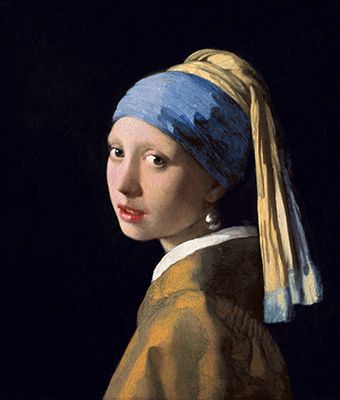
And up close, you can really appreciate his brushwork and the incredible attention to detail.
speaker_0HOST
But who was Johan Vermeer? Vermeer was born in 1632 and is considered one of the greatest painters of the Dutch Golden Age.
speaker_0HOST
He was born in Delft, Netherlands, and lived there for most of his life.
speaker_0HOST
And he only painted about 35 to 37 works, but each one is carefully planned and beautifully detailed.
speaker_0HOST
Then he used more direct brushwork in certain areas.
speaker_0HOST
He also used a dark box for observation, which helped him paint using dotted and rubbing techniques, giving his pictures the sparkling light effects similar to those you see in photographs.
speaker_0HOST
Why do you think Vermeer painted so realistically? What do you think the artist is showing us beyond what we can see, such as emotions, nostalgia, opinions, or memories? The answer is, in the Dutch Golden Age, photography hadn't been invented.
speaker_0HOST
People didn't really think of art in the modern sense, but more as a craft or a way to make a living.

Arie van GemerenHOST
Genoese bankers who financed the Habsburg Wars, Dutch and other European merchants and financiers who ended up holding the silver Spain spent rather than saved.
Arie van GemerenHOST
Some of the wealth that helped fuel the Dutch Golden Age, the same Amsterdam we've discussed before in this channel's context of global finance, flowed from the Andes to the Dutch who never set foot on the same mountain.
Arie van GemerenHOST
some of it was indirect some of it was very direct so let's get into it and here's where this story gets genuinely strange and very informative see spain and the dutch republic were at war for 80 years the dutch were literally fighting a war of independence against the empire that owned this mountain and the dutch got wildly rich off the exact same silver which is a wild historic twist the why is really informative Now, it starts with geography and collapse.
Arie van GemerenHOST
In 1585, Spanish forces sacked Antwerp, another story that we've covered on this channel.

speaker_1NARRATOR
barring Italy, that had produced some of the finest artistic work and collections ever produced in the continent.
speaker_1NARRATOR
For instance, the Louvre Museum was in Paris, while the Low Countries had been home to both the Burgundian Renaissance of the 15th century and the Dutch Golden Age of the 17th century.
speaker_1NARRATOR
many people in these countries had private collections that were soon going to be ransacked by the nazis particularly so where they were in jewish hands given the nazi policies towards the jewish people of europe Some collections would only avoid desecration because of preventative measures.
speaker_1NARRATOR
A little known fact is that the French had taken preventative measures to preserve the collections in the Louvre, in anticipation of German bombing campaigns against Paris or occupation of the city, and many of the museum's most iconic paintings and statues had been moved to remote parts of France in 1939.
speaker_1NARRATOR
Hoffmann was just one of numerous people who entered bidding wars for paintings acquired by agents, primarily in the Netherlands and France, though others, like Goering, were in a position to simply have military units under their command physically acquire paintings for them and bring them back to Germany on his behalf.
speaker_1NARRATOR
In all, Hoffman is understood to have acquired somewhere in the region of around 278 paintings.
speaker_1NARRATOR
He had a particular interest in the works of the masters of the Dutch Golden Age of the 17th century, when the painters of the Netherlands were considered the finest artists in the world.
speaker_1NARRATOR
As we will see, after the war, these paintings would have their own unusual story.

Simon WhistlerHOST
But what about blue? What about yellow? Good luck trying to find those colors out here.
Simon WhistlerHOST
Nevertheless, some of the greatest paintings of the second millennium were created during the 17th century, during the Dutch Golden Age.
Simon WhistlerHOST
Painters like Vermeer were creating hyper-realistic masterpieces.
Simon WhistlerHOST
But how did they do this without access to colours? Where did they get the colours from? Well, they had access to colors, and they came from all around the world, from really strange places and from really strange things.
2 more episodes mention Dutch Golden Age.
Create an account to see the whole feed, search across every transcript, and follow the entities you care about.