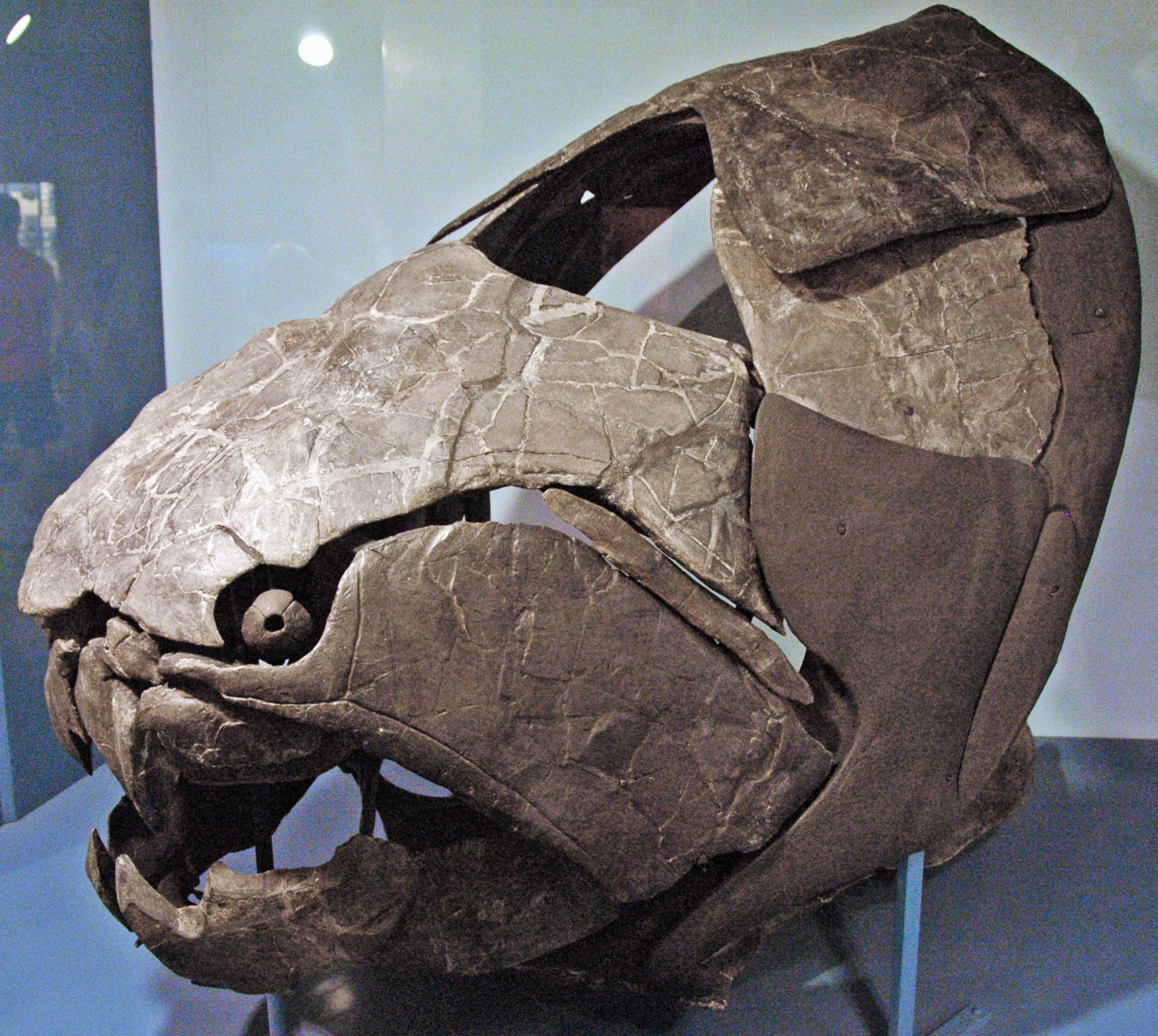
Dunkleosteus
FishWikipedia
4
MENTIONS
2
EPISODES
2
PODCASTS
Search complete. 4 mentions across 2 episodes found for "Dunkleosteus".
Sep 16, 2026

Melissa SivanyNARRATOR
Most placoderms were predators.
Melissa SivanyNARRATOR
They varied in size from only a few inches to the huge apex predator Dunkleosteus, which must have been the terror of the Devonian Seas, up to 30 feet long with enormous jaws.
Melissa SivanyNARRATOR
The Mount Eldon placoderm fossils weren't so large, only a few inches long.
Melissa SivanyNARRATOR
Notwithstanding their small size, they're still considered among the most important vertebrate fossils in the museum's collection and a prized part of Major Brady's legacy.

speaker_3NARRATOR
For a start, the earliest known sharks evolved, though they were far from the top predators we know today.
speaker_3NARRATOR
In fact, they were completely overshadowed by a group of bony fish called placoderms, like this absolute beast, Dunkleosteus.
speaker_3NARRATOR
Old Dunkley was the apex predator of the day.
speaker_3NARRATOR
At its smallest estimate, it was a little shorter than a male great white shark, that's three times the size of an adult human.
speaker_3NARRATOR
Without a doubt, this was the biggest species alive at the time, and one of the most intimidating fish to have ever lived.
speaker_3NARRATOR
Its colossal head housed guillotine-like teeth, and experts reckon it had a stronger bite than a saltwater crocodile.
speaker_3NARRATOR
For context, saltwater crocs have the most powerful bite of any living creature, but Dunkleosteus had more than double that.
speaker_3NARRATOR
I mean, picture a jaw that could snap a saltwater croc in half like a breadstick.