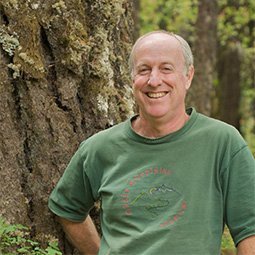
Douglas Tallamy
Entomologist and ecologistWikipedia
29
MENTIONS
11
EPISODES
10
PODCASTS
Search complete. 29 mentions across 11 episodes found for "Douglas Tallamy".
Sep 13, 2026

Bill YoungGUEST
No, I'm very pleased to see this.
Bill YoungGUEST
I love that Doug Tallamy has said, you know, just to homeowners, you know, put in one species, put in two, convert a little of your lawn.
Bill YoungGUEST
I'm very happy about that.
Bill YoungGUEST
The one thing is labeling and mislabeling and calling things native or calling things pollinator friendly.
Ann WallaceHOST
How do we work with people who've got small spaces?
Bob SwainGUEST
Basically, it's pretty much following along what Bill said.
Bob SwainGUEST
Doug Tallamy pretty much has spelled it out.
Bob SwainGUEST
Small spaces you have, if you install anything that promotes... pollinators, that promotes wildlife, that promotes anything that has to do with the environment, it's a step in the right direction.

Jessica WareGUEST
And so if we lose them, then all of the environments that you know will be different, and many of us would say would be much worse.
Jessica WareGUEST
And some people predict, like, there's a, a colleague of mine, Doug Tallamy, who says in the absence of insects, humans wouldn't last more than three months, so-
Wendy ZukermanHOST
Wow, and why is that? Is it, it's the, it's the pollination? Is that the m- most immediate thing? 'Cause I guess people most associate bees with pollinators, but what are the other insects that help out with that?
Jessica WareGUEST
I mean, for pollinators, there's lots of...
8 MINS LATER
Jessica WareGUEST
We kind of move animals around all the time with transoceanic cons- commerce, and often an invasive species, they don't have their natural enemies, and they can go into really large numbers, and they can outcompete native species.
Jessica WareGUEST
That's a stressor.
Jessica WareGUEST
So it's, my colleague David Wagner calls it death by a thousand cuts, you know? There's not one stressor that you could just, the panacea, you fix that, and insect decline's over.
Jessica WareGUEST
There's all of these little pieces that together are just too much.

Jess ZanderGUEST
But I have a lot of non-native things.
Jess ZanderGUEST
The way I'm thinking about this is I'm so far away from that goal of the Doug Tallamy sort of, if we could get to 70% native, I'm so far away from that.
Jess ZanderGUEST
But my thing is, is when I add new plants, they're native.
Jess ZanderGUEST
And when I, you know, when I get tired of something, like I had a lot of Erosa Sharon, I'm just slowly moving those along, slowly getting rid of different hydrangeas.

Amanda BustillosGUEST
... like, everyone who comes over to our house is so amazed at, like, what Hector has done.
Amanda BustillosGUEST
We learned a lot from Doug Tallamy, um, Homegrown National Park-
Hector BustillosGUEST
Okay
Amanda BustillosGUEST
... about how to make your little yard into a thriving ecosystem.

Lara Call GastingerGUEST
You care about like maybe doing something more about the environmental issues.
Lara Call GastingerGUEST
I think that Doug Tallamy, he wrote my foreword in this book and he had a really good quote in here.
Lara Call GastingerGUEST
Would you like me to read it? Yes.
Lara Call GastingerGUEST
OK.

speaker_0HOST
There's an entomologist I've followed for years.
speaker_0HOST
His name is Doug Tallamy.
speaker_0HOST
I've never actually met him.
speaker_0HOST
I have spoke to him at one time on my radio show through the phone.

David MizejewskiGUEST
Because oak trees are real wildlife habitat powerhouses.
David MizejewskiGUEST
So we know from the research of a guy named Dr. Doug Tallamy, he's an entomologist who, who specifically has studied the impacts of native plants in sort of our landscapes on sort insect population, but then, you know, broadly in the ecosystem.
David MizejewskiGUEST
And the thing that shocks most people when you talk about, say, butterfly gardening is that, you know, we think of the blooming plants that provide nectar to the adult butterflies.
David MizejewskiGUEST
But the reality is, you know, going back to the whole host plant thing, butterflies and moths, you know, their caterpillars can only eat the leaves of certain plants that they have co-evolved with, that they have adapted to To be able to survive the toxins that plants produce because they don't want things eating their leaves.
David MizejewskiGUEST
And so there's many more moth species just because they've been around on this planet longer.
David MizejewskiGUEST
and have diversified longer, which makes them arguably actually more important as pollinators, but also as that protein part of the food web for the birds.
David MizejewskiGUEST
And so those birds, those 96% of our backyard birds, another stat that comes from Dr. Doug Tallamy's work, that are feeding their babies, they're primarily feeding them caterpillars and primarily moth caterpillars.
David MizejewskiGUEST
So think about it.

Kevin GallagherHOST
Good evening.
Kevin GallagherHOST
Tonight's show features locals doing the right thing by our pollinators by changing their lawns and gardens, plus words of wisdom from renowned entomologist Doug Tallamy.
Kevin GallagherHOST
First up is Cori Kanzas.
Kevin GallagherHOST
After retiring, she joined Protect Our Pollinators, a unique Newtown group that started 11 years ago this month with a mission to save endangered pollinators through education and action.
16 MINS LATER
Cori KondasGUEST
And if you want to know more about that idea, the homegrown national park movement that Doug Tallamay is co-chairing, he emphasizes native plants because they tend to be much stronger with ecological relationships with the insects that evolved a long time ago, thousands of years ago.
Kevin GallagherHOST
It's true.
Kevin GallagherHOST
Doug Tallamy is a great guy, and he's been on here as well.
Kevin GallagherHOST
Thank you for joining me, Cori Kondas.

Jared RosenbaumGUEST
Sure
Fran ChismarHOST
... um, in reference to the New York Times article, uh, where the author was getting into ecological landscaping and had spent some time with Doug Tallamy.
Fran ChismarHOST
And Tom and I talked about it on a previous podcast for a good 20 minutes or so-
Jared RosenbaumGUEST
Mm-hmm
50 MINS LATER
Jared RosenbaumGUEST
Yeah, they become aware of something that they weren't before.
Fran ChismarHOST
Yeah.
Jared RosenbaumGUEST
Well, to loop back to the article again, you know, one of the things that the article said that was kinda mildly offensive is, uh, you know, it, it was talking about Doug Tallamy after having this like apparently really charming visit to his home-
Fran ChismarHOST
Yes
1 more episode mentions Douglas Tallamy.
Create an account to see the whole feed, search across every transcript, and follow the entities you care about.