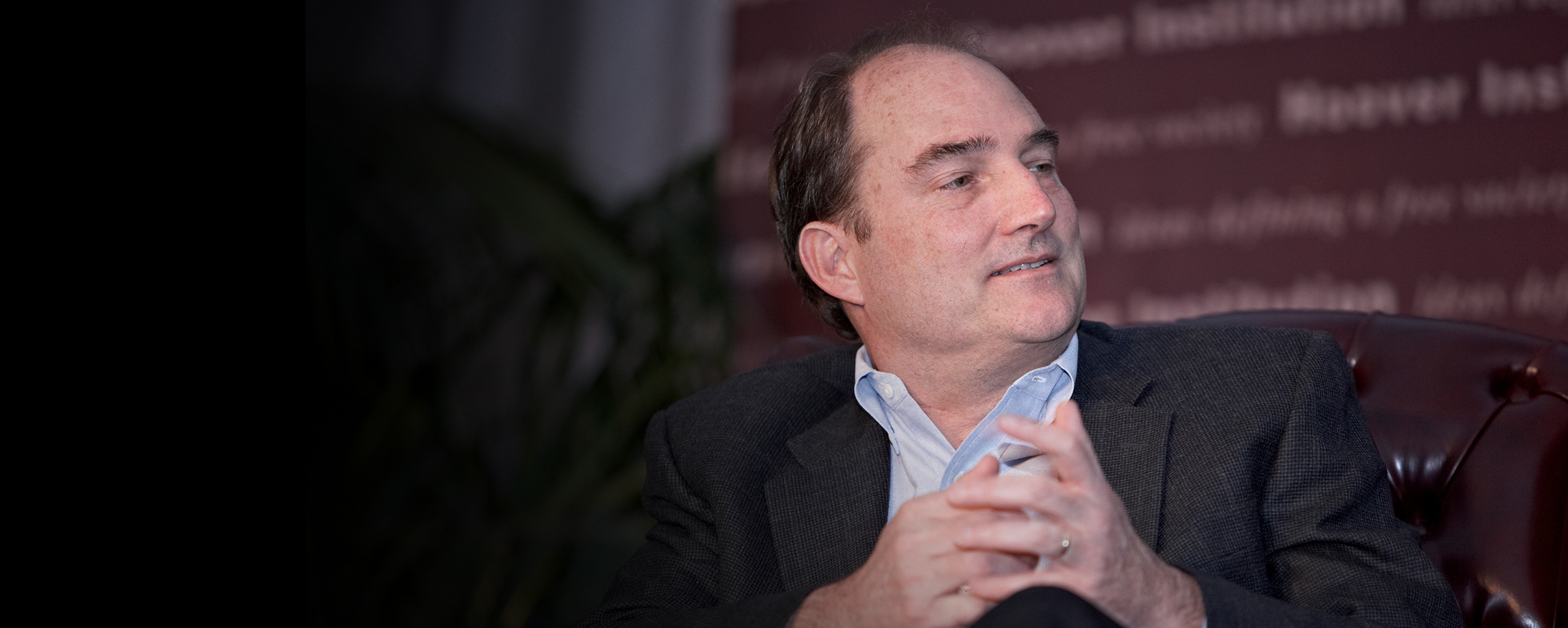
Douglas Rivers
Chief scientist of YouGovWikipedia
7
MENTIONS
6
EPISODES
6
PODCASTS
Search complete. 7 mentions across 6 episodes found for "Douglas Rivers".
Oct 31, 2026

speaker_1HOST
This Friday, we take a deep dive into the policy choices confronting Californians.
speaker_1HOST
Douglas Rivers and Michael Boskin analyze findings from two recent polls on policy preferences.
speaker_1HOST
Lee Ohanian provides a critical look at two measures that would increase taxation in California without addressing spending.
speaker_1HOST
And Lanhee Chen proposes a ballot initiative to make elections for California's comptroller and treasurer offices nonpartisan.
speaker_0HOST
what Californians really want.
speaker_0HOST
In addition to serving as a senior fellow, Douglas Rivers is the chief scientist at the global polling firm YouGov PLC.
speaker_0HOST
He teamed up with senior fellow Michael J. Boskin to analyze the results of two recent YouGov polls examining how Californians and Americans nationally feel about taxes and spending.
speaker_0HOST
As it turns out, despite California's high taxes and government spending, the poll found that Golden State residents actually have views on taxation similar to those of residents in other states.

Steve HaywardHOST
I think pretty highly of the people.
Steve HaywardHOST
Doug Rivers, who runs it, is connected some with Hoover, which isn't necessarily a batch of perfection these days.
Steve HaywardHOST
But leave that aside for now.
Steve HaywardHOST
But the reason you signed up and are included is what they try to do is quite unique in polling.

Steve HaywardHOST
I think pretty highly of the people.
Steve HaywardHOST
Doug Rivers, who runs it, is connected some with Hoover, which isn't necessarily a batch of perfection these days.
Steve HaywardHOST
But leave that aside for now.
Steve HaywardHOST
But the reason you signed up and are included is what they try to do is quite unique in polling.

Jack RakoveGUEST
I was very optimistic before the 2024 election, 2020 election.
Jack RakoveGUEST
I should say one of my colleagues is, at Stanford, is Doug Rivers, who's the leading poll taker for The Economist, and as these things go, is super smart.
Jack RakoveGUEST
So I think this remains to be discovered.
Jack RakoveGUEST
I mean, I do happen to think, and I wrote something about this in The Washington Monthly, which you can link to, that one of the best ways to commemorate the American Revolution, having just gone through the, our semiquincentennial, the 250th anniversary of American independence, was to talk about the form of resistance that the American colonists developed or applied, which had its English roots back in the 1760s and 1770s, the period between the Stamp Act crisis of 1765 and then the outbreak of Civil War.

Jack RakoveGUEST
I was very optimistic before the 2024 election, 2020 election.
Jack RakoveGUEST
I should say one of my colleagues is, at Stanford, is Doug Rivers, who's the leading poll taker for The Economist, and as these things go, is super smart.
Jack RakoveGUEST
So I think this remains to be discovered.
Jack RakoveGUEST
I mean, I do happen to think, and I wrote something about this in The Washington Monthly, which you can link to, that one of the best ways to commemorate the American Revolution, having just gone through the, our semiquincentennial, the 250th anniversary of American independence, was to talk about the form of resistance that the American colonists developed or applied, which had its English roots back in the 1760s and 1770s, the period between the Stamp Act crisis of 1765 and then the outbreak of Civil War.