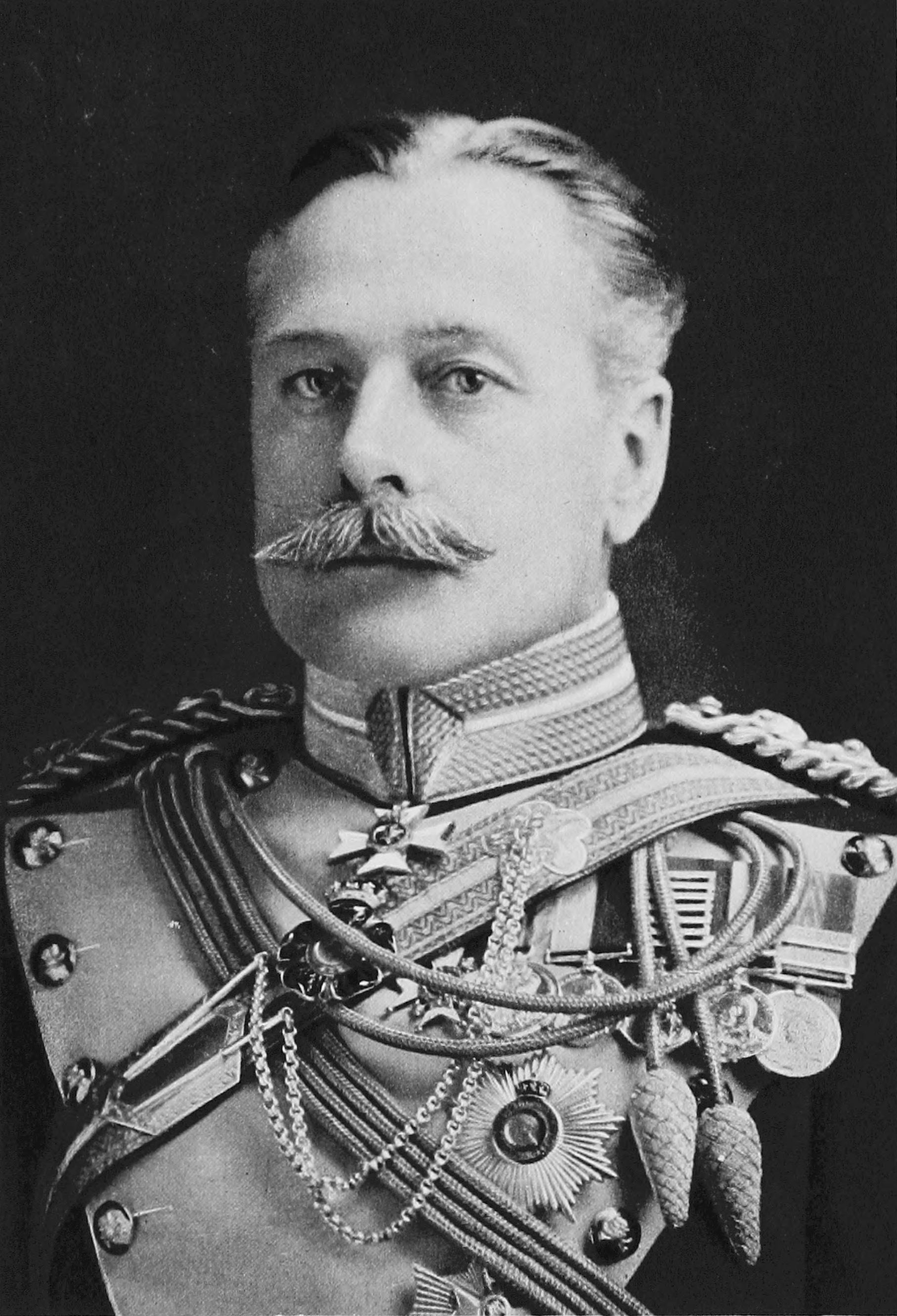
Douglas Haig, 1st Earl Haig
Senior officerWikipedia
39
MENTIONS
16
EPISODES
14
PODCASTS
Search complete. 39 mentions across 16 episodes found for "Douglas Haig, 1st Earl Haig".
Sep 15, 2026

Lindsay GrahamHOST
It's hoped that this deception will buy the British the time they need to deploy the wonder weapon on the battlefield, but the name sticks.
Lindsay GrahamHOST
And for General Douglas Haig, these new tanks cannot arrive soon enough.
Lindsay GrahamHOST
He's the commander-in-chief of British forces on the Western Front, and he intends to launch a new offensive in the area around the Somme River, where British and German armies have been locked in position for months.
Lindsay GrahamHOST
So tank production is made a priority by the British government, but the new weapon still isn't ready for the start of the Battle of the Somme in July 1916.
Lindsay GrahamHOST
Since the successful demonstration earlier this year, the British Army has spent months assembling dozens of tanks and training the crews needed to operate them.
Lindsay GrahamHOST
When enough machines and soldiers were ready, they were shipped across the English Channel and brought to the Somme.
Lindsay GrahamHOST
Now they're ready to support General Douglas Haig's latest offensive, a mass infantry attack on German trenches near the villages of Flers and Courcelette.
Lindsay GrahamHOST
As dawn breaks, Captain Mortimer's crew cranks the engine to life.

Spencer JonesHOST
And if we look at the British side, and by extension the Allied side, there's no doubt that when the Somme concept is cooked up in the late autumn of 1915, the idea is that the Somme, or possibly one of the other Allied defences, will breach the lines and a war of manoeuvre will return.
Spencer JonesHOST
Douglas Haig, as we've heard in this series, he certainly on day one thinks there can be a general rupture and that the Allies, the British, are going to go all the way through this.
Spencer JonesHOST
They're going to break through all the German lines into open country beyond.
Spencer JonesHOST
That never happens.
13 MINS LATER
Spencer JonesHOST
It's ultimately going to inflict a puncture wound on Germany that is going to lead to its defeat by the end of 1918.
Spencer JonesHOST
Well, that's an argument that a lot of the British military tried to make, particularly towards the end of the war.
Spencer JonesHOST
Douglas Haig referred to the Somme as a wearing out battle, this battle of attrition that was eventually going to weaken Germany to the point when it's defeated in 1918.
Spencer JonesHOST
Now, I think Haig's playing a little bit fast and loose there because he doesn't necessarily see it as an attritional battle in 1916.

David LawrenceNARRATOR
Conferences were held with Chancellor von Herting, Admiral von Hinz, the Foreign Minister, and Field Marshal von Hindenburg on August 14, 15, and 16. and there was also a meeting of the crown council at which i clearly stated that the war could not be won militarily the kick-off of august eighth at amiens was the first general offensive attempted by the british armies in nineteen eighteen and the events leading up to it must be briefly rehearsed in order to get a true strategic picture this can best be done in the words of field marshal haig as contained in his famous victory dispatch of december twenty one nineteen eighteen after describing the weakened condition of the forces at his command following the enemy offensive he says the german attacks though they had failed to break the allied line had stretched the resources of the allies to the utmost while before amiens and hayesbrook they had brought the enemy within a short distance of strategic points of great importance in these circumstances the possibility of an immediate renewal of the enemy's offensive could not but be viewed with grave anxiety at the commencement of the period under review in early may the allied high command repeatedly expressed the opinion that the enemy would renew his attacks on a large scale on the front arras amiens mondidier the strategic results to be obtained by the capture of amiens the separation of the french and the british armies and an advance toward the sea along the valley of the somme were very great and might have well proved decisive the enemy's opening offensive in march and april had already brought him within a measurable distance of success in this direction and had carried his armies through practically the whole of our organized lines of defense in short the enemy still possessed a sufficient superiority of force to retain the initiative and it was known he would be compelled to act within a comparatively limited time if he were to turn his superiority to account before it passed from him these were the two main factors which had to be taken into consideration when deciding the policy of the british armies during the late spring and early summer the common object of the french and ourselves was to tide over the period which must elapse until the growth of the american armies and the arrival of allied reinforcements placed the opposing forces once more on a footing of equality the situation was an anxious one but as it turned out the enemy was in no condition to push a new offensive and when it did come at last he elected for a direct thrust at paris from the aisne front launched at the end of may this great offensive swept steadily on until despite the desperate resistance of the french reinforced by british and american troops the marnier was reached And it culminated on July 15 with the opening east and southwest of Reims of what was to prove the last enemy blow on the grand scale.
David LawrenceNARRATOR
On July 18, Falk struck his shattering counter-stroke.
David LawrenceNARRATOR
Meanwhile, the British armies on the west front had been engaged in what Field Marshal Haig describes as a period of active defense.
David LawrenceNARRATOR
this included local attacks the building of a new system of railways behind amiens and the digging of five thousand miles of trench the lesson of the necessity for great depth of defense had been hardly learned in march Coming to July, he says, two months of comparative quiet worked a great change in the condition of the British armies.
David LawrenceNARRATOR
The drafts sent out from England had largely been absorbed.
1 HR 47 MINS LATER
Sławek KsiężyckiNARRATOR
The prisoners stated that they had no idea that an attack was impending, and captured documents did not indicate that any of our preparations had been detected.
Sławek KsiężyckiNARRATOR
An officer stated that the Canadians were believed to be on the Kemel front.
Sławek KsiężyckiNARRATOR
It will be interesting to reproduce here the following extract from Sir Douglas Haig's victory dispatch.

Nick ShepleyHOST
Few people anticipated that from the autumn of 1914, the opposing forces would get bogged down in a costly four-year war of attrition along more or less fixed positions from the English Channel to the Swiss frontier.
Nick ShepleyHOST
As the British military commitment escalated into a mass conscript army and the Butcher's Bill of trench warfare mounted, the autonomy of Sir John French and his successor Sir Douglas Haig, came to be questioned in London, where the civilian politicians, especially David Lloyd George, after he became Prime Minister in December 1916, increasingly sought to assert control over war strategy.
Nick ShepleyHOST
For civil-military relations in Britain, the consequence of total war and the necessity of mobilisation of all the national resources was to shift the wartime balance of power away from the armed forces, especially the army, to the political leadership of the country.
Nick ShepleyHOST
The generals initially viewed themselves as the King's generals.

David HaigGUEST
And we put the phone down.
David HaigGUEST
And then I received a letter a few days later from her thanking me for the conversation, which was addressed to Sir Douglas Haig.
David HaigGUEST
Which is not you.
David HaigGUEST
Which is not me.

John BrandonNARRATOR
Thereafter he devoted himself wholeheartedly to the study of the Anglo-German danger.
John BrandonNARRATOR
Taking for his motto the well-known maxim that it is allowable to learn even from an enemy, he adapted what he thought was best from the German methods, and it is well known that he and his close and trusted friend, Sir Douglas Haig, in making the British army the perfect machine that it is, bore well in mind the lessons to be gathered from the German maneuvers.
John BrandonNARRATOR
He objected strongly to the German close formation, holding it wasteful and unwise.
John BrandonNARRATOR
He had grafted South African experience on his stock of tactical knowledge, and if the drilling of our men was terribly hard, he and Sir Douglas found the ripe fruits of it in that wonderful retreat from Mons and in the battles round Ypres.
John BrandonNARRATOR
I think Frederick the Great would have made much of him, and that his chief hero in a military sense, the first Napoleon, would have kept him by his side.
John BrandonNARRATOR
He has been sorely tried.
John BrandonNARRATOR
It is to be hoped that Sir Douglas Haig, who in a military sense is his creation, will realize his teacher's dreams and ambitions.
John BrandonNARRATOR
End of chapter 24.
Spencer JonesHOST
So there's pure military reasons.
Spencer JonesHOST
But the controversy, and it's a controversy at the time, and it will certainly become one very soon after the war, is that there's political pressure on Douglas Haig In November, there's moves in the British government and the sitting Prime Minister, Herbert Asquith, who, of course, has lost his son recently and is heartbroken by this.
Spencer JonesHOST
He's fading away as a politician and he's about to be overthrown by his one-time ally, David Lloyd George.
Spencer JonesHOST
And David Lloyd George is canvassing opinion.
42 MINS LATER
Spencer JonesHOST
But, and this is the point to really come to, it won't be captured by force of arms, but the Germans will abandon it without a fight in early 1917.
Spencer JonesHOST
Perhaps as a recognition of how the Battle of the Somme has played out.
Spencer JonesHOST
And if we say, is the Battle of the Ancre worth it? Well, Haig thinks it is.
Spencer JonesHOST
parts of the army think it is, has to be said David Lloyd George and the politicians not so sure, and there's certainly been a number of historians who said this was unnecessary, better to just dig in, the Germans are going to withdraw anyway, although the Allies don't really know that at this stage.

AndyHOST
There is no course open to us but to fight it out.
AndyHOST
It's a pretty basic quote from General, well, Field Marshal Sir Douglas Haig.
AndyHOST
Oh, do we get a spoiler there? We do.
AndyHOST
We're going to have more of that quote later.
6 more episodes mention Douglas Haig, 1st Earl Haig.
Create an account to see the whole feed, search across every transcript, and follow the entities you care about.