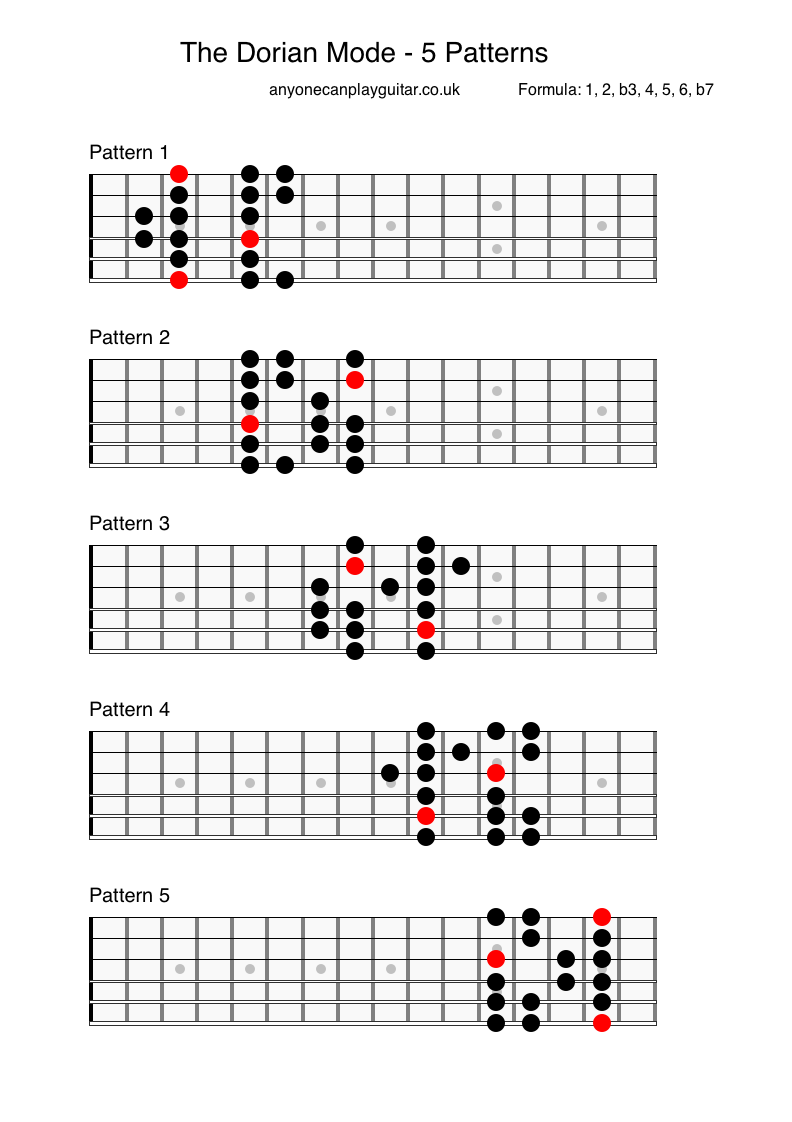
Dorian mode
11
MENTIONS
4
EPISODES
4
PODCASTS
Search complete. 11 mentions across 4 episodes found for "Dorian mode".
Oct 30, 2026

Cecil AlexanderGUEST
So you have the ninth and the sixth.
Cecil AlexanderGUEST
And now you happen to be coincidentally playing the Dorian scale, the D Dorian scale.
Cecil AlexanderGUEST
which is usually what we'll use on static minor seven chords, but also minor seven chords that are functioning in a larger progression, like a 2-5-1, 3-6-2-5-1, or something like that.
Cecil AlexanderGUEST
But a good scale, or sorry, a good tune that you can use this on would be Impressions, or So What by Miles Davis, which is just... you know this modal D minor vamp for half the tune and then it goes up a half step to E flat minor so it's like very little thinking compared to a lot of like great American songbook tunes where you'll have you know one chord per measure or two chords per measure and the harmonic rhythm is just like much faster so you know just kind of thinking of like soloing within that box maybe to start slowly kind of venturing outside of the box a little bit and then trying to also then visualize those auxiliary notes in other positions you know so if you have like your d minor pentatonic down here or the full box going down to that a down there you know where's the ninth and the sixth within that then trying to connect phrases
SpencerHOST
Yeah.
SpencerHOST
One thing that's interesting about the way you're describing it that might be unfamiliar or newly familiar to people watching this is you're really relating to the scale tones.
SpencerHOST
So when you're going up and down these shapes, it's not just this is the pentatonic scale or this is the Dorian scale and it just looks like this big chunk.
SpencerHOST
It's actually relationships between these notes and the nine has its own character and the six has its own character.

Ethan HeinHOST
A7.
Ethan HeinHOST
So E minor makes us think that we're in the key of E minor, yeah? A7, it's like the four major chord in E minor, which creates the feeling of E Dorian mode.
Ethan HeinHOST
That's not a particularly unusual sound in rock or blues or R&B or related styles.
Ethan HeinHOST
But then we get a C chord.