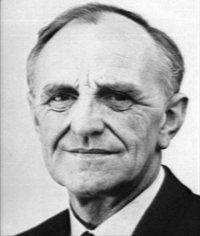
Donald Winnicott
English paediatrician and psychoanalystWikipedia
97
MENTIONS
52
EPISODES
49
PODCASTS
Search complete. 97 mentions across 52 episodes found for "Donald Winnicott".
Sep 12, 2026

Matt McCuskerGUEST
It, it really is, uh, should be revisited as to, like, how people go about doing that kind of stuff 'cause it's, it's not, it's not good at all.
Matt McCuskerGUEST
I think we got the 90-day maternity leave from, uh, there was just like a therapist back, I think it was an English guy, who was just like, Winnicott.
Matt McCuskerGUEST
He was just like, "Yo, you gotta give these, you gotta give these people, like, at least a couple months."
Chris WilliamsonHOST
Something.

Joy BeharHOST
...
Joy BeharHOST
I mentioned a book one time by somebody named Winnicott, who was a famous psychologist.
Whoopi GoldbergHOST
Mm-hmm.
Joy BeharHOST
And the, the book is called Good Enough Mother.

Aubrey MasangoHOST
Gotcha.
Zamo MbeleGUEST
But then we can move on to, and this is the most I think clinical thing that I'm going to say is, um, um, one of the founders of, uh, psychoanalytical, psychodynamic psychology, um, D.W. Winnicott, Donald Winnicott, um, speaks about this idea and, and, and I'm paraphrasing, but I hope to near quote him when he says, you know, "For most us human beings, it's a joy to be hidden, but it is a disaster not to be found." And an interpretation of that is actually there is some goodness and joy in keeping some things to ourselves and being our own beings, actually, to avoid intrusiveness and so on and so forth.
Zamo MbeleGUEST
But you know-
Aubrey MasangoHOST
Y- y- you're speaking there of the very subtle distinction between secrecy and privacy, right?

Niall McKeeverHOST
bond.
Jeremy HolmesGUEST
But at the same time, actually, what that bond is doing is validating fostering encouraging creating the context for a kind of autonomy um i mean i suppose you could say donald winnicott's concept of the child who's playing alone in the presence of the mother encapsulates that sort of paradox that if there's a kind of external feeling of being held and validated and secure then you can be yourself and rely on yourself and you can be your own secure base if you like so I'm not sure I mean I totally see what you're saying And even, you know, say, and I'm not familiar, in fact, there is a phrase, isn't there, which I've tried to remember and don't remember for this form of therapy, which has become very popular.
Jeremy HolmesGUEST
And my son, it's quite cute, who's another psychiatrist, was telling me about it the other day.
Jeremy HolmesGUEST
But in a

Katie O'GradySOUNDBITE_SPEAKER
The movement of these figures and the shapes they make are taken from images of the artist's own childhood play.
Katie O'GradySOUNDBITE_SPEAKER
Through this activity, the Minotaur is brought into proximity with psychoanalysts Donald Winnicott's thinking on the holding environment and the role of aggression in development of the self.
Katie O'GradySOUNDBITE_SPEAKER
For Winnicott, the holding environment provides the conditions in which an emerging self can experience the world without being overwhelmed by it.
Katie O'GradySOUNDBITE_SPEAKER
It is a space that does not seek to eliminate difficult impulses, but one in which they can be survived and integrated.
Katie O'GradySOUNDBITE_SPEAKER
Through this environment, the self can encounter and test the external world through a vitality that understands aggression as more than simply destructive.

Nancy McWilliamsGUEST
So psychoanalysis has evolved a lot since its original Freudian development.
Nancy McWilliamsGUEST
Some important people in that evolution have been Eric Erickson, Melanie Klein, Harry Steck Sullivan, Donald Winnicott, contemporary people in the relational movement like Stephen Mitchell, the self-psychology movement, which is very much about self-esteem by Heinz Kohut, Otto Kernberg's work, on internalized family dynamics in patients and psychoanalytic general technique has changed over time.
Nancy McWilliamsGUEST
When I was first trained, some supervisors put a lot of emphasis on trying to be a blank screen because the idea was if you were not giving the patient much information about yourself, the transferences would be easier to see.
Nancy McWilliamsGUEST
You know, if you said rather little and the patient immediately assumed you were critical, it would bring out the transference.

MichaelHOST
You're just a kid." So what does the child do? You adapt.
MichaelHOST
You adopt what psychoanalyst Donald Winnicott calls the false self.
MichaelHOST
You bury your vulnerability.
MichaelHOST
You bury your own needs.

Catherine LiuGUEST
We can't be human without being traumatized.
Catherine LiuGUEST
Um, the great British psychoanalyst DW Winnicott talks about how, um, birth is a process of being weaned from the maternal womb, actually, from the womb, actually.
Catherine LiuGUEST
So every step of establishing some kind of autonomy means breaking from this idea that we're enclosed in this cocoon, this uterine cocoon of, um, nurturing and mirroring.
Catherine LiuGUEST
And so you have this idea now, I find, on social media, especially among the younger genera- I, I should actually say the older generation is just as bad, where, um, we see social media as just, as merely a mirror, not a space where we recognize the otherness of others, but also our universal shared commonality, which has to do with class solidarity.

Alain de BottonGUEST
It was very intense, but it was disrupted.
Alain de BottonGUEST
And that person needs to understand that they are, you know, there's a wonderful sentence from Donald Winnicott, great psychoanalyst, who said, the catastrophe you fear will happen has already happened.
Alain de BottonGUEST
And the key thing is, it's been forgotten.
Alain de BottonGUEST
You forgot the catastrophe.

Alecia SimmondsHOST
Yeah.
Leigh BoucherHOST
So this is why I've been thinking about Winnicott.
Leigh BoucherHOST
So Winnicott-
Alecia SimmondsHOST
Mm
Leigh BoucherHOST
... early 20th century psychoanalyst-
Leigh BoucherHOST
When we're in those environments, we can flourish as humans, as infants, as children, and as adults, and it feels to me like this is the moment Nellie flourishes.
Leigh BoucherHOST
She has a, a good...
Leigh BoucherHOST
And, you know, Winnicott talks a lot about mothers.
42 more episodes mention Donald Winnicott.
Create an account to see the whole feed, search across every transcript, and follow the entities you care about.