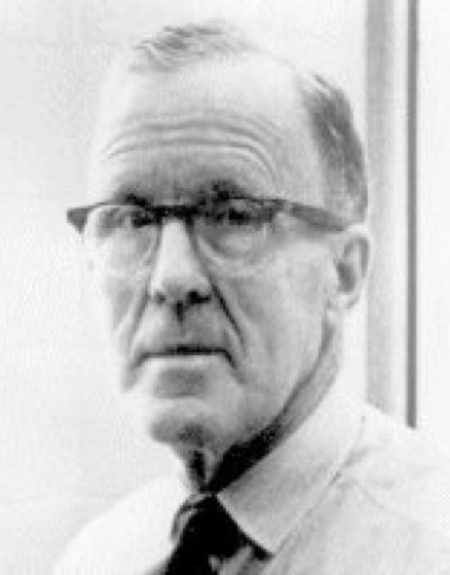
Donald O. Hebb
Canadian psychologistWikipedia
15
MENTIONS
13
EPISODES
13
PODCASTS
Search complete. 15 mentions across 13 episodes found for "Donald O. Hebb".
Nov 3, 2026

Tim ClintonHOST
How do you begin to just help people kind of calm down that rehearsing and that reenactment? rumination stuff that often just gets a hold of them you know that i think in in neuroscience or interpersonal neuroscience that this this it's like the brain begins to develop writing and more patterns things that quote wire together fire together type thing you know that speak to some of that and how you approach people who they're they're they're in a battle
Lee WarrenGUEST
right Well, there's this thing called Hebb's Law we talk about all the time, neuroplasticity, this idea that Donald Hebb gave us of neurons that fire together, wire together.
Lee WarrenGUEST
And that happens in response to the brain making things more automatic over time the more we think about them.
Lee WarrenGUEST
And that's God's design for it.

Henry MintzbergGUEST
As I say, you don't use the round earth theory to build runways in Holland.
Aidan McCullenHOST
You mentioned as well your former colleague in McGill, Donald Hebb, and he explained it beautifully.
Aidan McCullenHOST
A good theory is one that holds together long enough to get you to a better theory.
Aidan McCullenHOST
And the reason I share that is the importance of learning as a leader cannot be measured at all.

Art GutchHOST
There's an idea in neuroscience often summarized with the phrase you may have heard, neurons that fire together, wire together.
Art GutchHOST
The shorthand comes from the work of psychologist Donald Hebb.
Art GutchHOST
The science underneath learning is more complicated than that phrase, but it's a useful way of thinking about repeated activation.
Art GutchHOST
When patterns are repeatedly activated, the nervous system can become more efficient at producing them.

Tara PerryGUEST
Anything that's fired and wired.
Tara PerryGUEST
Donald Hebb was a researcher, a doctor in 1948, I believe, and it's called Hebb's Law.
Tara PerryGUEST
Neurons that fire together, wire together.
Tara PerryGUEST
So you have a clear thought and a strong emotion, and those fire and wire together.

David PerlmutterGUEST
expression of gratitude on a daily basis.
David PerlmutterGUEST
But I think that, you know, it's been said by a Dr. Donald Hebb in the late 1940s, a Canadian neuroscience researcher, that neurons that fire together wire together.
David PerlmutterGUEST
And that is the more you do something, the more indelible those connections become in your brain.
David PerlmutterGUEST
And, you know, the Dalai Lama once said that if you want others to be happy, treat them with compassion.

Alexa PenaHOST
Many of our daily decisions are influenced by patterns that we have practiced for years.
Alexa PenaHOST
And this is where the, the work of the psychologist Donald Hebb comes into play.
Alexa PenaHOST
Um, this is also Dr. Joe Dispenza's work.
Alexa PenaHOST
He frequently discusses the relationship between your thought patterns and your behaviors.

Joel SchmidgallHOST
No, every day we need to come before the Lord and get in the word and get in prayer.
Joel SchmidgallHOST
And when we walk in the spirit daily, it becomes a part of our transformation, Hebb's Law.
Joel SchmidgallHOST
was introduced by Canadian psychologist Donald Hebb in his 1949 book, The Organization of Behavior.
Joel SchmidgallHOST
And it states this, it states that neurons that fire together, wire together.
Joel SchmidgallHOST
It's a principle of neuroscience that it means this, repeated thoughts strengthen neural pathways.
Joel SchmidgallHOST
In other words, if you go out to a park and you walk around in a circle over and over and over again, you start to bear a path there, right? The next time you go to that park, you're naturally going to walk on that same path.
Joel SchmidgallHOST
So the same is true about Hebb's law.
Joel SchmidgallHOST
It's contending this concept that what you focus on, what you do faithfully, what you do continually, it literally rewires your brain.

Robert SkvarlaGUEST
He takes real things that were studied and mixes up the information or misrepresents it.
Robert SkvarlaGUEST
One of the things he mentions is that his version of MK often, or at least his understanding of it, incorrect as it was, was that it was a continuation of a paranormal study conducted by Donald Hebb, who conducted sensory deprivation studies in the early '50s preceding MKUltra.
Robert SkvarlaGUEST
Um, his studies were funded by the CIA and I think the Canadian Defense Research Board.
Robert SkvarlaGUEST
Um, the CIA used the Canadian organization as a conduit to get funds to him.
3 more episodes mention Donald O. Hebb.
Create an account to see the whole feed, search across every transcript, and follow the entities you care about.