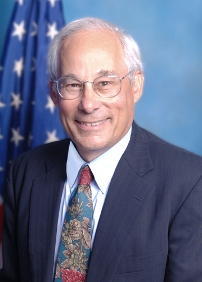
Donald Berwick
PhysicianWikipedia
20
MENTIONS
12
EPISODES
11
PODCASTS
Search complete. 20 mentions across 12 episodes found for "Donald Berwick".
Oct 26, 2026

Chris TrimbleHOST
And question three, can we fix the US health system one small step at a time? We'll be right back with Lindsay.
Chris TrimbleHOST
At the beginning of my conversation with Lindsay, I asked for an overall reaction to our previous episode, part two of our conversation with Don Berwick.
Lindsey LeiningerGUEST
When I think about what the beating heart of his comments are and his work is, you know, I see it as that every person in this country deserves access to affordable health care, high quality, delivered in their community.
Lindsey LeiningerGUEST
And that's really how I see it.
Lindsey LeiningerGUEST
And the idea is using soccer to promote public health.
Lindsey LeiningerGUEST
And it's coaches working with adolescents on wellness tips, mental health tips, and getting them connected to HIV testing and care.
Chris TrimbleHOST
So Lindsay and Don Berwick share similar values, but their styles are quite different.
Lindsey LeiningerGUEST
I think there is room for dreamers like Dr. Berwick and hopefully room for pragmatists like me.

Bob BoutelierHOST
In December of 2004, Dr.
Bob BoutelierHOST
Don Berwick stood before a room full of healthcare professionals He ran a small nonprofit, the Institute for Healthcare Improvement.
Bob BoutelierHOST
He had no power over any hospital in America.
Bob BoutelierHOST
He couldn't hire, fire, or issue a single binding rule.

Todd OttenGUEST
You're right.
Todd OttenGUEST
I mean, we one of the clips in the film, Don Berwick, who is the head of CMS for a while under President Obama, relates a story of a radiologist.
Todd OttenGUEST
They put a metronome on his desk.
Todd OttenGUEST
How fast he should be reading x-rays.

Andrew TsangGUEST
So, you know, cost is the number one problem, I think.
Andrew TsangGUEST
And apologies to Don Berwick's triple aim here.
Andrew TsangGUEST
I think cost is really like the biggest thing that everybody is talking about when it comes to U.S. health care.
Andrew TsangGUEST
So that's my initial reaction to the NSA and things like that.

Maureen BisognanoGUEST
It's an example of how a small group of very young people can take some energy and apply it to a problem and solve it.
Maureen BisognanoGUEST
So a few years ago now, uh, Don Berwick and I were f- were sitting in our office, and we were frustrated because I had just come back from England, and there I could see spread happening more quickly.
Maureen BisognanoGUEST
When I got back to the United States, I could see pockets of excellence around the country, but nobody was spreading anything.
Maureen BisognanoGUEST
It's like there's this tension around learning from another hospital, another academic medical center or another unit within your hospital, and spread was really difficult.

David NashGUEST
And when they get vulnerable, they're going to block, they're going to subterfuge, they're going to not participate, they're not gonna be open to understanding the system's nature of care.
David NashGUEST
So Don Berwick-
Keith BoelGUEST
Mm
David NashGUEST
... had it right in August of 1991, and we've been struggling with the cultural change.
Chris TrimbleHOST
And I'm Chris Trimble.
Glyn ElwynHOST
Today, Chris, we return to our conversation with Don Berwick.
Chris TrimbleHOST
We do.
Chris TrimbleHOST
Uh, listeners who haven't already listened to episode 23 may wanna start there.
Glyn ElwynHOST
Right.
Glyn ElwynHOST
Uh, how they, how do they react to that? And question three: What can the United States learn from other countries about healthcare?
Chris TrimbleHOST
We'll be right back with Don Berwick.
Chris TrimbleHOST
[on-hold music] Don Berwick has a frustration about how hospitals are run.

Kyla AvisHOST
It was 2009, and I was brand new to the Health Quality Council.
Kyla AvisHOST
I sat down in our boardroom to listen to a keynote from Don Berwick.
Kyla AvisHOST
At the time, Mr. Berwick was the president and CEO of the Institute for Healthcare Improvement at Boston, an organization that shaped much of what we did in the early days of HQC.
Kyla AvisHOST
We all look to IHI as a leader in quality improvement and innovation, and they really were.
Kyla AvisHOST
Think about this question.
Kyla AvisHOST
What do you really, really want? Here's an edited version of Mr.
Kyla AvisHOST
Don Berwick's 2009 keynote address at the IHI forum entitled Squirrel.
Kyla AvisHOST
He starts his speech sharing about a recent trip to a clinic in Ghana.

Somava SahaGUEST
But when we see that they're connected, then actually we can call in a broader set of assets.
Somava SahaGUEST
And Don Berwick says often that sometimes you have to make the problem bigger to solve it.
Somava SahaGUEST
And actually being able to see the whole picture helps us shift, for example, food as medicine from a prescription that's written without clarity about where that's going to food as health and generational wealth in a way that reconnects, for example, hospitals and community health centers to the network of small communities.
Somava SahaGUEST
generational and often disadvantaged farmers around them that invites and invests in a food ecosystem that can grow and stabilize finances for that community of people who are generational farmers.

Andrew SchutzbankGUEST
But what you're seeing after the revenue changes with the latest coding structure is insurance companies are exiting Medicare Advantage.
Andrew SchutzbankGUEST
which kind of proves the point that Don Berwick made, and this is an infinite money machine that we've led people onto.
Andrew SchutzbankGUEST
And now that we've not even turned off, just recalibrated the money machine, everyone's like, nope, I'm out, right? And so it sort of tells you where the problems are living.
Andrew SchutzbankGUEST
And they're not on the care side, right? They are on the kind of revenue side, on the description of misery side, as I like to call it, to really reinforce what it is.
2 more episodes mention Donald Berwick.
Create an account to see the whole feed, search across every transcript, and follow the entities you care about.