Domesday Book
BookWikipedia
64
MENTIONS
31
EPISODES
29
PODCASTS
Search complete. 64 mentions across 31 episodes found for "Domesday Book".
Nov 5, 2026

Peter StaveleyGUEST
But there were a lot of other villages in the area, and at that time... talking about 1080s now, a district or a large manor called Hallamshire, and actually sort of almost qualified as a county, comprising of about 13 different villages.
Peter StaveleyGUEST
And we know this from the Doomsday Book, which records these places.
Peter StaveleyGUEST
It's an amazing document, which without it, we would know so little about that period of time.
Peter StaveleyGUEST
But this particular area was recorded quite well.

Pamela NagamiNARRATOR
In 1085 he was advised by the wise men at Gloucester to make an inquest into the state of the country, to find out how much land there was in every shire, how many landholders and lesser men, and the worth of them all.
Pamela NagamiNARRATOR
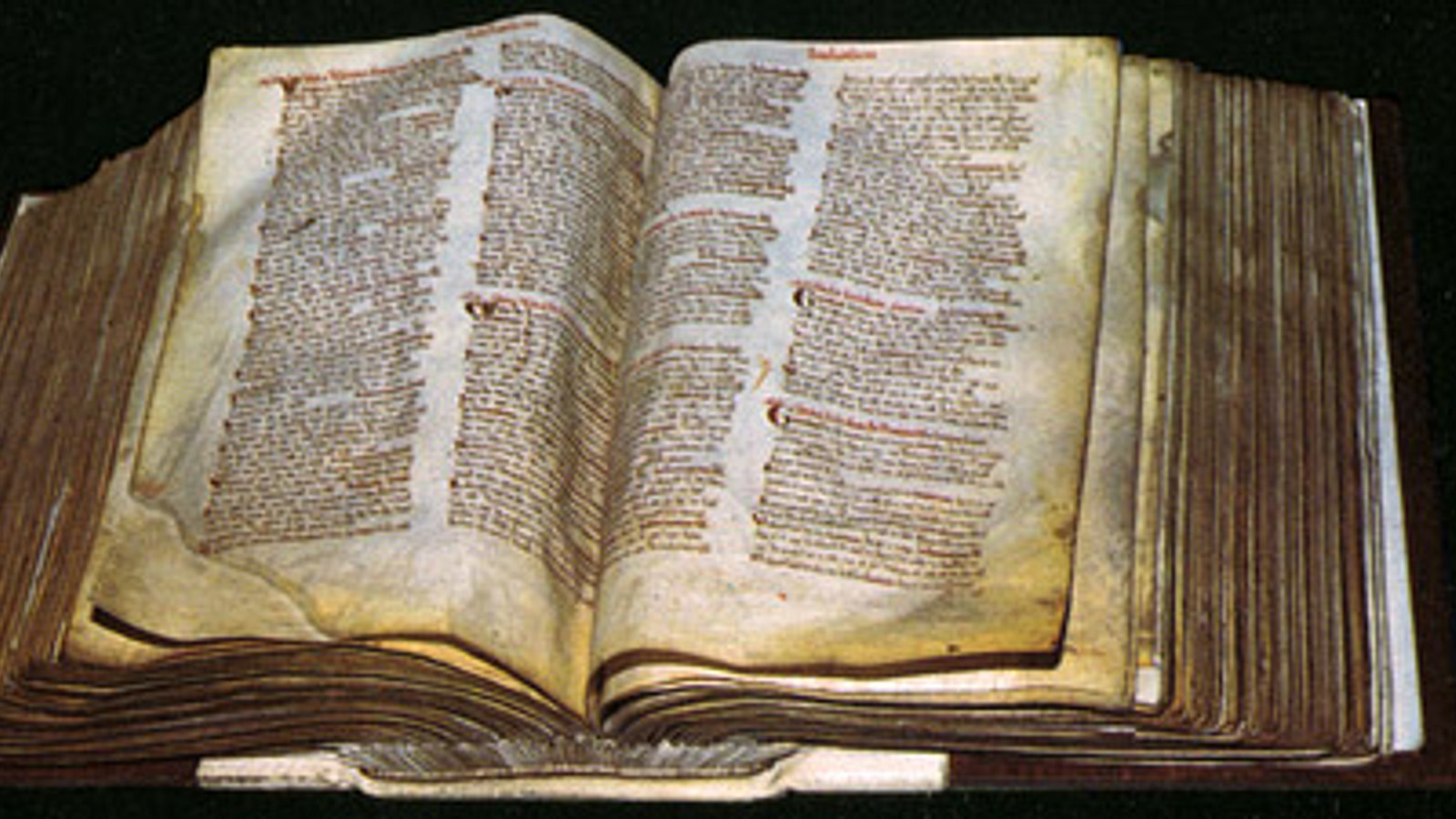
The results were written down in Domesday Book from which we glean nearly all we know of the conditions which prevailed in the England of that day.
Pamela NagamiNARRATOR
In 1086 William summoned all military tenants, whether holding from himself or from his tenants, to swear an oath of allegiance to him on Salisbury Plain.
Pamela NagamiNARRATOR
It has generally been considered as an act of great significance, though some recent historians have suggested that it was not without precedent.
Pamela NagamiNARRATOR
STILL MORE WAS IT SO IN THE EARLY NORMAN PERIOD.
Pamela NagamiNARRATOR
MONEY WAS HARDLY USED, AND THE FEW SPECIALIZED AUTISANS WERE PAID IN KIND.
Pamela NagamiNARRATOR
DOMESDAY BOOK ACCOUNTED FOR 280,000 PEOPLE.
Pamela NagamiNARRATOR
THESE WERE CHIEFLY THE HEADS OF FAMILIES.

Tom LicenceGUEST
I mean, everyone owned enslaved people.
Tom LicenceGUEST
There are lots of slaves mentioned in Doomsday Book.
Tom LicenceGUEST
They do all sorts of things.
Tom LicenceGUEST
There are lots of wills setting slaves free, slaves performing various roles in most elite households, as well as out plowing the fields and this sort of thing.

Bianca NobiloHOST
So the response to that by Alfred the Great is to start building his own ships using that abundant timber that you were just talking about, Tim.
Bianca NobiloHOST
And after that, around 1066, when the Normans are taking stock of their conquest, we know, because it's written in the Doomsday Book, that already there are about 6,000 water mills in Britain, which means that people are already starting to exploit their natural resources quite well, then we get the Black Death in the 1300s.
Bianca NobiloHOST
And this becomes really critical for the future of this country's economy.
Bianca NobiloHOST
And that's because it wipes out about half the population.

Roopika RisamGUEST
And really, there are many.
Roopika RisamGUEST
We can go back to, let's say, 1086 and see William the Conqueror coming to England and realizing that the Norman conquest had created a lot of conflict around land ownership between the Anglo-Saxons and the Normans, and he commissioned Domesday book, which is a massive data undertaking to track all of the estates and who owned them, how many plows they had, how many serfs they had.
Roopika RisamGUEST
And it was incredible because his clerks took care of all of England in a year and parts of Wales.
Roopika RisamGUEST
And this has become the the gold standard for histories of land in the UK, it was in England and Wales to the point that it is still cited in court cases today.

James O'BrienHOST
You need more social housing.
James O'BrienHOST
And I know it sticks in my... kind of left-wing heart, you also need to recognise that the system whereby massive landlords, as in landowners, as in people who can trace their lineage back to the Doomsday Book, who own half of Norwich or half of Westminster, they probably operate a system that's more equitable than the one... that has grown up in the aftermath of by to let legislation being introduced.
James O'BrienHOST
So I get it.
James O'BrienHOST
But, you know, open up the phone lines and say anyone feeling pinched.
James O'BrienHOST
And now it's gone back into reverse.
James O'BrienHOST
Concentration of wealth among the smallest proportion is growing, and it's harder and harder for your children or my children to get on the property ladder at all.
James O'BrienHOST
And so when I say down with buy-to-let landlords, I am kind of inevitably saying up with doomsday book landlords.
James O'BrienHOST
But they've owned their stuff for hundreds and hundreds of years.

James O'BrienHOST
And I know it sticks in my kind of left-wing heart.
James O'BrienHOST
You also need to recognise that The system whereby massive landlords, as in landowners, as in people who can trace their lineage back to the Doomsday Book, who own half of Norwich or half of Westminster, they probably operate a system that's more equitable than the one that has grown up in the aftermath of buy-to-let legislation being introduced.
James O'BrienHOST
So I get it.
James O'BrienHOST
But, you know, open up the phone lines and say, anyone feeling pinched, everyone rings in, mate.
James O'BrienHOST
And now it's gone back into reverse.
James O'BrienHOST
Concentration of wealth among the smallest proportion is growing, and it's harder and harder for your children or my children to get on the property ladder at all.
James O'BrienHOST
And so when I say down with buy-to-let landlords, I am kind of inevitably saying up with doomsday book landlords.
James O'BrienHOST
But they've owned their stuff for hundreds and hundreds of years.

Dave MusgroveGUEST
It has the Bay of Tapestry, which is this beautiful graphic story.
Dave MusgroveGUEST
And then we have Doomsday Book, 20 years afterwards, which is a much less exciting thing to look at, but is in many ways a more important document because this is the great survey that William undertook or got his men to undertake.
Dave MusgroveGUEST
analyzing the land in which he owned and we can look at that and we can see very clearly what happened as a consequence of 1066 so what that what doomsday survey shows is is who held the land in 1066 and who held it in 1086 and we can see this enormous change in land ownership and basically the decimation of the old english land honing class and replacement by incoming normers And we can also see what sort of land was held and what it was deployed for.
Dave MusgroveGUEST
So we can very clearly see that there was an enormous structural change in land holding.

Dan SnowNARRATOR
But one mill could produce as much grain as around 40 people grinding by hand.
Dan SnowNARRATOR
According to the Doomsday Book, in England, as early as 1080, there were over 5,500 water mills.
Dan SnowNARRATOR
Little is known about the mills of this time.
Dan SnowNARRATOR
However, one of the most ambitious projects at Guernon this year is the construction of a 12th century style water mill.

Addison AndersonNARRATOR
William consolidated his gains with a huge castle-building campaign and a reorganization of English society.
Addison AndersonNARRATOR
He lived up to his nickname, William the Conqueror, through a massive survey known as the Doomsday Book, which recorded the population and ownership of every piece of land in England.
Addison AndersonNARRATOR
Norman French became the language of the new royal court, while commoners continued to speak Anglo-Saxon.
Addison AndersonNARRATOR
Over time, the two merged to give us the English we know today, though the divide between lords and peasants can still be felt in synonym pairs such as cow and beef.
21 more episodes mention Domesday Book.
Create an account to see the whole feed, search across every transcript, and follow the entities you care about.