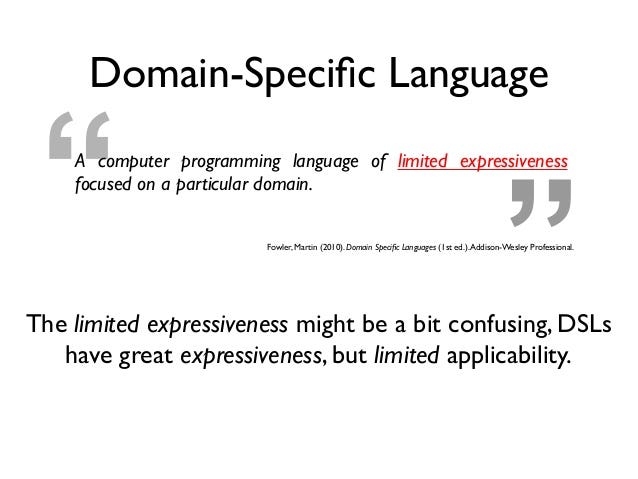
Domain-specific language
16
MENTIONS
9
EPISODES
6
PODCASTS
Search complete. 16 mentions across 9 episodes found for "Domain-specific language".
Nov 4, 2026

Curtis YarvinGUEST
They can understand how to use exotics.
Curtis YarvinGUEST
It's like they're good at DSLs, for example.
Curtis YarvinGUEST
And so if you can make the problem of building an application and especially of maintaining an application much, much simpler, you're doing very well.
Curtis YarvinGUEST
You know, the thing is, however, when you're looking at, okay, I'm like developing my own application, which I'm constantly like hot patching.

SamHOST
He has been a prolific contributor to the foundations of Haskell, with many papers pushing the boundaries of the Haskell type system, programming with effects, and applications of functional programming.
SamHOST
Our conversation was a whirlwind tour through Tom's long and wide publication history, with lots of tangents and ideas about functional programming, logic programming, constraints, DSLs, composition, program calculation, and basically we just had a great time.
SamHOST
All right.
SamHOST
Hello, Tom.
Tom SchrijversGUEST
I kept reading papers about functional programming and I found it really intriguing and exciting.
Tom SchrijversGUEST
And I actually love the structure in functional programming.
Tom SchrijversGUEST
So there's a lot of work on on DSLs and recursion schemes and lots of patterns that people were exploring.
Tom SchrijversGUEST
And I like that.

speaker_4HOST
Exactly.
speaker_4HOST
DSLs.
speaker_4HOST
You can write a custom double if or a checked while loop that automatically terminates if a security token expires.
speaker_4HOST
And to the developer using it, it looks like native syntax.
speaker_8HOST
And implicits aren't just for parameters either.
speaker_8HOST
They're heavily used for implicit conversions, which is really how Scala builds such incredibly clean domain-specific languages, or DSLs.
speaker_9HOST
Right, like if you're writing a type-safe SQL query builder, your database library might require a highly specific custom type, like column strings.
speaker_8HOST
But as a developer, you just want to type a normal standard string.

Chris OliverHOST
I think metaprogramming has gotten kind of a bad rap in Ruby for a long time.
Chris OliverHOST
It's like, you know, you're doing stuff dynamically and while it does create a really convenient thing for programmers making your own DSLs and whatever, it's like, A lot of those things are like compilable though, which is good.
Chris OliverHOST
Cause then, yeah, we can just analyze it ahead of time, define those methods manually.
Chris OliverHOST
The main reason for a lot of this stuff was just convenience for you, the human being to not have to write every single method down.

Eric NantzHOST
The next one I'm going to talk about is, of course, Rix, the one authored by Bruno Rodriguez as the where to bring the Nix package manager to help you manage both the R package dependencies and the system libraries associated with those packages and R itself, as long as you have the Nix package manager on your system.
Eric NantzHOST
Luckily, Rix gives it so that you don't have to be an expert in the next DSL, the domain specific language, to opt into it because it's got a wrapper literally called Rix to bootstrap the environment configuration for you, but it is what we call declarative configuration.
Eric NantzHOST
you'll want to keep iterating on this declarative file that it will put a wrapper around and rebuild anytime you want to add a package or remove a package but the way Nix works is that it's keeping a specific SHA hash of that package version coming from the upstream package cache that nix and the maintainers of rix maintain and much like with rm if i'm working on a project with nix and rix involved if i share it with you mike all you really need is a special file called default.nix with the next package manager you run nix build on that repo and you've got mostly, bit for bit, reproducibility of that R environment.
Eric NantzHOST
The only gotchas that can happen in my experience with this have been A, moving to say ARM64 architecture with R, i.e. with the Apple M1 chips and the like, and your collaborator is say on a Windows or Linux based machine.

Jason TurnerGUEST
Uh-
Ben DeaneHOST
You tend to see it in DSLs, I'm gonna say.
Jason TurnerGUEST
In DS- Well, the...
Jason TurnerGUEST
Someone in the audience-
speaker_2HOST
Yeah.
speaker_2HOST
Domain-specific languages, or DSLs, represent a perfect example of this philosophy in action.
speaker_4HOST
Oh, right.
speaker_4HOST
Like a flowcharting tool that businesspeople use.
speaker_5HOST
Meta programming is highly seductive.
speaker_5HOST
Once you learn how to inject code and build custom DSLs, you want to use it for absolutely everything.
speaker_4HOST
It's the shiny new hammer.
speaker_5HOST
It is.